
Parenting Tips
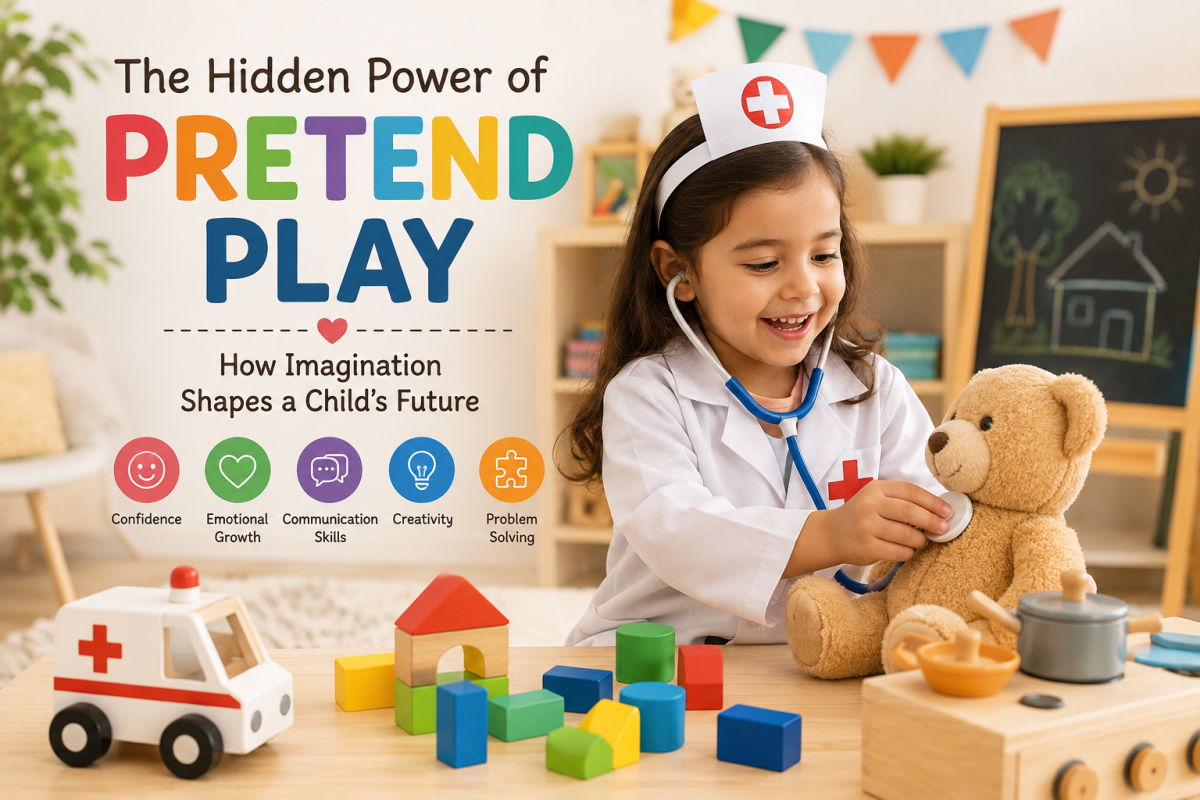
The Hidden Power of Pretend Play: How Imagination Shapes a Child’s Future
When children transform a cardboard box into a pirate ship or turn stuffed animals into classroom students, they are doing much more than simply having fun. Pretend play is one of the most valuable activities for a child\'s emotional, social, and cognitive development.
In today\'s fast-paced digital world, many parents focus on educational apps, structured learning programs, and organized activities. While these can be beneficial, imaginative play offers something unique. It allows children to explore ideas freely, create their own stories, and learn important life skills through experience rather than instruction.
What Is Pretend Play?
Pretend play, also known as imaginative play, happens when children use their creativity to invent characters, stories, and situations. A child may imagine being a doctor caring for patients, a chef preparing meals, or an astronaut exploring distant planets. Through these imaginative experiences, children develop a deeper understanding of the world around them while expressing their own thoughts and feelings.
Unlike activities with fixed rules and predetermined outcomes, pretend play gives children complete control over their adventures. This freedom encourages exploration, curiosity, and independent thinking.
Building Confidence Through Imagination
Every time a child steps into an imaginary role, they practice confidence. When they pretend to be a teacher leading a classroom or a firefighter rescuing people, they are exploring responsibilities and decision-making in a safe environment.
These imaginative experiences allow children to experiment with different identities and situations without fear of failure. As they create stories and solve imaginary challenges, they gain a stronger sense of self-belief. Over time, this confidence often carries into real-life interactions, helping children communicate more effectively and participate more actively in social settings.
Understanding Emotions Through Play
Children experience many emotions before they fully understand them. Feelings such as excitement, disappointment, nervousness, and happiness can sometimes be difficult to express with words.
Pretend play provides a natural outlet for processing these emotions. A child may recreate a recent visit to the doctor, act out their first day at school, or invent stories involving friendship and teamwork. Through these scenarios, children practice understanding different perspectives and develop empathy for others.
This emotional exploration helps children build stronger social skills and learn healthy ways to manage their feelings.
Developing Strong Communication Skills
Imaginative play encourages children to use language in meaningful and creative ways. Whether they are talking to imaginary characters, narrating a story, or interacting with friends during role-play, they are constantly practicing communication.
As children create conversations and explain situations, they expand their vocabulary and improve their ability to organize thoughts. They learn how to express ideas clearly, listen to others, and participate in collaborative storytelling. These communication skills become valuable foundations for academic success and future relationships.
Encouraging Creative Problem-Solving
Every imaginary adventure presents opportunities for problem-solving. Perhaps a pretend spaceship has lost power, a toy animal needs rescuing, or a make-believe restaurant has run out of ingredients. Children naturally create solutions to these challenges as part of their play.
This process teaches flexible thinking and creativity. Rather than relying on instructions, children learn to analyze situations and develop their own ideas. These experiences strengthen critical thinking skills that can benefit them throughout life.
Choosing Toys That Inspire Creativity
The most effective pretend-play toys are often the simplest ones. Toys that leave room for imagination encourage children to become active participants rather than passive observers.
Wooden blocks can become castles, bridges, or entire cities. Toy animals can inspire exciting adventures in jungles and forests. A play kitchen can transform into a busy restaurant, while a doctor kit can become the setting for caring and compassionate role-play. Because these toys do not dictate a single way to play, they encourage endless possibilities and repeated engagement.
Creating an Imagination-Friendly Environment
Supporting pretend play does not require expensive equipment or large play areas. A child\'s imagination thrives when given time, freedom, and simple resources.
Parents can encourage imaginative thinking by providing open-ended toys, reading storybooks together, and allowing unstructured playtime each day. Even ordinary household items such as blankets, cardboard boxes, and kitchen utensils can become valuable tools for creative exploration.
Most importantly, children benefit when adults appreciate and encourage their imaginative ideas. Showing interest in their stories and joining their adventures occasionally can make pretend play even more meaningful.
Final Thoughts
Pretend play may appear simple, but its impact on child development is remarkable. Through imaginative adventures, children build confidence, strengthen communication skills, develop emotional intelligence, and learn creative problem-solving.
In a world where many activities are carefully structured, pretend play offers children the freedom to explore, create, and discover. The stories they invent today help shape the skills, confidence, and creativity they will carry into the future.
