Monthly Archives: June 2026

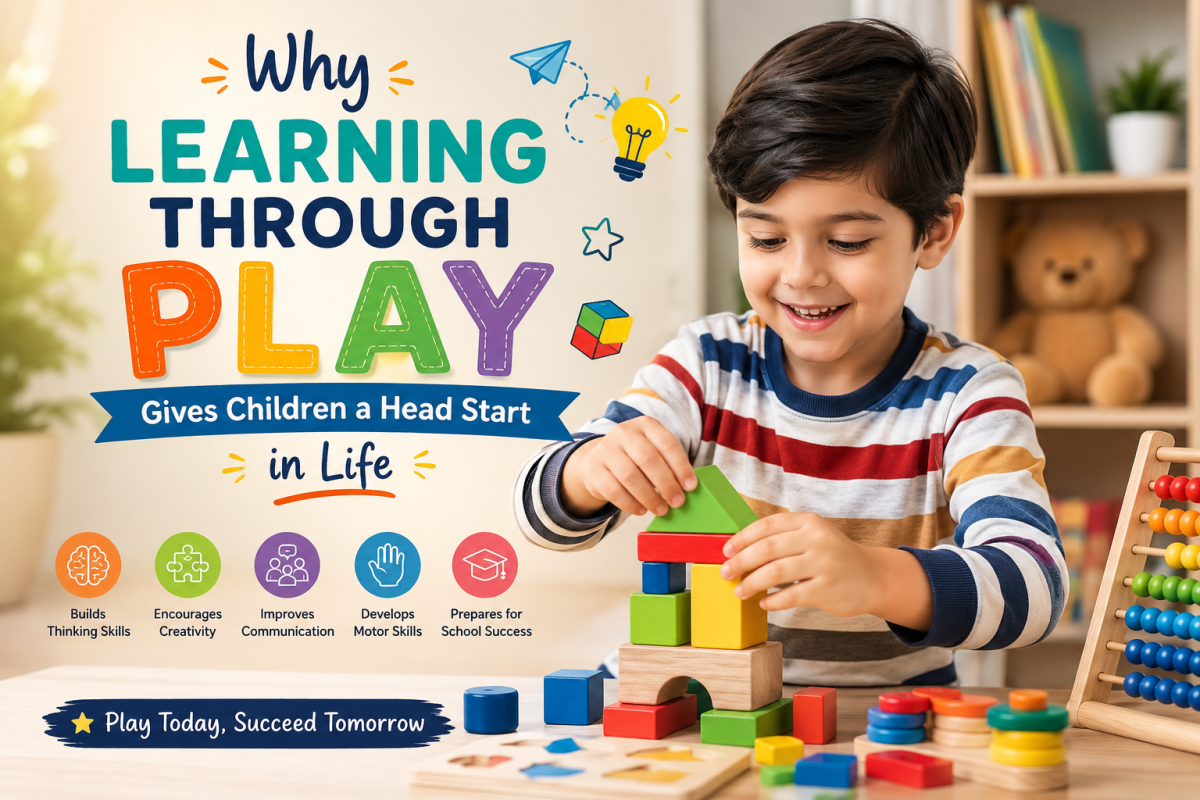
Why Learning Through Play Gives Children a Head Start in Life

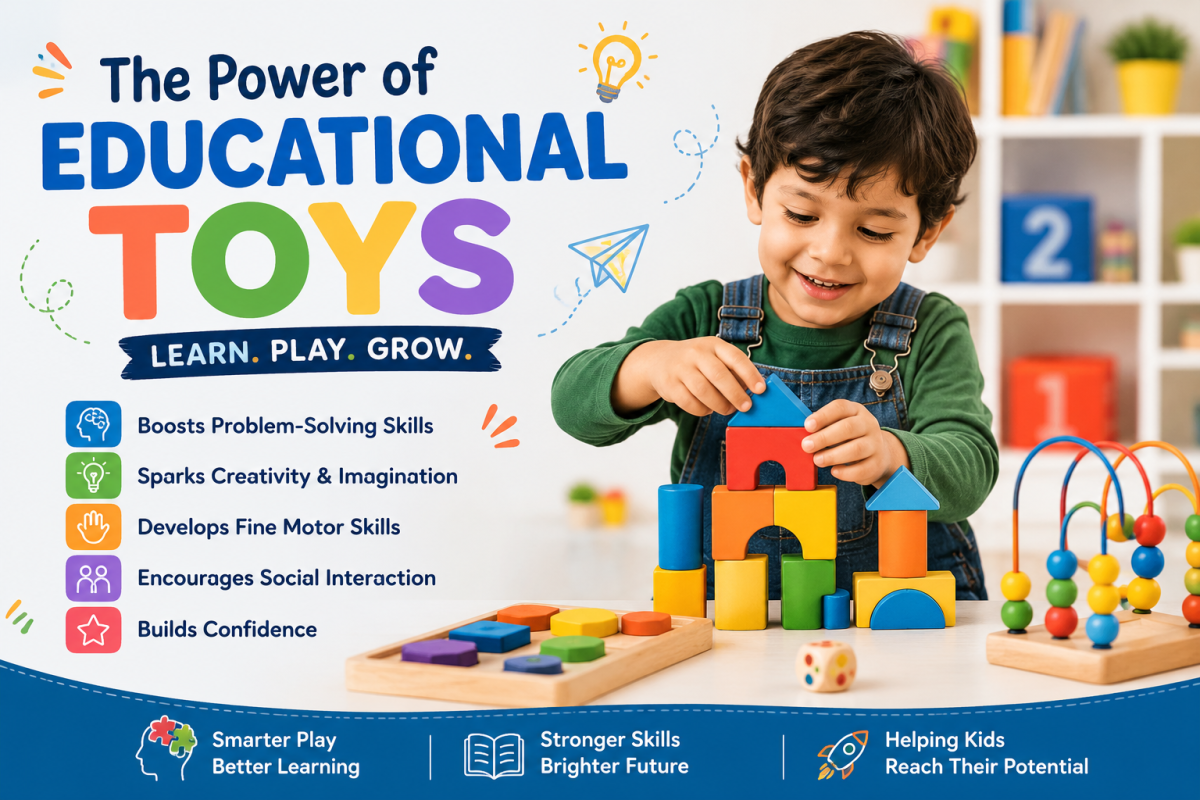
Every child learns best through play. Educational toys encourage curiosity, creativity, and problem-solving while helping children build essential skills before they begin school. By turning everyday play into meaningful learning experiences, these toys prepare children for academic success and lifelong confidence.

Play Builds the Foundation for Learning

Children naturally explore and learn through play. Educational toys provide hands-on experiences that help young minds understand the world around them. Every puzzle solved, block stacked, or game completed strengthens important developmental skills in an enjoyable way.


Improving Memory and Focus

Many educational toys challenge children to remember patterns, match objects, and complete tasks. These activities improve concentration, strengthen memory, and help children stay focused for longer periodsβ€”skills that are valuable in every classroom.


Encouraging Creative Thinking

Building sets, art supplies, and open-ended toys inspire children to use their imagination. Creative play teaches children to think independently, experiment with ideas, and develop innovative solutions to everyday challenges.


Supporting Early Language Development

Educational toys encourage children to ask questions, tell stories, and communicate during play. Letter games, picture cards, and storytelling toys help improve vocabulary, speaking skills, and early reading confidence.


Introducing Basic Math Concepts

Counting toys, sorting activities, and pattern games introduce numbers and mathematical thinking in a playful environment. Children begin recognizing quantities, sequences, and simple calculations without feeling pressured.


Strengthening Fine Motor Skills

Activities such as stacking blocks, threading beads, and connecting pieces improve hand strength, finger control, and hand-eye coordination. These skills prepare children for writing, drawing, and other classroom activities.


Building Confidence Through Achievement

Every completed puzzle or successful building project gives children a sense of accomplishment. These positive experiences increase self-confidence and encourage children to approach new challenges with enthusiasm.


Developing Social Skills Through Shared Play

Educational games often involve teamwork, communication, and cooperation. Playing with siblings, friends, or parents teaches children how to share, listen, take turns, and work together toward common goals.


Choosing Educational Toys That Grow With Your Child

Select toys that match your child\'s age and developmental stage while offering room for creativity and exploration. Building blocks, wooden puzzles, STEM kits, counting games, magnetic tiles, and learning boards provide long-lasting educational value.


Conclusion

Learning through play helps children develop the confidence, creativity, and practical skills they need for future success. Educational toys transform everyday playtime into valuable learning experiences that prepare children for school and beyond.

At ToyRoots, we believe that every toy can inspire curiosity, build knowledge, and encourage lifelong learning. The right educational toy today can shape a brighter tomorrow for every child.


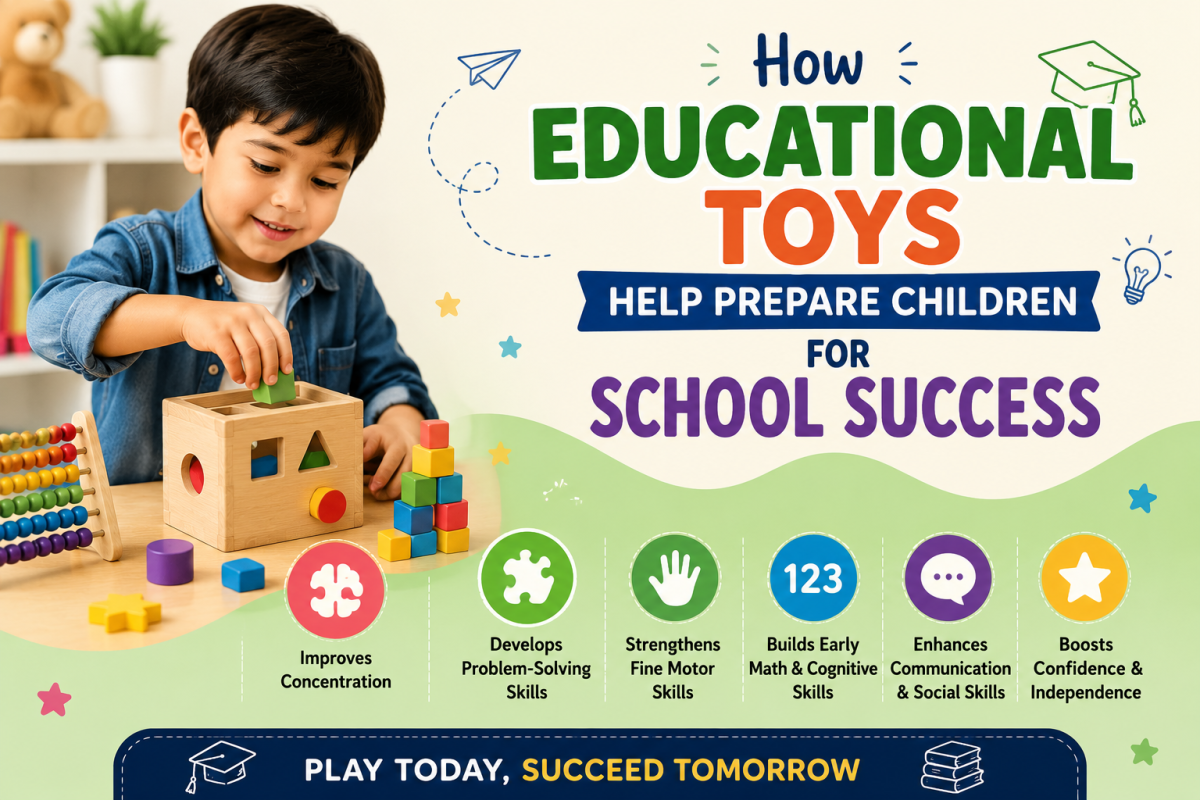
How Educational Toys Help Prepare Children for School Success

A child\'s learning journey begins long before they enter a classroom. The skills needed for school success, such as concentration, communication, problem-solving, and fine motor control, can be developed through play at home. Educational toys provide children with fun and engaging opportunities to build these essential abilities while fostering confidence and curiosity about learning.

Learning Starts Before School

Many parents think formal learning begins when children start school, but early childhood is one of the most important periods for development. During these years, children absorb information rapidly and develop foundational skills that support future learning. Educational toys help make this process enjoyable and effective.


Building Strong Concentration Skills

School requires children to focus on tasks, follow instructions, and complete activities. Educational toys such as puzzles, building sets, and sorting games encourage children to stay engaged and concentrate for longer periods. These experiences help prepare them for classroom learning.


Developing Problem-Solving Abilities

Educational toys present challenges that encourage children to think critically and find solutions. Whether they are fitting puzzle pieces together or constructing a structure, children learn how to analyze situations, make decisions, and overcome obstacles.


Strengthening Fine Motor Skills

Writing, drawing, cutting, and other classroom activities require strong hand and finger control. Toys that involve stacking, sorting, threading, and building help children develop fine motor skills and hand-eye coordination, making school tasks easier and more enjoyable.


Encouraging Early Math and Language Skills

Many educational toys introduce basic concepts such as numbers, shapes, colors, letters, and patterns. Through play, children naturally develop early literacy and numeracy skills that create a strong foundation for future academic success.


Boosting Confidence and Independence

Completing a puzzle, solving a challenge, or building something new gives children a sense of accomplishment. These positive experiences help build self-confidence and encourage children to approach new learning opportunities with enthusiasm.


Promoting Social and Communication Skills

Many educational toys encourage collaborative play between children, siblings, or parents. Through shared activities, children learn how to communicate ideas, take turns, cooperate, and express themselves effectively.


Creating a Positive Attitude Toward Learning

When learning is associated with fun and discovery, children are more likely to develop a lifelong love of learning. Educational toys help create positive experiences that make children excited about exploring new concepts and skills.


Choosing School-Ready Educational Toys

Toys such as building blocks, wooden puzzles, shape sorters, counting games, and STEM learning kits are excellent choices for preparing children for school. These toys combine entertainment with valuable learning opportunities that support overall development.


Conclusion

Educational toys play an important role in helping children develop the skills they need for school and beyond. By encouraging concentration, problem-solving, communication, and confidence, these toys help create a strong foundation for future academic success.

At ToyRoots, we believe every child deserves the opportunity to learn through play. The right educational toys can make learning enjoyable while preparing children for a bright and successful future.


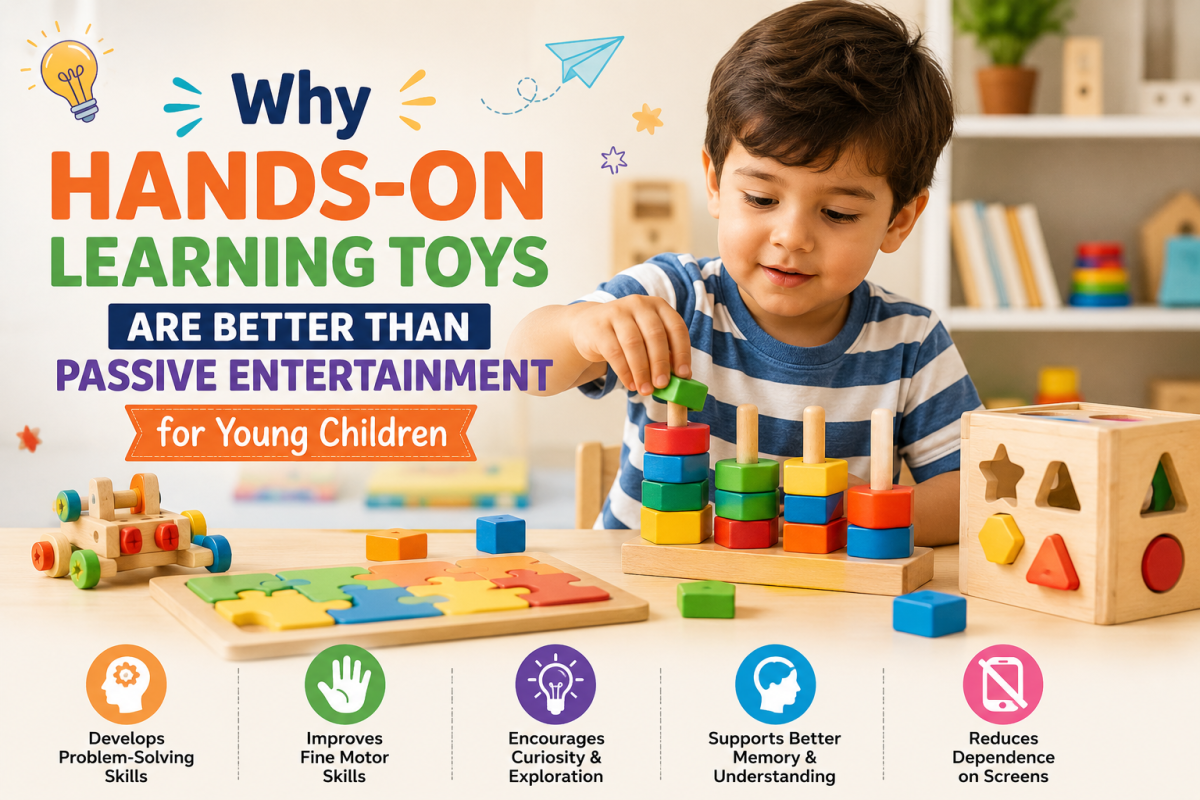
Why Hands-On Learning Toys Are Better Than Passive Entertainment for Young Children

In today\'s digital world, children are surrounded by screens and instant entertainment. While technology can offer educational benefits when used appropriately, young children learn best through active, hands-on experiences. Educational toys provide opportunities for exploration, creativity, and problem-solving that passive entertainment simply cannot match. By engaging with physical toys, children develop important cognitive, social, and motor skills while enjoying meaningful play experiences.

What Is Hands-On Learning?

Hands-on learning is an approach where children actively participate in discovering and understanding concepts through direct interaction with objects and activities. Instead of simply watching or listening, children learn by touching, building, sorting, experimenting, and exploring. Educational toys are powerful tools that support this type of learning because they encourage active engagement and curiosity.


Why Active Play Is More Effective Than Passive Entertainment

When children engage in active play, their brains are constantly processing information, making decisions, and solving problems. Passive entertainment, such as watching videos for long periods, often requires little effort or interaction. Hands-on learning toys encourage children to think independently, ask questions, and discover solutions through experience, leading to deeper understanding and stronger skill development.


Developing Strong Problem-Solving Skills

Educational toys naturally present children with challenges that require creative thinking. Whether they are assembling a puzzle, constructing a tower, or figuring out how pieces fit together, children learn to evaluate different options and find solutions. These experiences help develop critical thinking skills that benefit them throughout their educational journey.


Improving Fine Motor Skills

Many hands-on learning toys require children to grasp, stack, sort, connect, or manipulate objects. These activities strengthen the small muscles in their hands and fingers while improving hand-eye coordination. Fine motor development is essential for everyday tasks such as writing, drawing, buttoning clothes, and using classroom tools.


Encouraging Curiosity and Exploration

Children are naturally curious about the world around them. Educational toys allow them to explore new ideas, test their assumptions, and discover how things work. This process encourages a love for learning and helps children become confident explorers who are eager to gain new knowledge.


Supporting Better Memory and Understanding

Research shows that children often remember information more effectively when they learn through direct experience. When a child physically interacts with learning materials, multiple senses are involved in the learning process. This strengthens memory retention and helps children understand concepts more clearly than passive observation alone.


Reducing Dependence on Screens

Hands-on learning toys provide engaging alternatives to screen-based entertainment. When children have access to interesting educational activities, they are more likely to spend time building, creating, and exploring rather than relying solely on digital devices. This balance supports healthy development and encourages active participation in learning.


Best Toys for Hands-On Learning

Choosing toys that encourage exploration and creativity can greatly enhance a child\'s learning experience. The following toy categories are especially effective for promoting active engagement and skill development.


Building and Construction Sets

Construction toys help children develop engineering skills, creativity, and spatial awareness. By designing structures and experimenting with different configurations, children learn valuable lessons about balance, planning, and problem-solving.


Educational Puzzles

Puzzles encourage logical thinking, concentration, and persistence. As children work to complete a puzzle, they learn to recognize patterns, improve memory skills, and experience the satisfaction of achieving a goal through effort.


Sorting and Matching Toys

Sorting activities introduce children to colors, shapes, sizes, and classification skills. These toys strengthen cognitive development while helping young learners build a strong foundation for future math and science concepts.


STEM Learning Toys

STEM toys inspire curiosity about science, technology, engineering, and mathematics. Through experimentation and discovery, children learn how concepts work in real-world situations while developing confidence in their abilities.


How Parents Can Support Hands-On Learning

Parents can encourage hands-on learning by providing a variety of educational toys and allowing children time to explore freely. Asking open-ended questions, celebrating effort, and encouraging experimentation can help children become active learners who enjoy discovering new ideas on their own.


Long-Term Benefits of Active Learning

Children who regularly engage in hands-on learning often develop stronger problem-solving skills, greater creativity, improved concentration, and a lifelong love of learning. These benefits extend far beyond childhood and contribute to academic success, confidence, and personal growth.


Conclusion

Hands-on learning toys offer children far more than entertainment. They provide meaningful opportunities to explore, create, think critically, and develop essential life skills. By choosing educational toys that encourage active participation, parents can help children build a strong foundation for future learning and success.

At ToyRoots, we believe that every play experience should inspire curiosity, creativity, and growth. The right educational toys can transform everyday play into valuable learning adventures that support a child\'s development in fun and engaging ways.


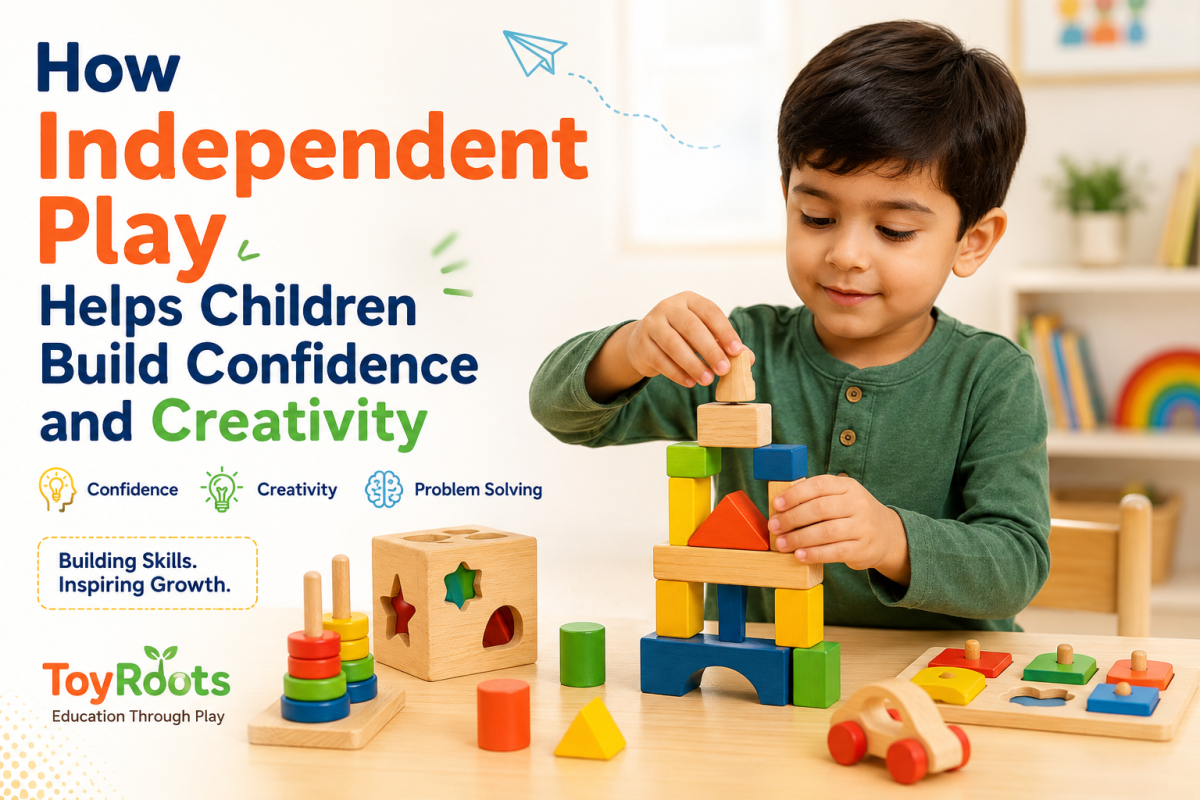
How Independent Play Helps Children Build Confidence and Creativity

As parents, we naturally want to support our children whenever they face a challenge. Whether they are building a tower, solving a puzzle, or learning how different shapes fit together, our instinct is often to step in and help. While guidance is important, children also benefit greatly from opportunities to explore and learn on their own. This is where independent play becomes one of the most valuable tools for healthy childhood development.

What Is Independent Play?

Independent play refers to the time children spend exploring, creating, and solving problems without constant direction from adults. It does not mean leaving a child unattended. Instead, it involves providing a safe environment and engaging educational toys that encourage children to discover solutions, make decisions, and use their imagination while parents remain nearby for supervision and support when needed.


Why Independent Play Matters for Child Development

Independent play is more than just a way to keep children occupied. It provides valuable opportunities for learning and growth. Through self-directed activities, children develop essential life skills that help them become more confident, creative, and resilient.


Building Confidence Through Self-Discovery

One of the greatest benefits of independent play is the confidence it builds in children. Every time a child successfully completes a puzzle, constructs a stable structure, or discovers a solution to a problem, they experience a sense of achievement. These small victories help children trust their own abilities and develop the confidence needed to tackle new challenges. Over time, this self-belief extends beyond play and positively influences their learning experiences, social interactions, and everyday activities.


Encouraging Creativity and Imagination

Independent play encourages creativity by allowing children to think freely without predetermined outcomes. Open-ended educational toys give children the freedom to invent stories, design structures, and experiment with new ideas. A simple set of building blocks can become a castle one day and a spaceship the next. This type of imaginative play stimulates creative thinking and teaches children that there are often multiple ways to approach a task or solve a problem.


Strengthening Problem-Solving Skills

As children interact with educational toys, they naturally encounter challenges that require careful thinking and experimentation. They learn to analyze situations, test different solutions, and adapt when something does not work as expected. This process helps strengthen logical reasoning and teaches perseverance, both of which are essential skills for future success.


Improving Focus and Patience

Unlike digital entertainment, which often provides instant rewards and constant stimulation, hands-on educational toys encourage children to focus on a single activity for extended periods. Whether they are assembling a puzzle, building a structure, or sorting objects, children learn the value of sustained attention and persistence. These skills contribute to better learning habits and improved concentration in school and daily life.


Independent Play as a Healthy Alternative to Screen Time

In today\'s technology-driven world, independent play offers a healthy alternative to excessive screen time. When children are engaged in meaningful, hands-on activities, they are less likely to rely on digital devices for entertainment. Educational toys capture their attention while promoting active learning, creativity, and physical interaction with their environment. This balance is important for supporting both cognitive and emotional development.


Choosing the Right Toys for Independent Play

The quality of independent play often depends on the toys available to children. Educational toys that encourage exploration and creativity are ideal because they allow children to learn through experience rather than simply following instructions.


Building Blocks

Building blocks inspire creativity, improve spatial awareness, and encourage children to experiment with different designs. They provide endless opportunities for imaginative play while developing problem-solving skills.


Wooden Puzzles

Wooden puzzles help children improve concentration, hand-eye coordination, and logical thinking. They challenge young minds while offering a rewarding sense of accomplishment upon completion.


Shape Sorters and Learning Toys

Shape sorters introduce children to basic concepts such as colors, shapes, and patterns. These toys encourage critical thinking while helping develop fine motor skills and coordination.


Construction and STEM Toys

Construction toys and STEM-based learning sets allow children to explore engineering concepts, creativity, and innovation through hands-on play. They encourage curiosity and inspire a love for learning.


How Parents Can Encourage Independent Play

Parents play an important role in helping children develop healthy independent play habits. Creating a safe and organized play environment can make children feel comfortable exploring on their own. Offering age-appropriate educational toys and allowing children time to experiment without immediate intervention helps build confidence and resilience. Rather than providing solutions right away, parents can encourage children to think through challenges and celebrate their efforts, fostering a growth mindset.


The Long-Term Benefits of Independent Play

The skills children develop through independent play often stay with them throughout life. Confidence, creativity, problem-solving abilities, patience, and self-motivation are qualities that contribute to success in education, relationships, and future careers. By encouraging independent play during childhood, parents help lay the foundation for lifelong learning and personal growth.


Conclusion

Independent play is much more than a way to keep children entertained. It is a powerful tool for developing confidence, creativity, concentration, and critical thinking skills. Through meaningful play experiences, children learn how to think independently, solve problems, and explore the world around them.

At ToyRoots, we believe that the best educational toys inspire curiosity, creativity, and lifelong learning. By encouraging independent play, parents can give their children the opportunity to grow into confident, capable, and imaginative learners while having fun every step of the way.


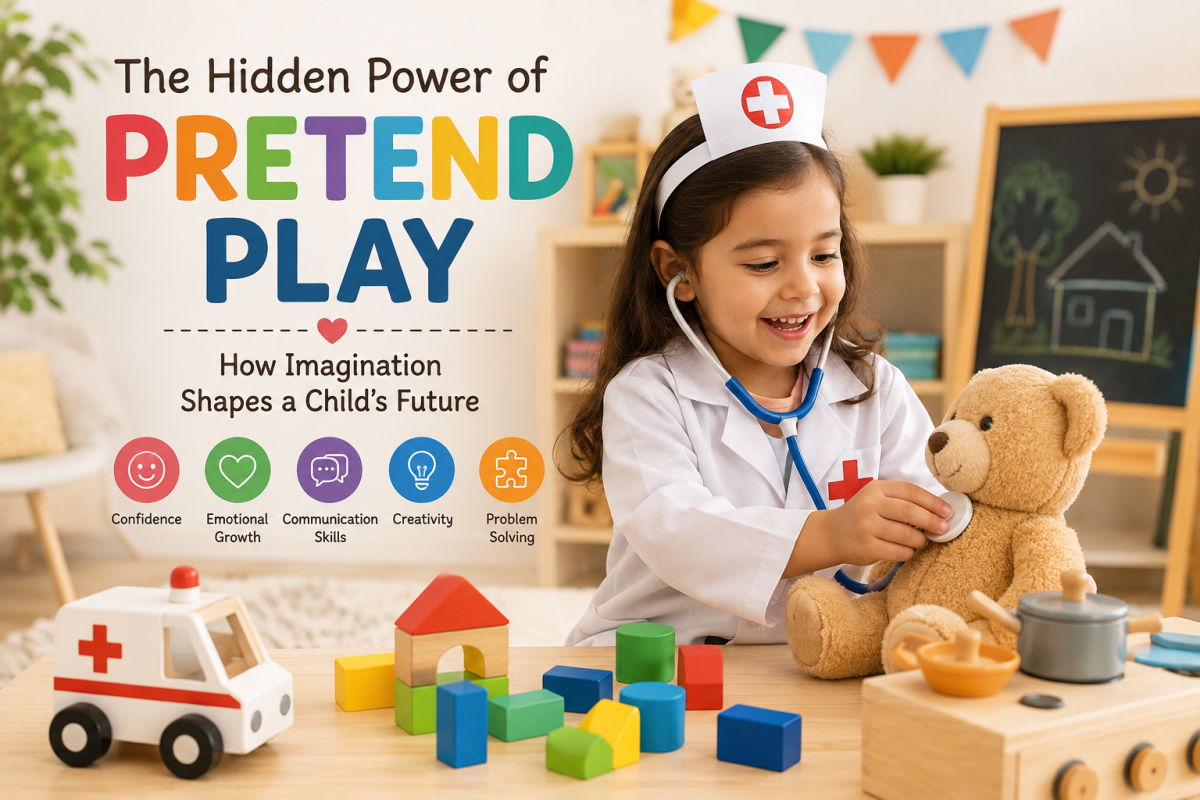
The Hidden Power of Pretend Play: How Imagination Shapes a Child’s Future

When children transform a cardboard box into a pirate ship or turn stuffed animals into classroom students, they are doing much more than simply having fun. Pretend play is one of the most valuable activities for a child\'s emotional, social, and cognitive development.

In today\'s fast-paced digital world, many parents focus on educational apps, structured learning programs, and organized activities. While these can be beneficial, imaginative play offers something unique. It allows children to explore ideas freely, create their own stories, and learn important life skills through experience rather than instruction.

What Is Pretend Play?

Pretend play, also known as imaginative play, happens when children use their creativity to invent characters, stories, and situations. A child may imagine being a doctor caring for patients, a chef preparing meals, or an astronaut exploring distant planets. Through these imaginative experiences, children develop a deeper understanding of the world around them while expressing their own thoughts and feelings.

Unlike activities with fixed rules and predetermined outcomes, pretend play gives children complete control over their adventures. This freedom encourages exploration, curiosity, and independent thinking.

Building Confidence Through Imagination

Every time a child steps into an imaginary role, they practice confidence. When they pretend to be a teacher leading a classroom or a firefighter rescuing people, they are exploring responsibilities and decision-making in a safe environment.

These imaginative experiences allow children to experiment with different identities and situations without fear of failure. As they create stories and solve imaginary challenges, they gain a stronger sense of self-belief. Over time, this confidence often carries into real-life interactions, helping children communicate more effectively and participate more actively in social settings.

Understanding Emotions Through Play

Children experience many emotions before they fully understand them. Feelings such as excitement, disappointment, nervousness, and happiness can sometimes be difficult to express with words.

Pretend play provides a natural outlet for processing these emotions. A child may recreate a recent visit to the doctor, act out their first day at school, or invent stories involving friendship and teamwork. Through these scenarios, children practice understanding different perspectives and develop empathy for others.

This emotional exploration helps children build stronger social skills and learn healthy ways to manage their feelings.

Developing Strong Communication Skills

Imaginative play encourages children to use language in meaningful and creative ways. Whether they are talking to imaginary characters, narrating a story, or interacting with friends during role-play, they are constantly practicing communication.

As children create conversations and explain situations, they expand their vocabulary and improve their ability to organize thoughts. They learn how to express ideas clearly, listen to others, and participate in collaborative storytelling. These communication skills become valuable foundations for academic success and future relationships.

Encouraging Creative Problem-Solving

Every imaginary adventure presents opportunities for problem-solving. Perhaps a pretend spaceship has lost power, a toy animal needs rescuing, or a make-believe restaurant has run out of ingredients. Children naturally create solutions to these challenges as part of their play.

This process teaches flexible thinking and creativity. Rather than relying on instructions, children learn to analyze situations and develop their own ideas. These experiences strengthen critical thinking skills that can benefit them throughout life.

Choosing Toys That Inspire Creativity

The most effective pretend-play toys are often the simplest ones. Toys that leave room for imagination encourage children to become active participants rather than passive observers.

Wooden blocks can become castles, bridges, or entire cities. Toy animals can inspire exciting adventures in jungles and forests. A play kitchen can transform into a busy restaurant, while a doctor kit can become the setting for caring and compassionate role-play. Because these toys do not dictate a single way to play, they encourage endless possibilities and repeated engagement.

Creating an Imagination-Friendly Environment

Supporting pretend play does not require expensive equipment or large play areas. A child\'s imagination thrives when given time, freedom, and simple resources.

Parents can encourage imaginative thinking by providing open-ended toys, reading storybooks together, and allowing unstructured playtime each day. Even ordinary household items such as blankets, cardboard boxes, and kitchen utensils can become valuable tools for creative exploration.

Most importantly, children benefit when adults appreciate and encourage their imaginative ideas. Showing interest in their stories and joining their adventures occasionally can make pretend play even more meaningful.

Final Thoughts

Pretend play may appear simple, but its impact on child development is remarkable. Through imaginative adventures, children build confidence, strengthen communication skills, develop emotional intelligence, and learn creative problem-solving.

In a world where many activities are carefully structured, pretend play offers children the freedom to explore, create, and discover. The stories they invent today help shape the skills, confidence, and creativity they will carry into the future.

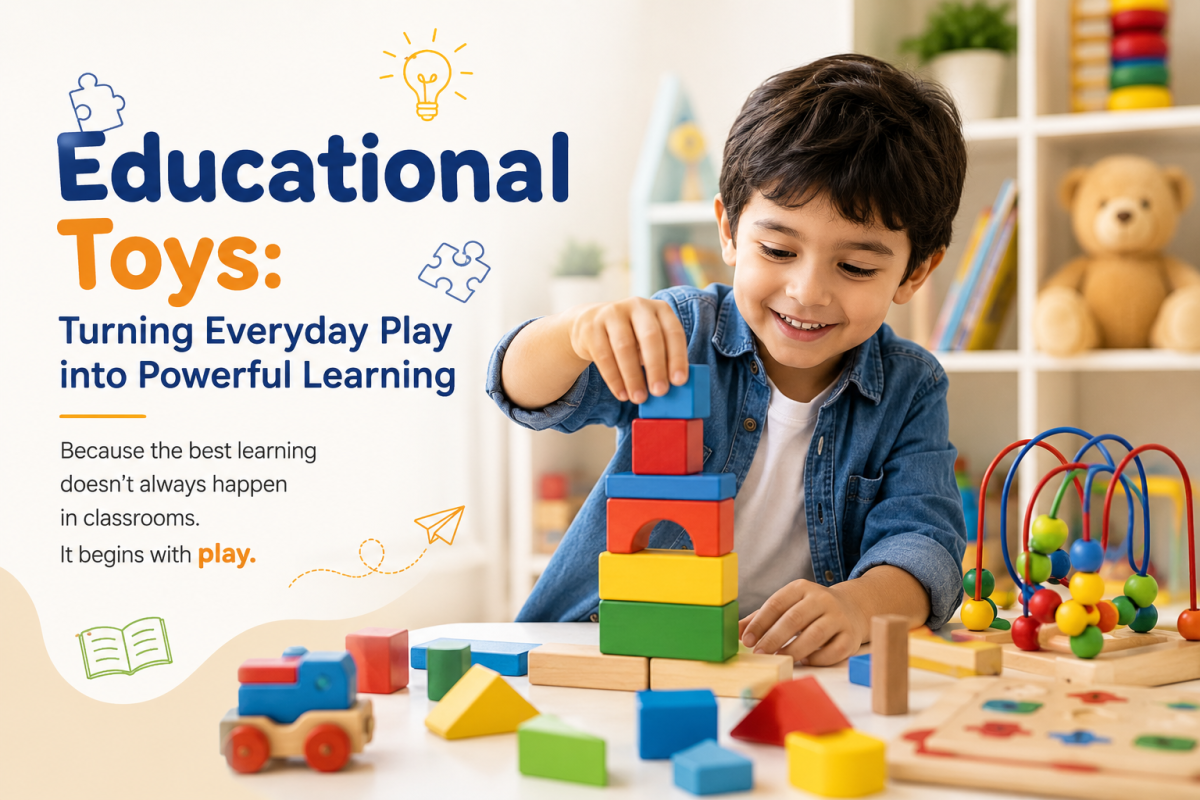
🧸 Educational Toys: Turning Everyday Play into Powerful Learning

In today’s fast-moving world, children are exposed to learning in many different forms, but the most natural and effective learning still happens through play. Long before formal education begins, children explore, observe, and understand the world through toys. This is where educational toys make a real difference. They are not just designed for entertainment but are carefully created to support a child’s mental, emotional, and physical development. By turning playtime into a meaningful experience, educational toys help children learn important life skills without even realizing it.

🧠 When Play Becomes Learning Without Even Trying

A child sitting quietly with a toy is not just playingβ€”they are exploring how the world works in their own way. There is no pressure, no instruction, and no fixed path. Yet, in that simple moment, learning is happening naturally. This is the beauty of educational toys. They turn everyday play into silent learning experiences that shape how a child thinks, reacts, and understands.


🎯 Thinking Starts With Simple Play

When a child picks up a puzzle piece or stacks a block, something interesting happens inside their mind. They are not just completing a taskβ€”they are trying to understand patterns, balance, and possibilities. There is curiosity in every move, and that curiosity quietly builds thinking skills that will stay with them for life.

The best part is that children do not feel like they are learning. To them, it is just fun. But behind that fun, their brain is working, adjusting, and growing in ways that traditional learning often cannot match.


🎨 Every Toy Opens a New Imagination Door

Give a child a simple set of blocks, and you will never see the same creation twice. One day it becomes a castle, the next day a spaceship, and sometimes something only they can explain. That is imagination at workβ€”unlimited and free.

Educational toys do not tell children what to build. Instead, they give them space to decide. This freedom helps children develop confidence in their ideas and teaches them that there can be many answers to one problem.


πŸ”§ Falling Down Is Part of Figuring Out

Not everything works on the first try. Towers fall. Pieces don’t fit. Things break apart. But instead of disappointment, something important is happeningβ€”learning through experience.

Each mistake encourages another attempt. And each attempt makes the child a little more patient, a little more focused, and a little more determined. Over time, they start seeing mistakes not as failure, but as part of the process.


πŸ‘¨β€πŸ‘©β€πŸ‘§ Moments That Bring Families Closer

Educational toys are not just for childrenβ€”they often bring parents into the experience too. A parent sitting beside a child, asking questions or simply watching them build something, creates a different kind of learning environment.

These moments become conversations, laughter, and shared discovery. Without realizing it, both parent and child are connected through something simple but meaningfulβ€”play.


🌍 Final Thought: Learning That Doesn’t Feel Like Learning

The most powerful learning does not always come from books or classrooms. Sometimes it happens on the floor, with toys, imagination, and curiosity leading the way.

Educational toys remind us of something simple but important: when children are free to explore, experiment, and imagine, they are not just playingβ€”they are building the foundation of how they will think for the rest of their lives.

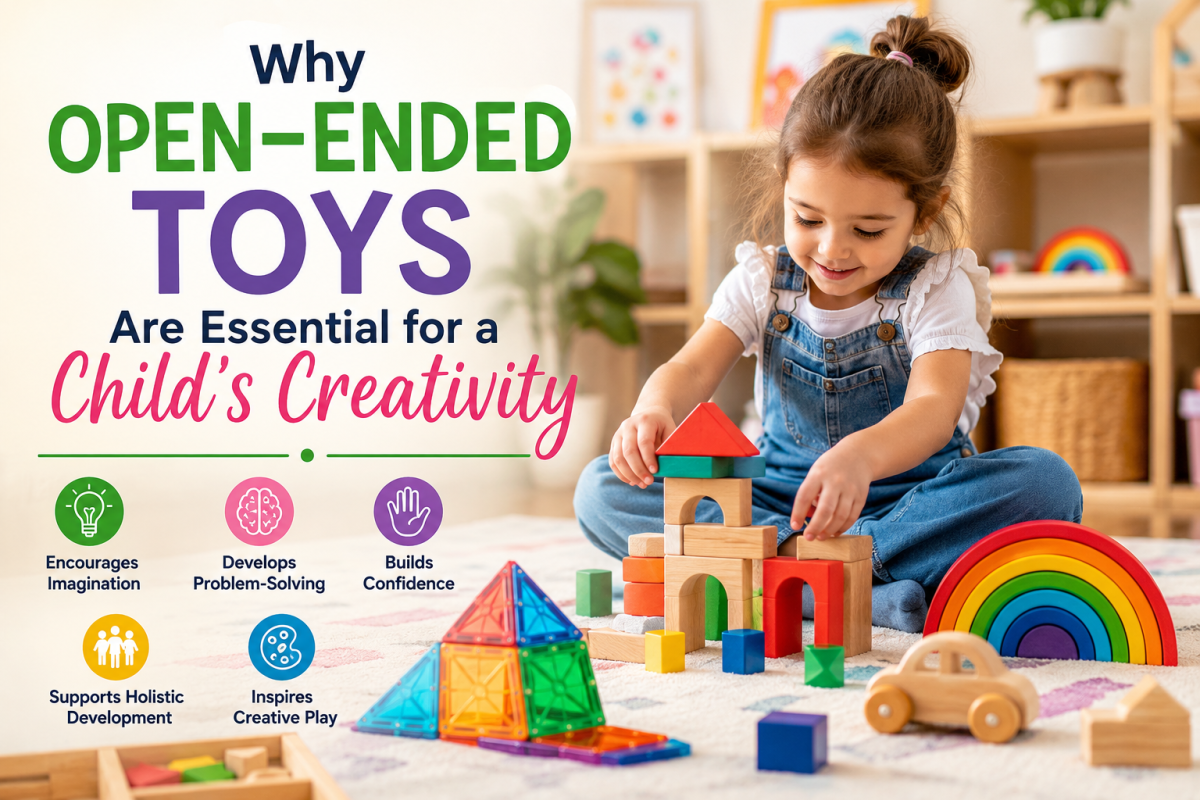
Why Open-Ended Toys Are Essential for a Child’s Creativity

Children are naturally curious and imaginative. They love exploring new ideas, creating stories, and finding unique ways to interact with the world around them. While many toys provide entertainment, open-ended toys offer something even more valuableβ€”they encourage creativity, independent thinking, and limitless learning opportunities.
```html

🧸 What Are Open-Ended Toys?

Open-ended toys are toys that can be used in many different ways without a specific set of instructions or a single correct outcome. Unlike toys that perform a fixed function, open-ended toys allow children to decide how they want to play.

Examples of open-ended toys include:

  • 🧱 Building blocks
  • πŸ”· Magnetic tiles
  • πŸͺ΅ Wooden construction sets
  • 🎭 Play silks and scarves
  • 🧸 Pretend play accessories
  • 🎨 Art and craft materials

Because there are no strict rules, children are free to use their imagination and create their own play experiences.


🎨 How Open-Ended Toys Encourage Creativity

🎭 Inspiring Imaginative Play

A simple set of blocks can become a castle, a spaceship, a bridge, or an entire city. Open-ended toys encourage children to imagine new possibilities and transform ordinary objects into something extraordinary.

This type of imaginative play helps children develop creative thinking skills that can benefit them throughout their lives.

πŸš€ Allowing Children to Take the Lead

With open-ended toys, children become the creators of their own play experiences. They make decisions, solve problems, and explore ideas without relying on instructions.

This freedom helps children develop confidence in their own abilities and encourages independent learning.

πŸ”„ Supporting Multiple Solutions

Many traditional toys have one intended use, but open-ended toys can be used in countless ways. There is no single right answer, which teaches children that problems can often have multiple solutions.

This flexible thinking helps children become more adaptable and innovative when facing challenges.

🧩 Encouraging Experimentation

Creativity often develops through trial and error. Open-ended toys provide opportunities for children to test ideas, make changes, and try again.

Whether a tower falls over or a design doesn\'t work as planned, children learn valuable lessons about persistence and problem-solving.

πŸ’‘ Did You Know?

Children often learn more from experimenting and making mistakes than from being given the correct answer immediately.


🌟 Additional Developmental Benefits

Beyond creativity, open-ended toys support many important areas of child development, including:

  • βœ”οΈ Problem-solving skills
  • βœ”οΈ Fine motor development
  • βœ”οΈ Communication skills
  • βœ”οΈ Social interaction
  • βœ”οΈ Emotional expression
  • βœ”οΈ Critical thinking

These toys grow with children, offering new challenges and learning opportunities at different stages of development.


βœ… Choosing the Right Open-Ended Toys

When selecting open-ended toys, look for products that:

  • ✨ Encourage imagination
  • ✨ Can be used in multiple ways
  • ✨ Are age-appropriate
  • ✨ Promote active participation
  • ✨ Support independent exploration

Simple toys often provide the greatest opportunities for creative play because they leave room for a child\'s imagination to take over.


πŸ‘¨β€πŸ‘©β€πŸ‘§ How Parents Can Encourage Creative Play

Parents can support creativity by providing a variety of open-ended materials and allowing children plenty of time for unstructured play.

πŸ’­ Try Asking:

❓ What are you building?

❓ What could you make next?

❓ How else could you use these pieces?

These questions encourage children to think more deeply and expand their ideas.


πŸ’‘ Final Thoughts

Creativity is one of the most valuable skills a child can develop, and open-ended toys provide the perfect environment for creative growth. By allowing children to imagine, experiment, and explore without limits, these toys help build confidence, problem-solving abilities, and a lifelong love of learning.

At ToyRoots, we believe that the best toys are the ones that inspire children to create their own adventures, discover new possibilities, and learn through play every day.

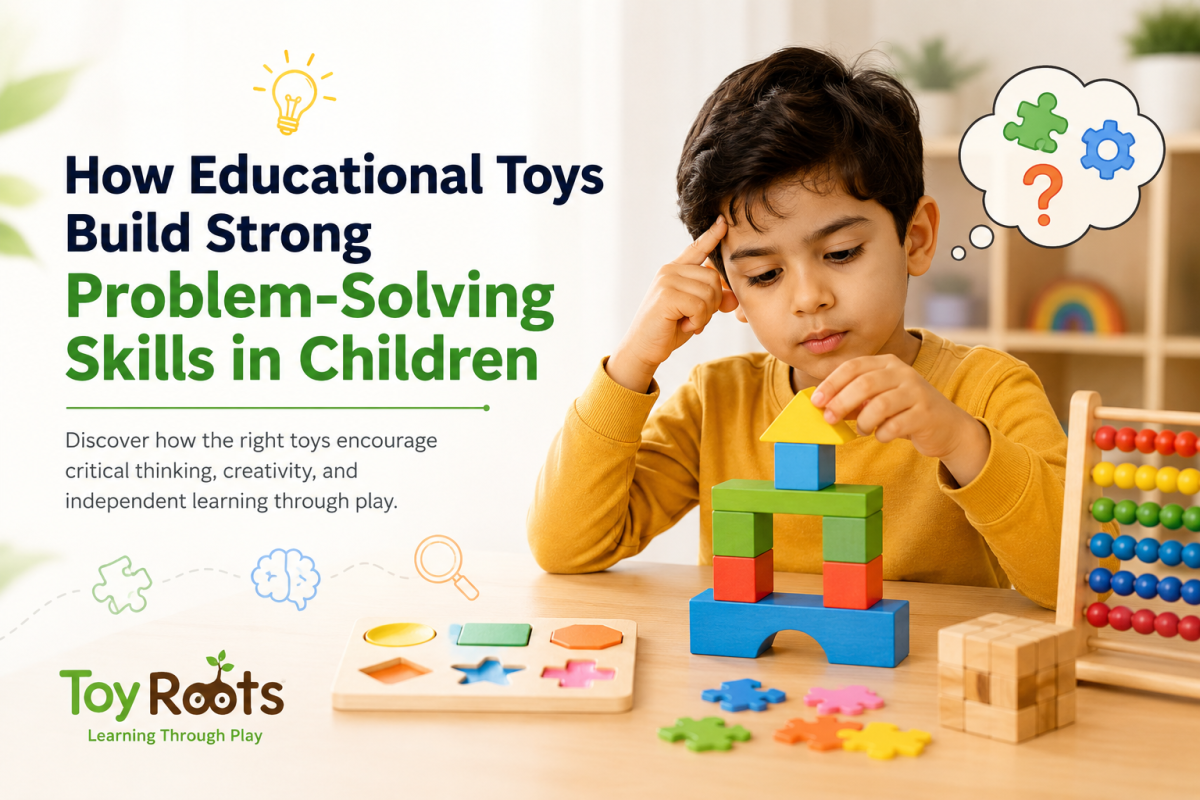
How Educational Toys Improve Problem-Solving Skills in Children

As parents, we all want our children to grow into confident, independent thinkers who can handle challenges and make smart decisions. While schools play an important role in developing these abilities, some of the most valuable learning happens during playtime. Educational toys are more than just a source of entertainment. They encourage children to think, experiment, and find solutions on their own. Every time a child solves a puzzle, builds a structure, or completes a challenge, they are strengthening problem-solving skills that will benefit them throughout their lives.

What Are Problem-Solving Skills?

Problem-solving skills are the abilities that help children identify challenges, think critically about possible solutions, and make decisions based on their experiences. These skills play an important role in a child\'s overall development because they encourage independent thinking and help children navigate everyday situations with confidence.

As children develop strong problem-solving abilities, they become better at handling challenges, making decisions, thinking creatively, and adapting to new situations. These skills not only support academic success but also prepare children for real-world experiences throughout their lives.


Why Problem-Solving Matters in Early Childhood

During early childhood, children are constantly encountering new situations that require them to think and act independently. Whether a tower of blocks falls over, a puzzle piece doesn\'t fit, or a toy car gets stuck under furniture, each situation presents an opportunity to learn.

While these challenges may seem small to adults, they are valuable learning experiences for young children. Every time a child works through a problem, they learn how to analyze situations, test different solutions, and understand the results of their actions.

When children are encouraged to solve problems on their own, they gain confidence in their abilities and develop a growth mindset that motivates them to keep learning and exploring.


How Educational Toys Develop Problem-Solving Skills

🧩 Encouraging Critical Thinking

Educational toys naturally encourage children to think beyond simple play. Activities such as matching shapes, sorting colors, completing puzzles, or building structures require observation, comparison, and decision-making. As children interact with these toys, they begin to understand relationships between objects and learn how their choices affect outcomes.

πŸ”„ Teaching Through Trial and Error

One of the most effective ways children learn is through experimentation. Educational toys provide a safe environment where children can try different approaches without fear of failure. If a puzzle piece doesn\'t fit or a building collapses, children are encouraged to try again. Through this process, they learn that mistakes are not failures but valuable opportunities to learn and improve.

⏳ Building Patience and Persistence

Many educational toys require concentration and repeated effort before a child reaches a solution. Completing a challenging puzzle or constructing a stable tower may take several attempts. These experiences teach children patience and persistence, helping them understand that success often comes through practice and determination.

🧠 Strengthening Logical Thinking

STEM toys and Montessori-inspired learning materials are particularly effective at developing logical thinking skills. These toys encourage children to recognize patterns, predict outcomes, and follow sequences. As they engage with these activities, children learn to approach challenges in a structured and organized way.

πŸ’‘ Inspiring Creative Solutions

Open-ended educational toys such as building blocks, magnetic tiles, and construction sets allow children to explore multiple solutions to a single challenge. Since there is often no single \"correct\" answer, children learn to think creatively, experiment with new ideas, and develop flexible problem-solving strategies.


Best Educational Toys for Problem-Solving Development

Wooden Puzzles: Wooden puzzles are excellent tools for developing problem-solving skills because they encourage children to analyze shapes, identify patterns, and think critically about how pieces fit together.

Shape Sorters: Shape sorters are ideal for younger children and help introduce basic problem-solving concepts through hands-on exploration.

Building Blocks: Building blocks provide endless opportunities for creative problem-solving and imaginative play.

Logic Games: Logic games encourage strategic thinking, planning, and decision-making while keeping children engaged.

STEM Construction Toys: STEM construction toys introduce children to engineering and design concepts while strengthening analytical thinking.


How Parents Can Support Problem-Solving Through Play

Parents play an important role in helping children develop strong problem-solving skills. Instead of immediately providing answers, encourage children to think independently and explore possible solutions on their own.

Try asking:

\"What do you think will happen if you try this?\"

\"Can you think of another way to solve the problem?\"

\"Why do you think that happened?\"

By providing encouragement rather than solutions, parents help children become more independent, resilient, and willing to tackle challenges on their own.


The Long-Term Benefits of Problem-Solving Skills

Children who develop strong problem-solving skills at an early age are often better prepared for future academic and personal challenges. They tend to approach difficult situations with confidence, think creatively when faced with obstacles, and remain persistent when solutions are not immediately obvious.

These abilities support success not only in school but also in everyday life, helping children become adaptable, resourceful, and confident individuals.


Final Thoughts

Every challenge a child encounters during play is an opportunity to learn and grow. Educational toys create engaging experiences that encourage children to think critically, experiment with solutions, and develop essential life skills.

From puzzles and shape sorters to STEM kits and building blocks, the right educational toys can transform ordinary playtime into meaningful learning opportunities. By nurturing problem-solving skills from an early age, parents can help children build the confidence and resilience they need for lifelong success.

At ToyRoots, we believe that the best educational toys do more than entertainβ€”they inspire curiosity, creativity, and independent thinking that lasts a lifetime.

Why Educational Toys Are Important for Children’s Development

In today\'s fast-paced digital world, parents are constantly looking for ways to support their children\'s learning while keeping them engaged and entertained. Educational toys offer the perfect balance between fun and learning, helping children develop essential skills that will benefit them throughout their lives.

What Are Educational Toys?

Educational toys are specially designed to encourage learning through play. These toys help children develop cognitive, motor, social, emotional, and problem-solving skills while enjoying themselves. From building blocks and puzzles to science kits and language games, educational toys make learning an exciting experience.


Benefits of Educational Toys

1. Enhance Problem-Solving Skills

Many educational toys challenge children to think critically and find solutions. Puzzles, construction sets, and strategy games encourage kids to analyze situations, make decisions, and solve problems independently.

2. Improve Creativity and Imagination

Creative toys such as building blocks, art supplies, and pretend-play sets allow children to explore their imagination. They can create stories, design structures, and express their ideas in unique ways.

3. Develop Fine Motor Skills

Toys that require grasping, stacking, sorting, or assembling help improve hand-eye coordination and fine motor skills. These abilities are important for writing, drawing, and everyday activities.

4. Encourage Social Interaction

Many educational toys are designed for group play, helping children learn cooperation, communication, and teamwork. Playing with others teaches valuable social skills that contribute to healthy relationships.

5. Build Confidence

When children successfully complete a puzzle, build a model, or learn a new concept through play, they gain confidence in their abilities. This positive reinforcement motivates them to continue learning.

Choosing the Right Educational Toy

When selecting educational toys, consider the child\'s age, interests, and developmental stage. The best toys are those that challenge children without causing frustration. Look for toys that encourage exploration, creativity, and active participation.

Pro Tip: Choose toys that match your child\'s current abilities while offering a slight challenge to encourage growth and learning.

Learning Through Play

Research has shown that children learn best when they are actively engaged. Educational toys transform learning into a fun and enjoyable activity, helping children absorb new information naturally. Whether they are learning numbers, letters, science concepts, or problem-solving techniques, play-based learning creates lasting educational experiences.

Final Thoughts

Educational toys are more than just entertainment. They are valuable tools that support children\'s growth, creativity, and learning. By providing children with high-quality educational toys, parents can help build a strong foundation for future success while making learning enjoyable every day.

Explore our collection of educational toys and discover exciting ways to inspire learning through play.

How Educational Toys Help Children Learn While Having Fun

🌟 Play is one of the most important parts of childhood. Through play, children explore the world, develop new skills, and build confidence. Educational toys take playtime a step further by combining fun with learning, helping children grow while they enjoy every moment.

Educational toys are specially designed to support a child\'s development through interactive play. They encourage children to think, create, solve problems, and discover new concepts in a fun and engaging way.

Popular examples include puzzles, building blocks, STEM kits, Montessori toys, shape sorters, and educational games that keep children actively involved in learning.

πŸ’‘ Did You Know?
Children who regularly engage in educational play often develop stronger critical-thinking, creativity, and problem-solving skills.

Children learn best when they are actively engaged. Educational toys provide hands-on experiences that help improve cognitive abilities, creativity, communication, and motor skills while keeping children entertained.

✨ Benefits of Educational Toys

  • 🎨 Boost Creativity – Encourages imagination and innovative thinking.
  • 🧠 Improve Problem-Solving – Helps children think critically and make decisions.
  • ✍️ Develop Motor Skills – Strengthens hand-eye coordination and control.
  • πŸ“š Support Early Learning – Introduces numbers, letters, shapes, and colors.
  • πŸ’ͺ Build Confidence – Gives children a sense of achievement through learning.
  • πŸ“΅ Reduce Screen Time – Provides a healthy alternative to digital devices.

The best learning experiences happen when children are having fun. Educational toys allow children to explore, experiment, and discover at their own pace, making learning natural, enjoyable, and memorable.

Whether building a tower, solving a puzzle, or completing a science activity, every moment of play becomes an opportunity to learn something new.

πŸ† Why Parents Choose ToyRoots

At ToyRoots, we carefully select educational toys that inspire curiosity, creativity, and confidence. Our collection is designed to help children develop essential skills while enjoying meaningful and engaging play experiences.

🎁 Give Your Child the Joy of Learning

Discover educational toys that make learning fun, engaging, and rewarding every day.

```