
No products in the cart.
Parenting Tips, ToyRoots Life
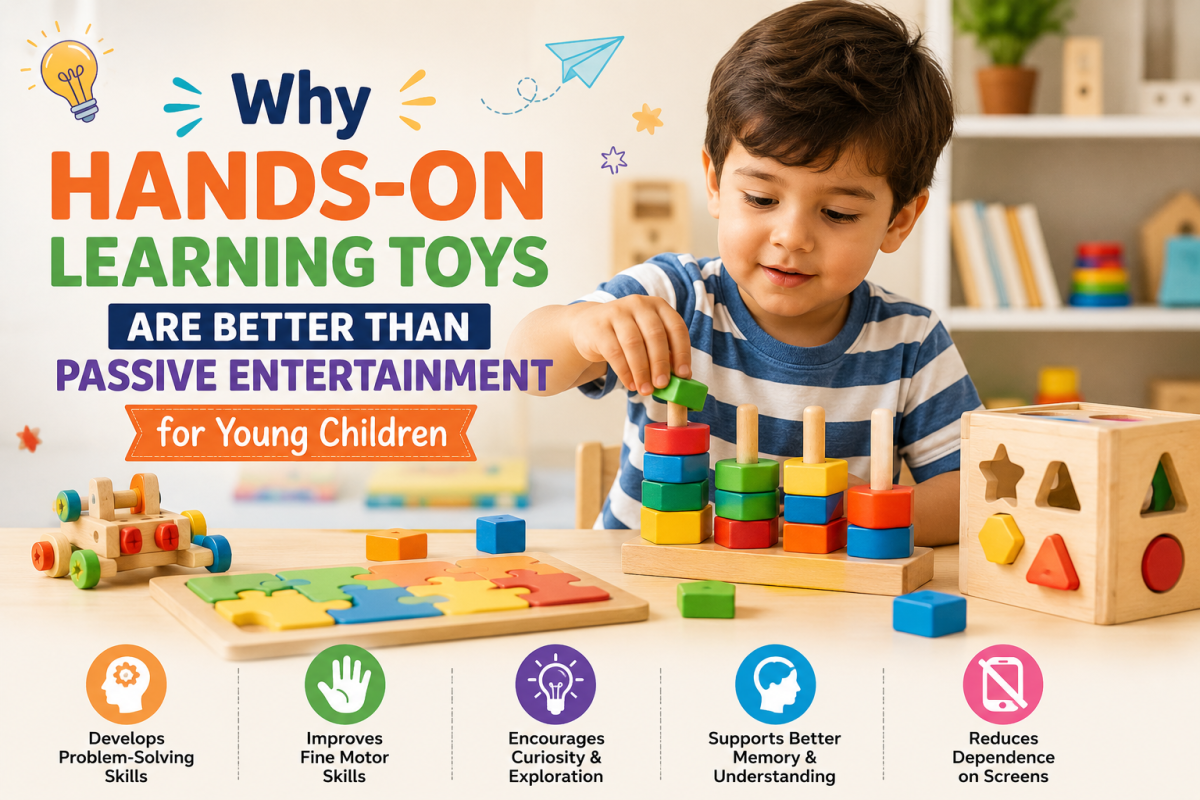
Why Hands-On Learning Toys Are Better Than Passive Entertainment for Young Children
In today\’s digital world, children are surrounded by screens and instant entertainment. While technology can offer educational benefits when used appropriately, young children learn best through active, hands-on experiences. Educational toys provide opportunities for exploration, creativity, and problem-solving that passive entertainment simply cannot match. By engaging with physical toys, children develop important cognitive, social, and motor skills while enjoying meaningful play experiences.
What Is Hands-On Learning?
Hands-on learning is an approach where children actively participate in discovering and understanding concepts through direct interaction with objects and activities. Instead of simply watching or listening, children learn by touching, building, sorting, experimenting, and exploring. Educational toys are powerful tools that support this type of learning because they encourage active engagement and curiosity.
Why Active Play Is More Effective Than Passive Entertainment
When children engage in active play, their brains are constantly processing information, making decisions, and solving problems. Passive entertainment, such as watching videos for long periods, often requires little effort or interaction. Hands-on learning toys encourage children to think independently, ask questions, and discover solutions through experience, leading to deeper understanding and stronger skill development.
Developing Strong Problem-Solving Skills
Educational toys naturally present children with challenges that require creative thinking. Whether they are assembling a puzzle, constructing a tower, or figuring out how pieces fit together, children learn to evaluate different options and find solutions. These experiences help develop critical thinking skills that benefit them throughout their educational journey.
Improving Fine Motor Skills
Many hands-on learning toys require children to grasp, stack, sort, connect, or manipulate objects. These activities strengthen the small muscles in their hands and fingers while improving hand-eye coordination. Fine motor development is essential for everyday tasks such as writing, drawing, buttoning clothes, and using classroom tools.
Encouraging Curiosity and Exploration
Children are naturally curious about the world around them. Educational toys allow them to explore new ideas, test their assumptions, and discover how things work. This process encourages a love for learning and helps children become confident explorers who are eager to gain new knowledge.
Supporting Better Memory and Understanding
Research shows that children often remember information more effectively when they learn through direct experience. When a child physically interacts with learning materials, multiple senses are involved in the learning process. This strengthens memory retention and helps children understand concepts more clearly than passive observation alone.
Reducing Dependence on Screens
Hands-on learning toys provide engaging alternatives to screen-based entertainment. When children have access to interesting educational activities, they are more likely to spend time building, creating, and exploring rather than relying solely on digital devices. This balance supports healthy development and encourages active participation in learning.
Best Toys for Hands-On Learning
Choosing toys that encourage exploration and creativity can greatly enhance a child\’s learning experience. The following toy categories are especially effective for promoting active engagement and skill development.
Building and Construction Sets
Construction toys help children develop engineering skills, creativity, and spatial awareness. By designing structures and experimenting with different configurations, children learn valuable lessons about balance, planning, and problem-solving.
Educational Puzzles
Puzzles encourage logical thinking, concentration, and persistence. As children work to complete a puzzle, they learn to recognize patterns, improve memory skills, and experience the satisfaction of achieving a goal through effort.
Sorting and Matching Toys
Sorting activities introduce children to colors, shapes, sizes, and classification skills. These toys strengthen cognitive development while helping young learners build a strong foundation for future math and science concepts.
STEM Learning Toys
STEM toys inspire curiosity about science, technology, engineering, and mathematics. Through experimentation and discovery, children learn how concepts work in real-world situations while developing confidence in their abilities.
How Parents Can Support Hands-On Learning
Parents can encourage hands-on learning by providing a variety of educational toys and allowing children time to explore freely. Asking open-ended questions, celebrating effort, and encouraging experimentation can help children become active learners who enjoy discovering new ideas on their own.
Long-Term Benefits of Active Learning
Children who regularly engage in hands-on learning often develop stronger problem-solving skills, greater creativity, improved concentration, and a lifelong love of learning. These benefits extend far beyond childhood and contribute to academic success, confidence, and personal growth.
Conclusion
Hands-on learning toys offer children far more than entertainment. They provide meaningful opportunities to explore, create, think critically, and develop essential life skills. By choosing educational toys that encourage active participation, parents can help children build a strong foundation for future learning and success.
At ToyRoots, we believe that every play experience should inspire curiosity, creativity, and growth. The right educational toys can transform everyday play into valuable learning adventures that support a child\’s development in fun and engaging ways.
Related reading
All in Parenting Tips →
Eidi Gift Ideas for Kids in Pakistan: Thoughtful Gifts Beyond Cash
Eid is a time for family gatherings, delicious food, new clothes, and the excitement of receiving Eidi. For children, opening an envelope…
How to Clean and Maintain Kids’ Toys: A Parent’s Guide for Pakistan
Children touch their toys throughout the day. They carry them around the house, play with them on the floor, take them outside,…
How to Choose Wooden Toys for Kids in Pakistan: A Parent’s Guide
Choosing a toy for your child is about more than finding something colourful or entertaining. You want something they will enjoy, use…
