
No products in the cart.
Parenting Tips
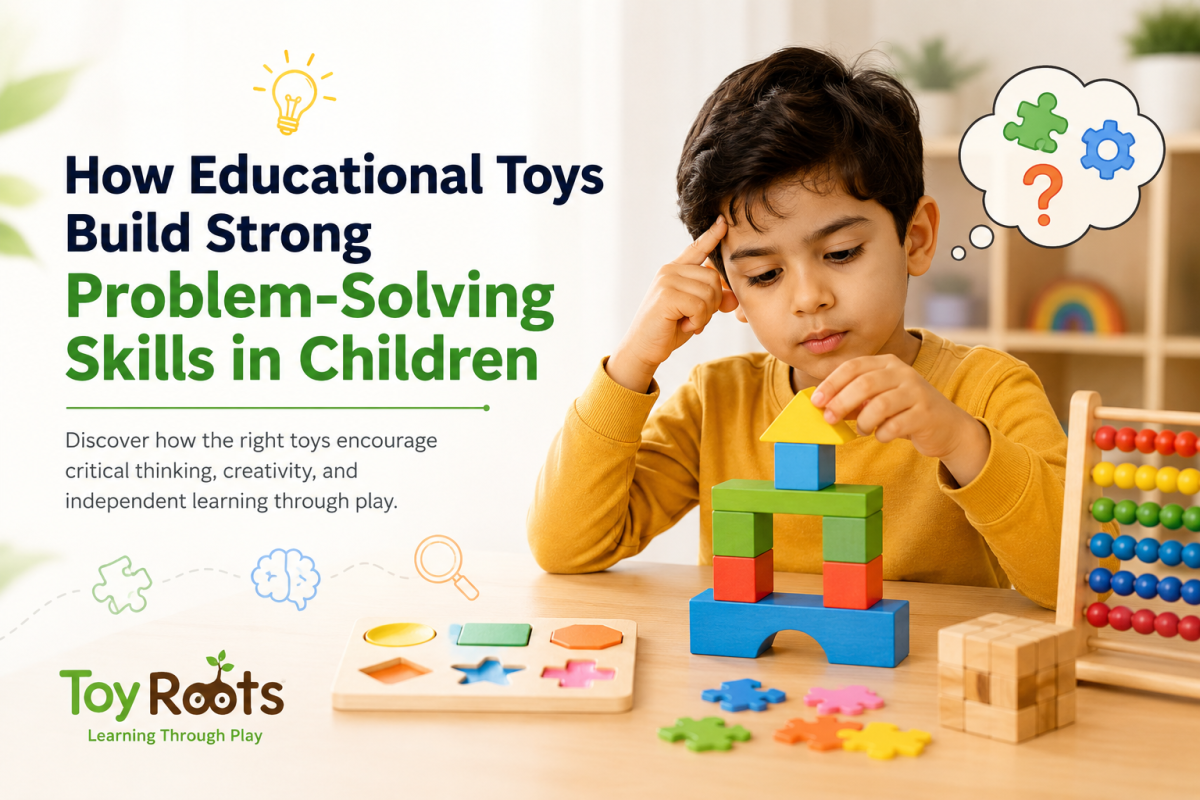
How Educational Toys Improve Problem-Solving Skills in Children
As parents, we all want our children to grow into confident, independent thinkers who can handle challenges and make smart decisions. While schools play an important role in developing these abilities, some of the most valuable learning happens during playtime.Educational toys are more than just a source of entertainment. They encourage children to think, experiment, and find solutions on their own. Every time a child solves a puzzle, builds a structure, or completes a challenge, they are strengthening problem-solving skills that will benefit them throughout their lives.
What Are Problem-Solving Skills?
Problem-solving skills help children identify challenges, think critically, and choose the best solutions. These skills encourage independent thinking and help children confidently handle everyday situations.
As children strengthen these abilities, they become more creative, adaptable, and confident in both learning and daily life.
Did You Know?
Problem-solving skills improve confidence, creativity, decision-making, and resilience from an early age.
Why Problem-Solving Matters in Early Childhood
Young children face small challenges every day, from completing puzzles to stacking blocks. Each challenge helps them observe, experiment, and discover new ways to solve problems.
When children solve problems independently, they build patience, confidence, and a lifelong love of learning.
How Educational Toys Develop Problem-Solving Skills
🧩 Encouraging Critical Thinking
Matching games, puzzles, and sorting activities help children compare, observe, and make thoughtful decisions.
🔄 Learning Through Trial and Error
Educational toys allow children to experiment safely and discover that mistakes are opportunities to learn.
⏳ Building Patience and Persistence
Completing puzzles or building structures teaches children perseverance and determination.
🧠 Strengthening Logical Thinking
STEM toys help children recognize patterns, predict outcomes, and solve challenges step by step.
💡 Inspiring Creative Solutions
Open-ended toys encourage children to explore different ideas and develop creative thinking skills.
Best Educational Toys for Problem-Solving
Develop logical thinking and pattern recognition.
Teach matching and reasoning skills.
Encourage creativity and planning.
🎯 Logic Games
Promote strategic thinking and decision-making.
⚙ STEM Construction Toys
Introduce engineering concepts while building analytical thinking.
How Parents Can Support Problem-Solving
Encourage children to think independently instead of immediately providing answers.
Try asking:
- What do you think will happen if you try this?
- Can you think of another solution?
- Why do you think that happened?
Final Thoughts
Every challenge during play is an opportunity to learn. Educational toys help children develop creativity, confidence, patience, and problem-solving skills that support lifelong success. https://toyroots.com/product-category/educational-puzzles-for-kids/
Related reading
All in Parenting Tips →
Best Fine Motor Skills Toys for Kids in Pakistan: An Age-by-Age Guide
Short answer Match the toy to what your child’s hands can already do. At 1, that means large-piece puzzles, stacking toys and…
Best Toys for 6–8 Year Olds in Pakistan: A Practical Guide for Parents
Short answer By 6–8 children can follow rules and multi-step instructions, so the strongest choices are construction sets, logic puzzles, STEM kits,…
How to Choose STEM Toys for Kids in Pakistan: A Parent’s Guide by Age, Skill & Budget
Short answer Start with what your child is already drawn to — building, puzzles, or taking things apart — then match the…
