No products in the cart.
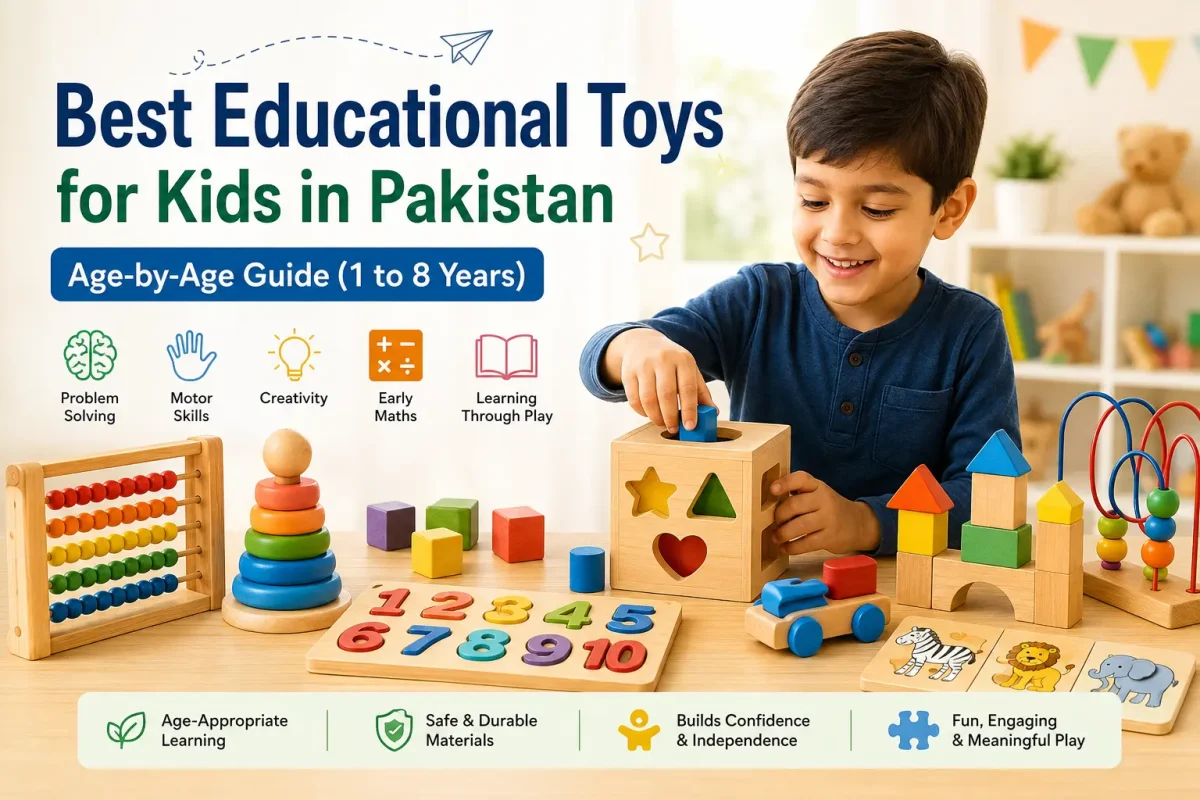
Choosing the right toy for your child is about much more than keeping them busy. The right educational toy can encourage curiosity, creativity, problem-solving, coordination, concentration, and independent play.
But with so many toys available, parents often ask:
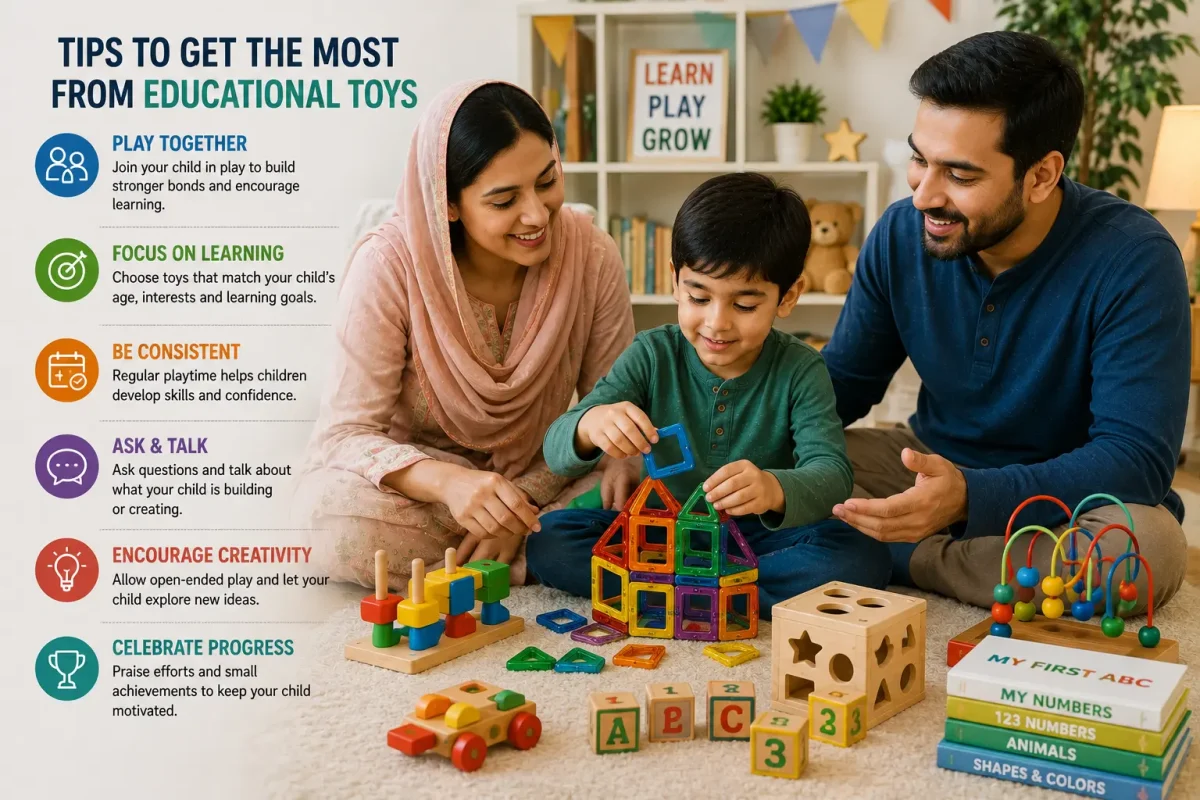
Which educational toys are actually suitable for my child’s age?
A toy that is perfect for a 1-year-old may be too simple for a 6-year-old. Similarly, a toy designed for older children may be frustrating or unsafe for a toddler.
In this guide, we’ll explore the best educational toys for kids in Pakistan from 1 to 8 years old, what skills different toys can encourage, and how parents can choose the right toy based on age, interests, learning needs, safety, and budget.
The goal isn’t to find the most expensive toy. It’s to find a toy that gives your child a reason to explore, think, build, create, solve, and play.
Why Are Educational Toys Important?
Educational toys turn everyday play into an opportunity for learning.
Unlike toys that provide entertainment without much participation, good educational toys encourage children to actively interact with objects, make decisions, experiment, and try again when something doesn’t work.
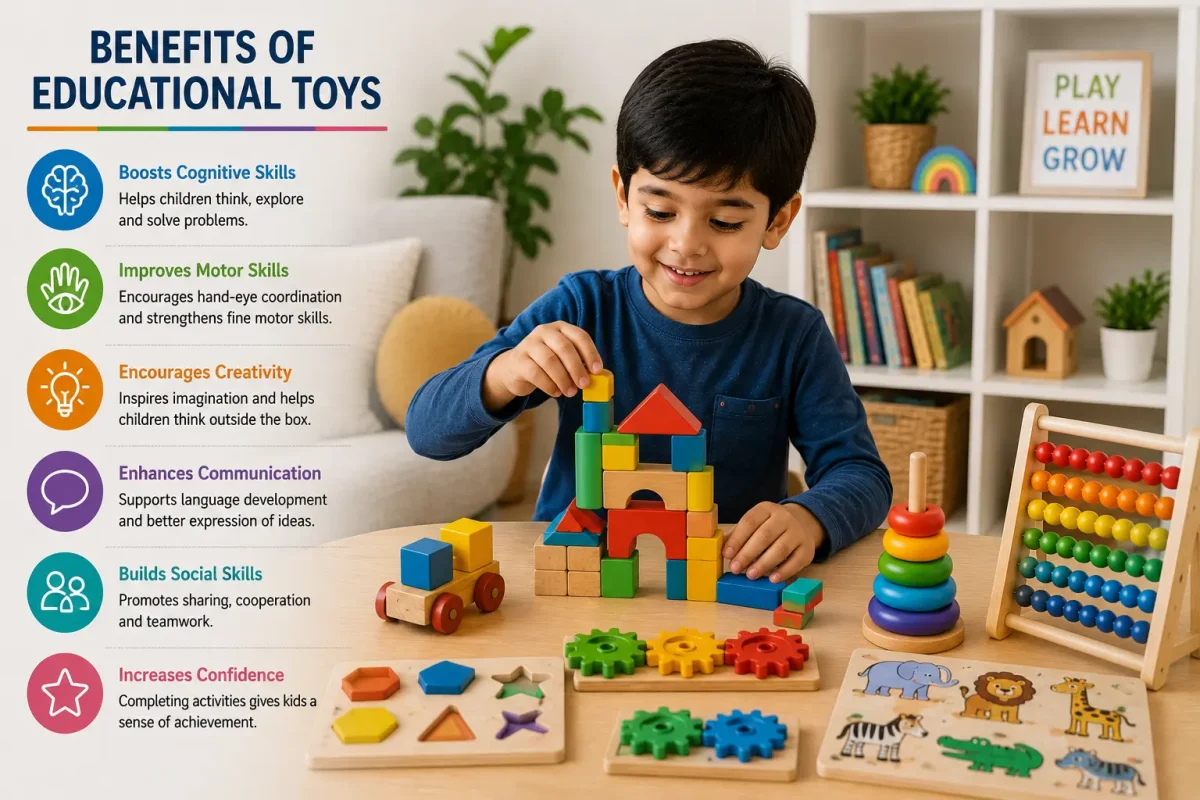
Depending on the toy, educational play can help children develop:
- Fine motor skills
- Hand-eye coordination
- Problem-solving skills
- Early maths skills
- Language and vocabulary
- Concentration
- Creativity and imagination
- Spatial awareness
- Logical thinking
- Independent learning
- Confidence
However, an educational toy does not need to look like a classroom activity.
A simple wooden puzzle can teach problem-solving. Building blocks can introduce concepts of balance and structure. A counting toy can make early maths more hands-on.
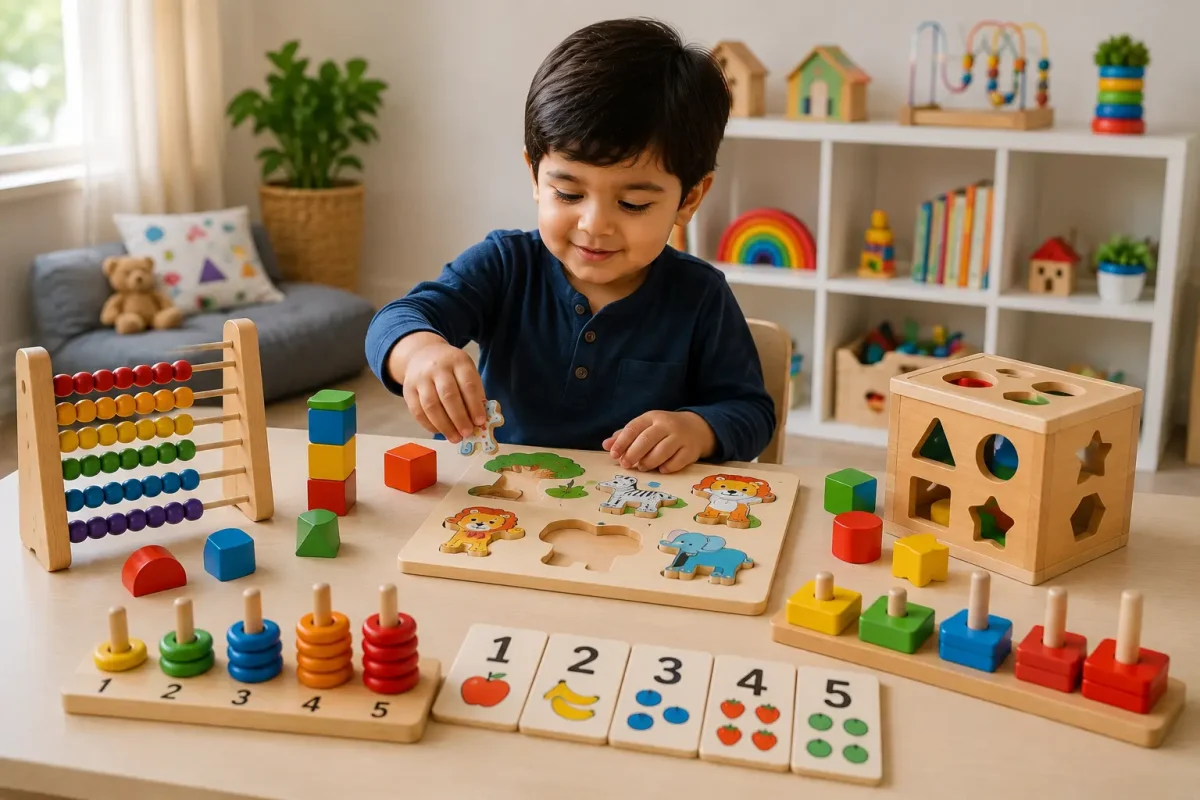
The best learning often happens when children don’t feel like they are being taught.
Parents looking for a broader selection can also explore ToyRoots educational toys, including Montessori-inspired puzzles, building toys, counting activities and STEM learning options.
Best Educational Toys for 1-Year-Olds
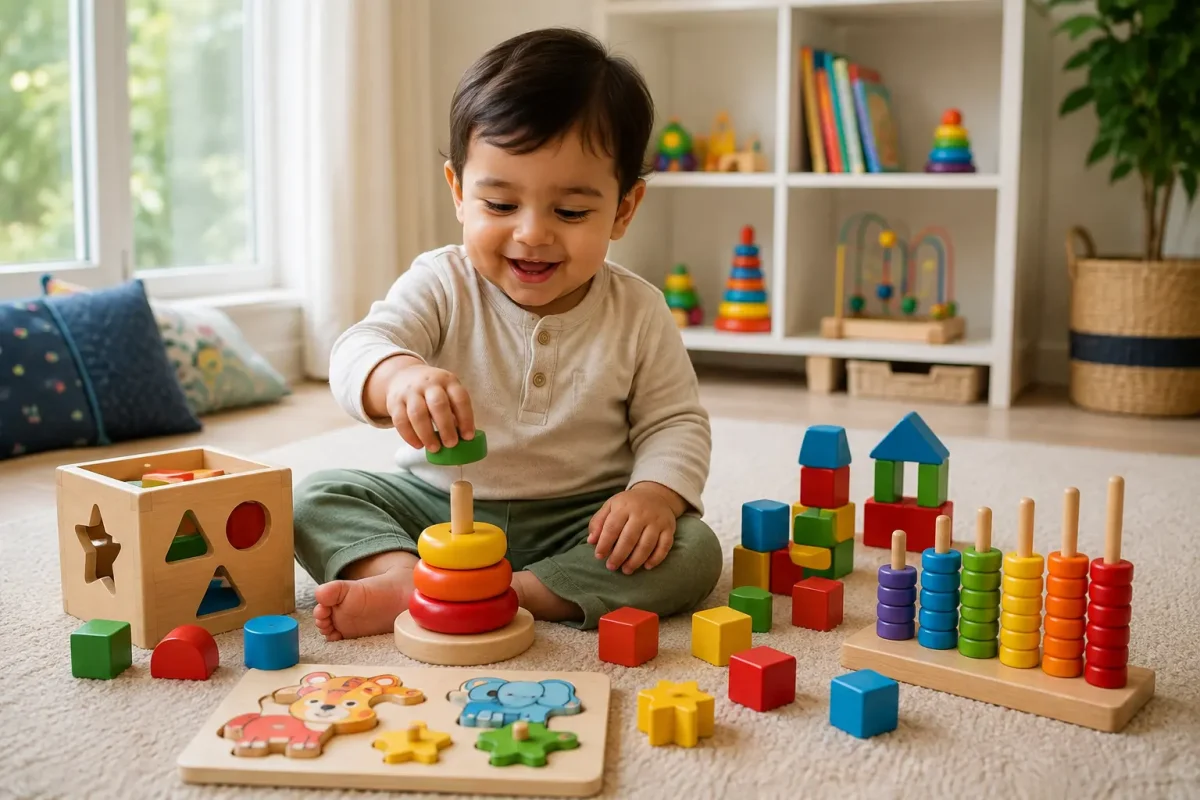
At around one year old, children are becoming increasingly curious about their surroundings. They are learning through touching, moving, grabbing, stacking, dropping, and exploring.
At this stage, simple toys are often better than complicated ones.
Skills to Encourage
- Hand-eye coordination
- Fine motor skills
- Object recognition
- Cause and effect
- Balance and movement
- Early problem-solving
- Sensory exploration
Recommended Educational Toys for 1-Year-Olds
1. Shape Sorters
Shape sorters encourage children to recognise basic shapes and work out where each piece belongs.
2. Stacking Toys
Stacking rings, cups, or blocks can help children understand size, order, balance, and coordination.
3. Simple Wooden Puzzles
Choose puzzles with large, easy-to-hold pieces. Animal, fruit, vehicle, and everyday-object puzzles can introduce recognition while developing hand control.
4. Colour and Matching Toys
Simple matching activities can introduce colours and visual differences without making learning complicated.
5. Push and Pull Toys
For children who are becoming more mobile, suitable push-and-pull toys can encourage movement and coordination.

Parent Tip
At this age, don’t worry about whether your child completes an activity correctly. Let them explore the toy in their own way while an adult stays nearby when supervision is needed.
Best Educational Toys for 2-Year-Olds
Two-year-olds are beginning to understand simple instructions and relationships between objects. They are also developing vocabulary and becoming more interested in sorting, matching, counting, and identifying things.
Skills to Encourage
- Matching
- Colour recognition
- Shape recognition
- Early counting
- Fine motor control
- Vocabulary
- Memory
- Simple problem-solving
Recommended Educational Toys for 2-Year-Olds
1. Wooden Matching Toys
Matching colours, pictures, shapes, or objects can help children notice similarities and differences.
2. Number and Counting Toys
Simple counting activities introduce numbers through hands-on play. Parents can explore ToyRoots counting and number learning toys for age-appropriate counting and early maths activities.
3. Wooden Puzzles
Large-piece puzzles can encourage concentration and problem-solving. You can also browse the ToyRoots educational puzzles collection for different puzzle styles and difficulty levels.
4. Alphabet Puzzles
Simple alphabet puzzles can introduce letters and improve recognition.
5. Sorting Toys

Colour and shape sorting activities help children classify objects and develop early logical thinking.
For more age-specific ideas, parents can explore educational toys for 2-year-olds at ToyRoots, including puzzles, counting toys, sorting activities and other hands-on learning toys.
Best Educational Toys for 3-Year-Olds
At three years old, children are usually ready for more challenging activities. They can begin solving simple puzzles, recognising more letters and numbers, and using toys for imaginative play.
Skills to Encourage
- Problem-solving
- Early maths
- Language development
- Creativity
- Memory
- Concentration
- Fine motor skills
- Imaginative play
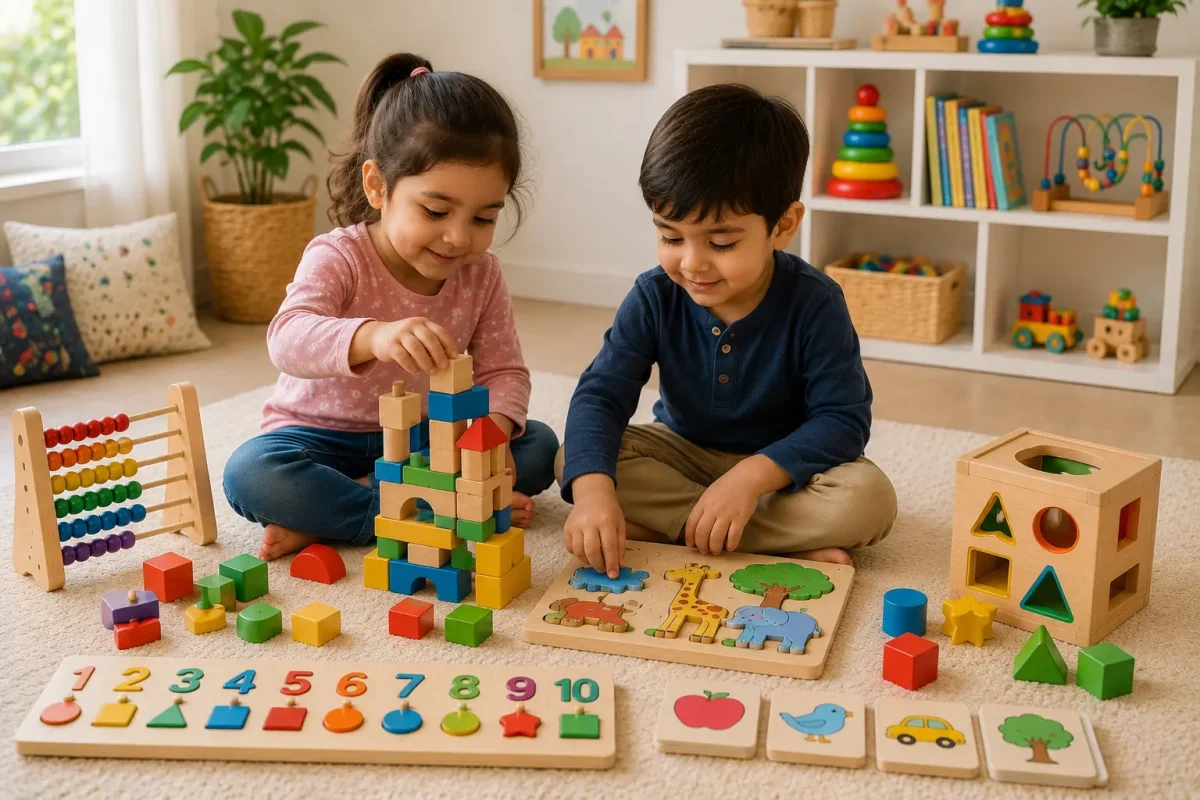
Recommended Educational Toys for 3-Year-Olds
1. Alphabet and Number Puzzles
These combine hands-on play with early literacy and numeracy.
2. Building Blocks
Blocks allow children to build towers, houses, vehicles, and imaginary structures while learning about shapes, balance, and space.
3. Logic Games
Simple logic activities can introduce children to patterns, matching, sequencing, and problem-solving.
4. Magnetic Building Toys
Age-appropriate magnetic construction toys can encourage creativity and spatial thinking. The ToyRoots Magnetic Building Blocks are one option for hands-on construction and 3D building.
5. Pretend-Play Toys
Pretend play gives children opportunities to develop language, imagination, and social skills.
Parent Tip
Ask open-ended questions such as:
“What are you building?”
or
“What do you think will happen if you put this piece here?”
Instead of giving the answer immediately, give your child time to think.
Best Educational Toys for 4-Year-Olds
Four-year-olds can often handle activities that require several steps. They may also start showing stronger preferences for puzzles, building, drawing, numbers, stories, or pretend play.
This is a good time to gradually increase the level of challenge.
Skills to Encourage
- Logical thinking
- Early mathematics
- Pattern recognition
- Concentration
- Creativity
- Spatial awareness
- Problem-solving
- Communication
Recommended Educational Toys for 4-Year-Olds
1. Advanced Wooden Puzzles
Choose puzzles with more pieces or slightly more complex designs than toddler puzzles.
2. Pattern and Sorting Games
These can help children recognise sequences and relationships.
3. Building Sets
Construction toys allow children to plan and create their own designs.
4. Early Maths Toys
Counting games, number boards, and simple mathematical activities can make numbers more interactive. The ToyRoots counting and number toys collection includes hands-on options for early numeracy.
5. Creative Learning Toys
Drawing, craft, modelling, and construction activities give children opportunities to create something themselves.
At this age, the best toys are often those that have more than one possible way to play.
Best Educational Toys for 5-Year-Olds
Five-year-olds are becoming more capable of following instructions, solving multi-step problems, and staying focused on activities for longer periods.
This is also a good stage to introduce more structured STEM and logic activities.
Skills to Encourage
- Problem-solving
- Logical thinking
- Early STEM skills
- Mathematics
- Creativity
- Concentration
- Planning
- Independent play
Recommended Educational Toys for 5-Year-Olds
1. Logic Puzzles
Puzzles and brain games can encourage children to think carefully and try different solutions. The ToyRoots educational puzzles collection includes logic, number, geometric and other problem-solving activities.
2. Construction Toys
Building activities introduce planning, structure, balance, and spatial reasoning.
3. STEM-Inspired Toys
Age-appropriate STEM toys can introduce children to basic concepts through hands-on activities. Parents can explore the ToyRoots STEM toys collection for different types of building, logic, maths and science-inspired toys.
4. Number and Maths Games
Games involving counting, matching, patterns, and simple calculations can make early maths enjoyable.
5. DIY and Creative Kits
Building or creating something from separate pieces encourages planning and persistence.
The important thing is to choose a challenge that is difficult enough to be interesting but not so difficult that the child gives up.
Best Educational Toys for 6-Year-Olds
At six, children are entering an important stage where they can increasingly follow rules, understand more complex instructions, and solve problems independently.
Educational toys can now become more challenging.
Skills to Encourage
- Critical thinking
- Problem-solving
- STEM concepts
- Strategy
- Mathematics
- Creativity
- Reading and language
- Independent learning
Recommended Educational Toys for 6-Year-Olds
1. Building and Construction Sets
Children can follow instructions or create their own structures.
2. Logic Puzzles
More challenging puzzles can encourage concentration and reasoning.
3. STEM Activities
Science and engineering activities can introduce concepts through experimentation and hands-on learning. Explore STEM toys at ToyRoots for age-appropriate options.
4. Strategy Games
Age-appropriate strategy games can teach planning, patience, rules, and decision-making.
5. Creative Projects

Art, construction, modelling, and DIY activities encourage children to turn ideas into something physical.
Best Educational Toys for 7-Year-Olds
Seven-year-olds can often enjoy toys that require planning, experimentation, and multiple steps.
Instead of simply asking whether a toy is “educational”, ask:
What will my child actually do with it?
A good toy should give the child an opportunity to make decisions and solve problems.
Recommended Educational Toys for 7-Year-Olds
- Advanced puzzles
- Construction sets
- STEM activities
- Science experiment kits
- Logic games
- Number and maths games
- Strategy games
- Creative building activities
Why Open-Ended Toys Are Valuable
A toy with one fixed activity may become boring quickly.
An open-ended building set, puzzle collection, or creative kit can be used repeatedly in different ways.
That gives children more opportunities to experiment and develop their own ideas.
Best Educational Toys for 8-Year-Olds
By eight, many children are ready for more challenging activities that involve strategy, science, engineering, logic, and creativity.
At this age, parents should consider both age and individual ability.
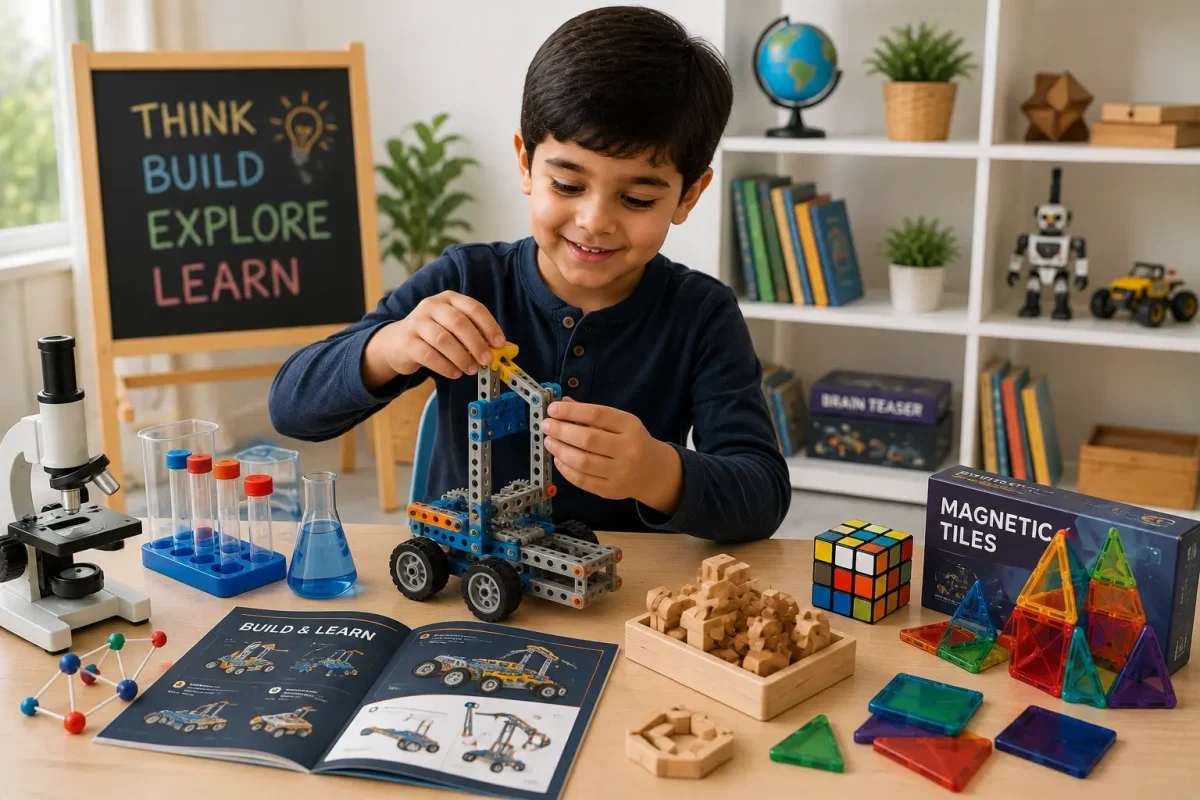
A seven- or eight-year-old who loves science may enjoy a STEM kit, while another child may get much more value from a strategy game, construction set, puzzle, or creative activity.
Recommended Educational Toys for 8-Year-Olds
- Advanced STEM kits
- Science experiment kits
- Engineering and construction sets
- Challenging logic puzzles
- Strategy games
- Advanced building toys
- Creative DIY projects
- Maths and problem-solving games
For children who are ready for more advanced hands-on learning, parents can explore the ToyRoots STEM collection. Always check the individual product’s recommended age before ordering.
Educational Toys by Skill: What Should Your Child Learn?
Sometimes age alone isn’t enough to choose a toy.
Think about the skill you want to encourage.
| Skill | Good Toy Types |
|---|---|
| Fine motor skills | Puzzles, stacking toys, sorting activities |
| Hand-eye coordination | Shape sorters, puzzles, construction toys |
| Early maths | Counting toys, number puzzles, abacus |
| Problem-solving | Logic games, puzzles, construction sets |
| Creativity | Building toys, art, DIY activities |
| Spatial awareness | Blocks, magnetic construction toys, puzzles |
| Concentration | Puzzles, matching games, strategy activities |
| STEM skills | Science kits, construction toys, experiments |
| Imagination | Pretend play, open-ended building toys |
| Independent play | Puzzles, building sets, sorting and logic toys |
The goal isn’t to buy one toy for every skill.
A well-designed toy can support several skills at the same time.
Montessori vs STEM Toys: Which Is Better?
Parents often ask whether they should choose Montessori toys or STEM toys.
The answer is: neither is automatically better.
They support different types of learning.
Montessori-Inspired Toys
Montessori-inspired toys often focus on:
- Hands-on exploration
- Independence
- Concentration
- Practical skills
- Simple, purposeful activities
Wooden puzzles, sorting toys, stacking activities, and practical-life activities can fit well into this approach. Parents can browse ToyRoots Montessori toys for hands-on learning options.
STEM Toys
STEM stands for:
Science, Technology, Engineering, and Mathematics.
STEM toys often focus more on:
- Problem-solving
- Building
- Experimentation
- Logical thinking
- Engineering concepts
- Scientific exploration
For younger children, simple construction and sorting activities can introduce the foundations of STEM. Older children may be ready for more structured science, engineering, and building activities.

So instead of asking “Montessori or STEM?”, ask:
“What kind of learning does my child enjoy right now?”
Wooden Toys vs Electronic Toys
Electronic toys can be entertaining, but children don’t necessarily need lights, sounds, screens, or batteries to learn.
Wooden and hands-on toys can encourage children to actively participate in play.
For example, a wooden puzzle requires the child to:
- Look at the pieces.
- Compare shapes.
- Try different positions.
- Make a decision.
- Correct mistakes.
- Complete the puzzle.
This type of active play can be particularly valuable for young children.
The material itself, however, doesn’t automatically make a toy educational.
A good wooden toy is useful because of the activity it encourages—not simply because it is made from wood.
Parents looking specifically for hands-on puzzle activities can explore the ToyRoots educational wooden puzzles collection.
How to Choose the Right Educational Toy for Your Child
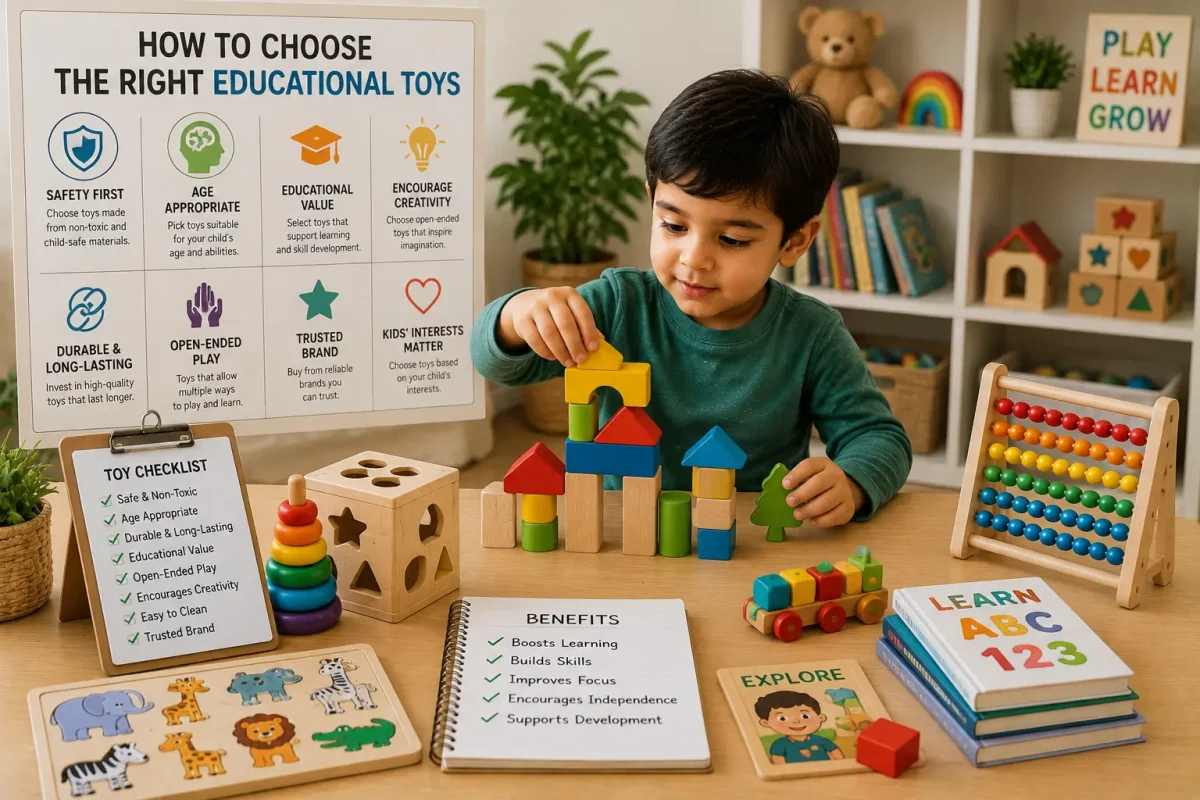
Before buying a toy, use this simple formula:
Age + Interest + Skill + Challenge + Budget
1. Age
Always check the manufacturer’s recommended age.
2. Interest
Think about what your child naturally enjoys.
Do they like:
- Building?
- Puzzles?
- Numbers?
- Drawing?
- Science?
- Pretend play?
- Physical activities?
3. Skill
Choose a toy that supports a skill your child is developing.
4. Challenge
The toy should be challenging enough to keep the child interested without becoming unnecessarily frustrating.
5. Budget
A higher price doesn’t automatically mean better learning.
A simple puzzle that a child uses repeatedly can be more valuable than an expensive toy that is forgotten after a few days.
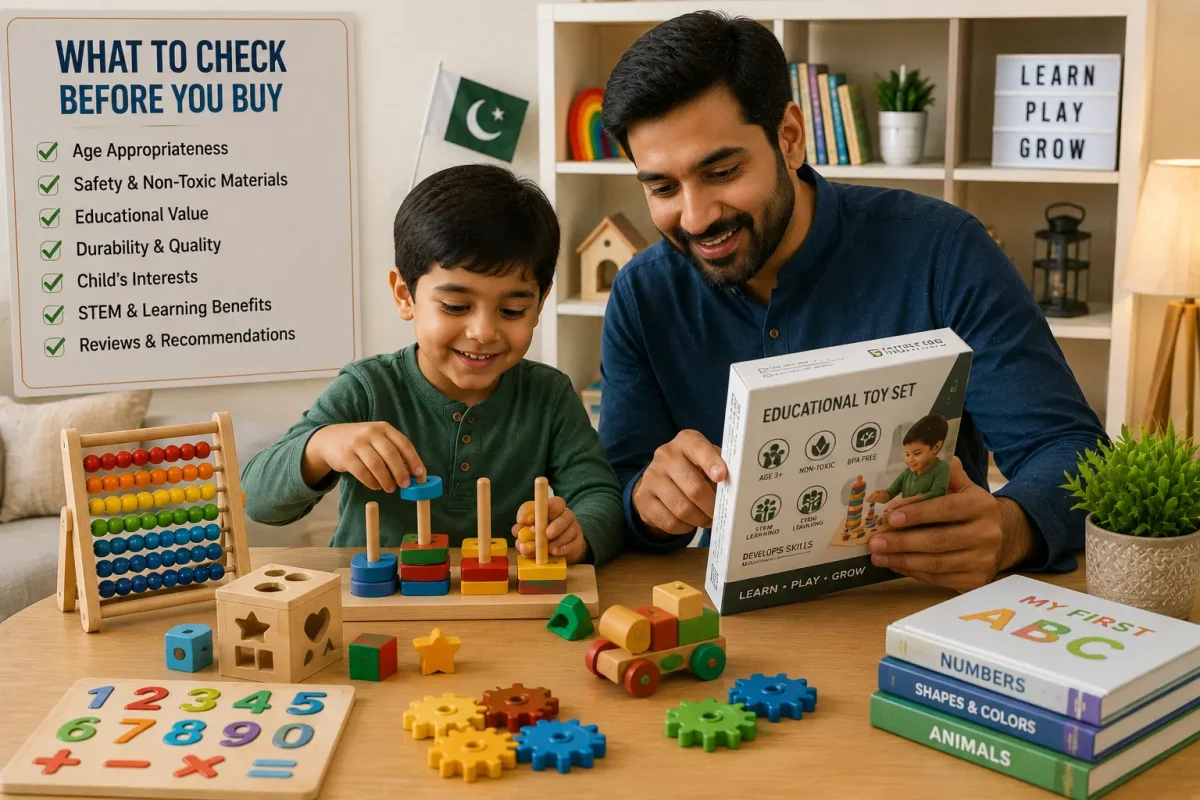
What Should Pakistani Parents Check Before Buying Educational Toys?
When buying toys online in Pakistan, parents should consider more than appearance.
Check the Age Recommendation
Make sure the toy is appropriate for the child’s age.
Check for Small Parts
Younger children may require toys with larger pieces and closer adult supervision.
Think About Storage
Large construction sets and multi-piece toys need space.
Consider Durability
A toy that can be used repeatedly can offer better long-term value.
Think About Screen-Free Play
Hands-on toys can provide an alternative to passive screen entertainment.
Check the Product Details
Before ordering, read the individual product page for age guidance, materials, dimensions, included pieces, and any supervision requirements.
How Much Should You Spend on Educational Toys in Pakistan?
You don’t have to spend thousands of rupees to provide meaningful educational play.
Under Rs. 1,000
Look for:
- Simple wooden puzzles
- Matching activities
- Counting activities
- Small logic games
- Basic creative activities
Rs. 1,000–2,500
You may find:
- More detailed puzzles
- Building toys
- Educational games
- Larger activity sets
- Some STEM-inspired toys
Rs. 2,500+
This budget can open up options such as:
- Larger construction sets
- Advanced STEM kits
- Multi-activity learning kits
- Detailed model-building toys
- More challenging educational games
However, price should not be your main selection criterion.
Ask instead:
Will my child actually play with this repeatedly?
Common Mistakes Parents Make When Buying Educational Toys
Buying a Toy That Is Too Advanced
A toy that is far beyond the child’s current ability can become frustrating rather than educational.
Choosing a Toy Only Because It Says “Educational”
The word “educational” on packaging doesn’t automatically make a toy useful.
Look at the actual activity.
Buying Too Many Toys
Children don’t necessarily need a huge number of toys.
A smaller selection of varied, reusable activities can sometimes provide better play.
Ignoring the Child’s Interests
A toy may be excellent in theory but still sit untouched if it doesn’t match the child’s interests.
Choosing Toys Only for Entertainment
Lights and sounds may attract attention, but active participation is often more valuable for learning.
Forgetting Safety
Always consider age recommendations, small parts, magnets, materials, and supervision requirements.
Frequently Asked Questions
What are the best educational toys for kids in Pakistan?
The best educational toy depends on the child’s age, interests, developmental stage, and the skill you want to encourage. Popular options include wooden puzzles, shape sorters, counting toys, building blocks, logic games, Montessori-inspired toys, and age-appropriate STEM activities.
Which educational toys are best for a 1-year-old?
Simple shape sorters, stacking toys, large-piece wooden puzzles, colour-matching activities, and suitable push-and-pull toys can encourage early coordination, recognition, and exploration.
What are good educational toys for a 2-year-old?
Matching games, sorting toys, simple counting activities, wooden puzzles, alphabet puzzles, and stacking toys are useful options for many two-year-olds.
What should I buy for a 3-year-old?
Consider puzzles, building blocks, alphabet and number activities, logic games, magnetic construction toys, and imaginative-play activities.
What are the best educational toys for 4- and 5-year-olds?
Children at this age can often enjoy more challenging puzzles, building sets, pattern games, early maths activities, creative kits, and age-appropriate STEM toys.
Are STEM toys suitable for young children?
Yes, but the type of STEM activity should match the child’s age. For younger children, simple building, sorting, counting, and cause-and-effect activities can introduce STEM concepts. Older children can move toward science experiments, engineering activities, construction sets, and more structured STEM kits.
Parents can explore the ToyRoots STEM toys collection to find different hands-on options.
Are Montessori toys better than regular toys?
Not necessarily. Montessori-inspired toys can encourage hands-on exploration and independence, while other educational toys may focus on STEM, creativity, language, maths, or problem-solving. The best choice depends on the child and the type of play you want to encourage.
Explore Montessori toys at ToyRoots to compare different hands-on learning options.
Are wooden toys better for children?
Wooden toys can be durable and encourage hands-on, screen-free play, but the material alone doesn’t determine whether a toy is educational. What matters most is the activity the toy encourages.
How do I choose an educational toy for my child?
Start with five things:
Age → Interest → Skill → Challenge → Budget
This simple approach can help you choose a toy that your child is more likely to enjoy and use repeatedly.
Final Thoughts
The best educational toys for kids in Pakistan aren’t necessarily the most expensive, biggest, or most technologically advanced.
The right toy is one that gives a child a reason to think, explore, create, solve problems, experiment, and try again.
For a 1-year-old, that might be a simple shape sorter or stacking toy.
For a 3-year-old, it could be a puzzle or building set.
For a 5-year-old, it might be a logic game or STEM activity.
For a 7- or 8-year-old, it could be a science kit, construction set, strategy game, or challenging puzzle.
Most importantly, choose the toy around your child, not just the age printed on the box.
Consider what they enjoy, what skills they are developing, how much challenge they can handle, and whether the toy will continue to be useful after the first few days.
At ToyRoots, the goal is simple: make learning through play enjoyable, meaningful, and accessible for children in Pakistan.
Explore ToyRoots’ educational toys, including Montessori, wooden, puzzle, counting, building, and STEM learning options, to find age-appropriate choices for your child’s next learning adventure.