
No products in the cart.
Parenting Tips, ToyRoots Life
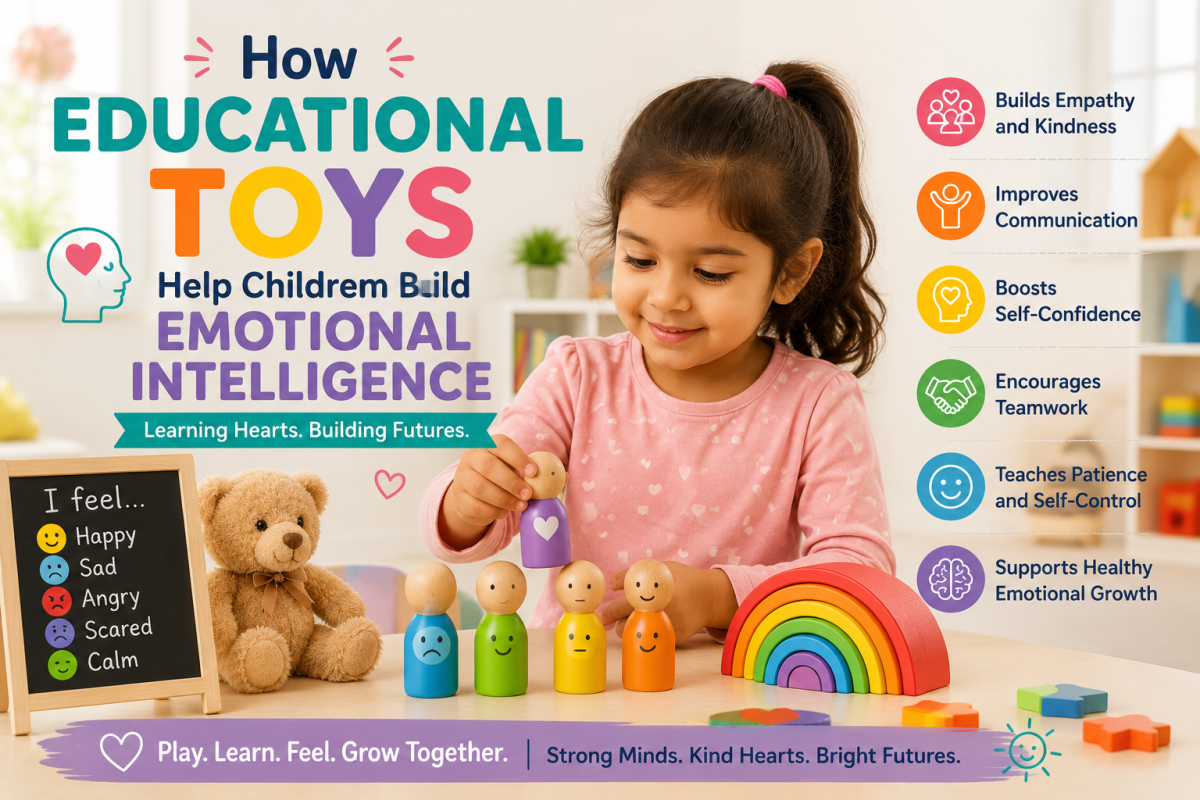
How Educational Toys Help Children Build Emotional Intelligence
Children learn much more than numbers and letters during their early years. They also develop emotional intelligence—the ability to understand feelings, manage emotions, show empathy, and build positive relationships. Educational toys can play a valuable role in supporting these life skills while making learning enjoyable. Through imaginative play, cooperative games, and hands-on activities, children gradually develop emotional awareness that benefits them throughout life.
Why Emotional Intelligence Matters
Emotional intelligence helps children recognize their own emotions while understanding the feelings of others. Children with strong emotional skills often communicate better, solve conflicts peacefully, and adapt more easily to new situations. These abilities contribute to success both inside and outside the classroom.
Learning Empathy Through Pretend Play
Pretend play toys such as dollhouses, kitchen sets, doctor kits, and role-playing games encourage children to imagine different situations and perspectives. As they act out everyday experiences, they learn to understand emotions, care for others, and respond with kindness.
Teaching Patience and Self-Control
Many educational games require children to wait for their turn, follow rules, and complete challenges step by step. These activities teach patience, self-control, and the importance of staying calm even when things do not go as planned.
Building Confidence Through Small Achievements
Completing puzzles, solving brain games, or successfully building a structure gives children a sense of accomplishment. Each achievement strengthens their confidence and encourages them to face new challenges with a positive attitude.
Encouraging Healthy Communication
Educational toys often create opportunities for children to ask questions, explain their ideas, and express their thoughts. Playing with parents, siblings, or friends improves listening skills, respectful conversations, and effective communication.
Developing Teamwork Skills
Group activities and cooperative games teach children how to work together toward a shared goal. They learn the value of cooperation, sharing responsibilities, celebrating successes together, and supporting one another during challenges.
Managing Frustration Positively
Every child faces moments when a puzzle seems difficult or a building project falls apart. Educational toys help children understand that mistakes are part of learning. They gradually develop resilience by trying again instead of giving up.
Choosing Toys That Support Emotional Growth
Select toys that encourage creativity, storytelling, teamwork, and open-ended exploration. Building blocks, pretend play sets, board games, emotion flashcards, storytelling cards, and collaborative puzzles are excellent choices for promoting emotional intelligence.
Helping Parents Connect Through Play
Playing together creates meaningful moments between parents and children. These interactions strengthen trust, encourage open conversations, and allow parents to guide children as they learn to understand and manage their emotions.
Conclusion
Educational toys help children develop more than academic knowledge—they also nurture emotional intelligence, confidence, empathy, communication, and resilience. These life skills prepare children for healthy relationships, successful learning, and future personal growth.
At ToyRoots, we believe every toy should inspire both learning and emotional development. By choosing educational toys that encourage creativity, cooperation, and imagination, parents can help children grow into confident and compassionate individuals.
Related reading
All in Parenting Tips →
Eidi Gift Ideas for Kids in Pakistan: Thoughtful Gifts Beyond Cash
Eid is a time for family gatherings, delicious food, new clothes, and the excitement of receiving Eidi. For children, opening an envelope…
How to Clean and Maintain Kids’ Toys: A Parent’s Guide for Pakistan
Children touch their toys throughout the day. They carry them around the house, play with them on the floor, take them outside,…
How to Choose Wooden Toys for Kids in Pakistan: A Parent’s Guide
Choosing a toy for your child is about more than finding something colourful or entertaining. You want something they will enjoy, use…
