No products in the cart.
Parenting Tips
How to Clean and Maintain Kids’ Toys: A Parent’s Guide for Pakistan
Children touch their toys throughout the day. They carry them around the house, play with them on the floor, take them outside, and sometimes put them directly into their mouths. Over time, toys can collect dust, food residue, saliva and other dirt.
For parents, keeping toys clean is an important part of maintaining a healthy play environment. However, cleaning every toy in the same way is not a good idea. Wooden puzzles, plastic building blocks, stuffed animals and electronic learning toys all require different care.
The good news is that maintaining children’s toys does not need to be complicated or expensive. With a few simple habits, you can keep your child’s favourite toys clean, protect their condition and make them last longer.
In this guide, we will explain how to clean different types of children’s toys, how often to clean them, which cleaning mistakes to avoid, and how Pakistani parents can establish a simple toy cleaning routine at home.
Why Is It Important to Clean Children’s Toys?
Toys are frequently handled by children, making regular cleaning an important part of everyday household hygiene. The frequency and method of cleaning should depend on the toy, how it is used, and whether it has become visibly dirty or contaminated.
Here are four reasons to make toy cleaning part of your routine.
1. To Remove Dirt and Everyday Residue
Dust, food crumbs and sticky fingerprints can accumulate on toys during normal play. Cleaning helps remove this visible dirt and keeps play materials in better condition.
2. To Maintain a Hygienic Play Environment
Children may share toys with siblings, friends and other family members. Toys that are frequently handled or put into children’s mouths deserve particular attention.
According to the US Centers for Disease Control and Prevention (CDC), cleaning removes dirt and impurities, while sanitising or disinfecting may be appropriate in particular circumstances. Cleaning should generally come before disinfection. Read the CDC’s guidance on cleaning and disinfecting toys and childcare settings.
3. To Help Toys Last Longer
Different materials respond differently to moisture, heat and cleaning products. Excessive water can damage wooden toys, while unsuitable cleaning products may affect painted surfaces, stickers or electronic components.
Using the right cleaning method can help preserve a toy’s appearance and functionality.
4. To Encourage Better Household Habits
A simple routine teaches children that looking after their belongings is part of everyday life. Older children can help put toys away, identify visibly dirty items and return clean toys to their storage containers.
Younger children will need adult assistance, particularly when cleaning products or small toy components are involved.
How to Clean Different Types of Kids’ Toys
The most effective cleaning method depends on the material and the manufacturer’s instructions. Before cleaning any toy, check its care label or product guidance.
1. How to Clean Wooden Toys
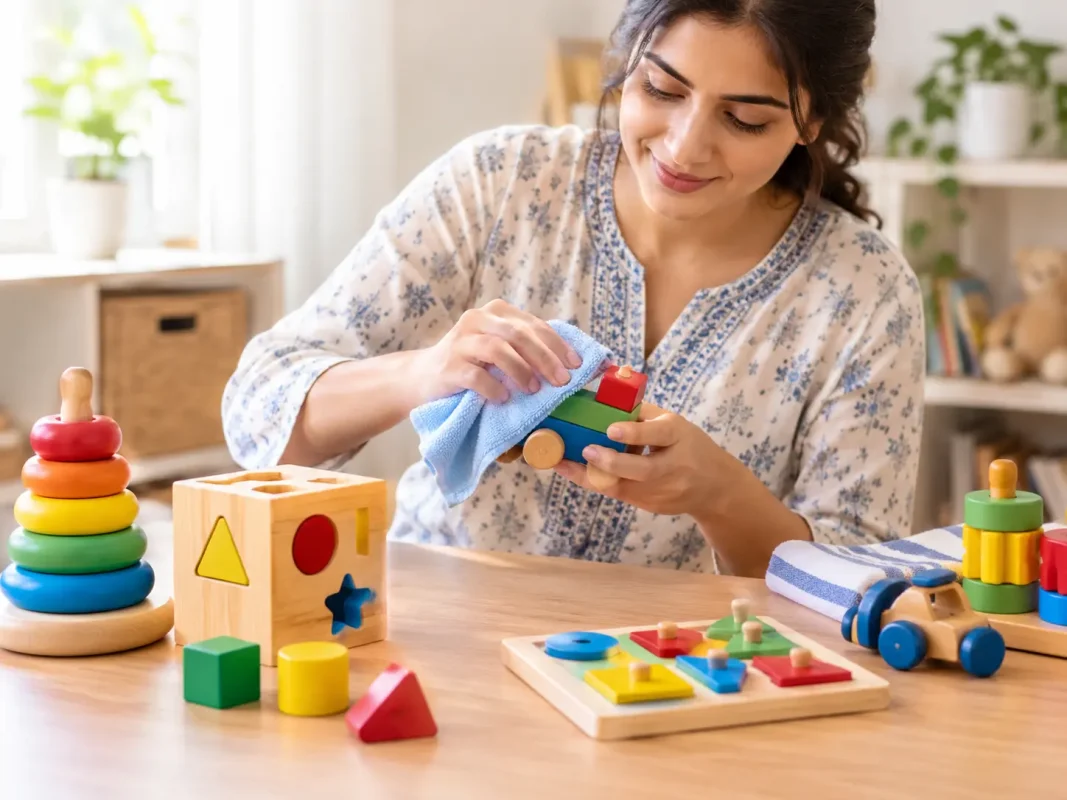
Wooden toys are popular with families who enjoy puzzles, building blocks, counting boards and Montessori-inspired activities. Because wood can absorb moisture, these toys usually need more careful cleaning than washable plastic toys.
Follow these steps:
- Remove loose dust and dirt with a clean, dry or slightly damp soft cloth.
- If the manufacturer permits it, wipe the surface with a cloth lightly dampened with mild soapy water.
- Avoid soaking the toy or placing it under running water.
- Wipe away any soap residue with a separate, clean, slightly damp cloth if necessary.
- Dry the toy immediately with a clean towel and allow it to finish drying completely in a well-ventilated area before returning it to storage.
What should you avoid?
Do not soak wooden toys, boil them, or put them in a dishwasher unless the manufacturer explicitly confirms that the toy can withstand that treatment. Excess moisture can cause swelling, cracking, rough surfaces or damage to the finish.
Also, avoid harsh chemicals and abrasive scrubbers that may damage painted or coated surfaces.
Before giving a wooden toy back to your child, inspect it for splinters, cracks, loose parts or peeling paint. Remove damaged toys from use until they can be safely repaired or replaced.
Parents who want to learn more about selecting wooden toys can also read our guide to choosing wooden toys for kids in Pakistan.
2. How to Clean Plastic Toys
Many plastic toys, including some building blocks, shape sorters and activity toys, can be cleaned with mild soap and water. However, not every plastic toy is suitable for immersion or machine washing.
Follow these steps:
- Check the manufacturer’s cleaning instructions.
- Wash washable, non-electronic toys in warm water with mild soap.
- Use a soft brush to reach grooves and corners where dirt may accumulate.
- Rinse thoroughly with clean water.
- Allow the toy to air-dry completely before storing or using it.
For toys with removable batteries or electronic components, follow the instructions for that specific design rather than immersing the entire toy.
When is extra care needed?
Plastic toys used by babies and toddlers may be placed in their mouths. Clean these toys promptly after they become dirty or contaminated, and follow the manufacturer’s guidance about suitable sanitising methods.
Do not assume that every plastic toy can be boiled, placed in a dishwasher or treated with bleach.
3. How to Clean Soft Toys and Stuffed Animals
Stuffed animals, plush toys and fabric dolls often accompany children during play, naps and family outings. They can collect dust, food stains and everyday dirt.
Fortunately, many fabric toys can be cleaned using a washing machine, provided their labels allow it.
For machine-washable toys:
- Read the care label carefully.
- Place the toy in a suitable laundry bag if appropriate.
- Use a gentle washing cycle and a detergent suitable for the material.
- Follow the recommended washing temperature.
- Dry the toy according to its care instructions until the filling is completely dry.
Some toys require handwashing or surface cleaning instead. Toys containing batteries, delicate decorations, glued parts or special fillings may not be suitable for machine washing.
Avoid returning a damp stuffed toy to a child’s bed or storage basket. Moisture trapped inside the filling can cause unpleasant odours and may encourage mould growth.
4. How to Clean Montessori and Educational Toys
Montessori-inspired and educational toys include wooden puzzles, shape sorters, counting boards, stacking toys and other hands-on learning materials.
These products can be made from different materials, so there is no single cleaning method suitable for every educational toy.
For example:
- Wooden counting boards: Wipe gently with a suitable cloth and dry immediately.
- Plastic shape sorters: Wash with mild soap and water if permitted by the manufacturer.
- Building blocks: Clean according to their material and construction, paying attention to grooves and connecting parts.
- Puzzles: Clean the surface carefully, avoiding excessive moisture that could warp cardboard or damage printed images.
- Electronic learning toys: Switch off the device, remove batteries if the instructions recommend it, and clean the exterior using the approved method.
Always check for loose pieces, damaged edges and peeling surfaces before returning a toy to a child’s play area.
If your child enjoys hands-on learning, explore our range of educational toys and choose products that suit their age, interests and abilities.
5. How to Clean Bath Toys
Bath toys can retain water inside hollow sections, making proper drying especially important.
After bath time:
- Rinse the toy with clean water to remove soap and visible residue.
- Shake out as much water as possible.
- Drain hollow toys completely.
- Leave them in a clean, well-ventilated place to dry.
- Inspect toys regularly for dark spots, unpleasant smells or visible mould.
If a toy repeatedly retains water and develops mould inside, discard it if it cannot be cleaned thoroughly according to the manufacturer’s instructions.
For future purchases, consider bath toys designed to drain easily or models without enclosed water-holding spaces.
6. How to Clean Electronic Toys
Electronic toys may contain speakers, lights, buttons, battery compartments and internal circuits. Immersing them in water can permanently damage these components.
To clean an electronic toy safely:
- Switch it off before cleaning.
- Disconnect the charging cable or remove batteries if the manufacturer’s instructions permit.
- Wipe the exterior with a soft cloth using the approved cleaning method.
- Use a lightly dampened cloth only where permitted, keeping moisture away from openings and electrical components.
- Allow the toy to dry completely before switching it on again.
Never spray liquid directly into a toy’s speaker, charging port, battery compartment or control panel.
If the manufacturer recommends a particular cleaning product, follow the label and product instructions carefully.
How Often Should You Clean Children’s Toys?
There is no universal cleaning schedule for every toy. A toy used by a toddler who frequently puts objects in their mouth needs different attention from a puzzle used occasionally by an older child.
Use the following routine as a practical starting point.
| Toy or situation | Recommended approach |
|---|---|
| Toys with visible dirt or food residue | Clean promptly |
| Toys that have been mouthed | Set aside and clean before reuse |
| Toys shared by siblings or children outside the household | Clean as appropriate before sharing, especially after contamination |
| Frequently handled toys | Inspect and clean regularly based on use |
| Soft toys | Wash according to the care label and when dirty |
| Bath toys | Drain and dry after every bath |
| Toys used during or after illness | Clean and, where appropriate, disinfect according to the material and manufacturer guidance |
| Wooden toys | Wipe when needed and dry promptly |
In childcare environments, the CDC recommends cleaning visibly dirty surfaces and paying particular attention to frequently touched items. It also explains that cleaning, sanitising and disinfecting serve different purposes.
For home use, routine cleaning may be sufficient for many toys. Disinfection is not automatically necessary every day.
Cleaning vs Sanitising vs Disinfecting: What Is the Difference?
These terms are often used interchangeably, but they describe different processes.
Cleaning
Cleaning removes dirt, dust and impurities from a surface. Soap, water and an appropriate cloth or brush are commonly used, depending on the material.
Sanitising
Sanitising reduces germs on a surface to a level considered acceptable under the applicable standard or product instructions.
Disinfecting
Disinfecting uses an appropriate chemical or process to destroy certain germs on a surface.
For parents, the most important point is to choose the appropriate method for the toy and the situation.
If a toy requires disinfection, first clean it, then use only a product specifically suitable for the material and intended use. Follow its dilution, contact-time, rinsing and drying instructions.
Never mix bleach with other cleaning products, particularly acids or ammonia, because dangerous gases can be released. Keep all cleaning chemicals away from children, and never apply a household disinfectant to a toy that a child may mouth unless the product instructions specifically permit that use.
Common Toy Cleaning Mistakes Parents Should Avoid
Even with good intentions, some cleaning habits can damage toys or create unnecessary risks.
1. Using Too Much Water on Wooden Toys
Wood can absorb moisture. Excessive water may damage the surface, weaken glued joints or cause swelling.
Use a minimally damp cloth when appropriate, and dry the toy promptly.
2. Using Harsh Chemicals Without Checking the Label
Bleach, alcohol-based products and other cleaners are not suitable for every toy. They may damage paint, plastic, fabric or protective coatings.
Always check both the toy manufacturer’s instructions and the cleaning product’s label.
3. Returning Toys Before They Are Completely Dry
Damp toys can develop unpleasant smells and, in some cases, mould. Make sure every part is dry before storage, especially stuffed animals, hollow bath toys and toys with crevices.
4. Ignoring Small Parts and Damage
Cleaning does not make a damaged toy safe. Broken plastic, splintered wood, loose magnets, exposed batteries and detached small parts can create serious hazards.
Inspect toys during cleaning and remove unsafe items from use.
5. Assuming Every Toy Needs Daily Disinfection
Frequent disinfection is not necessary for every household toy. Cleaning needs depend on use, contamination, the child’s age and health circumstances, and the manufacturer’s instructions.
Focus on sensible, consistent hygiene rather than using strong chemicals unnecessarily.
How to Store Children’s Toys After Cleaning
Proper storage helps keep clean toys in good condition and makes daily tidying easier.
Use these practical tips:
- Allow toys to dry completely before storing them.
- Keep clean toys separate from items waiting to be washed.
- Use clean, dry baskets or storage containers.
- Avoid damp cupboards and areas where moisture accumulates.
- Store small components together so that they are less likely to get lost.
- Keep cleaning supplies and disinfectants in secure locations inaccessible to children.
- Inspect stored toys periodically for damage, dust or moisture.
In Pakistani homes, where dust can accumulate quickly and weather conditions vary by region and season, choosing a dry storage location and cleaning toys as needed can make maintenance easier.
You do not need expensive storage systems. Clean baskets, suitable shelves and a consistent routine are often enough.
A Simple Weekly Toy Cleaning Routine for Busy Parents
If you have a busy household, a small routine is easier to maintain than a large cleaning session that happens only occasionally.
Here is one approach you can adapt to your family’s needs.
Daily:
- Remove toys with visible food, dirt or other contamination.
- Set aside toys that children have mouthed.
- Drain and dry bath toys after use.
- Return clean, dry toys to their designated storage area.
Weekly:
- Check frequently used toys for dirt and damage.
- Clean suitable toys according to their material and care instructions.
- Wash fabric toys when needed and as directed on their labels.
- Wipe toy storage surfaces and allow them to dry.
When someone is ill:
- Pay closer attention to toys that have been mouthed or contaminated.
- Clean them before another child uses them.
- Disinfect suitable toys when appropriate, following the manufacturer’s guidance and the cleaning product’s instructions.
This is a flexible household routine, not a requirement to disinfect every toy on a fixed schedule. Adjust it according to your child’s needs and the condition of the toys.
Frequently Asked Questions
How do I clean wooden toys naturally?
Use a clean cloth, and if the manufacturer permits it, wipe with a small amount of mild soapy water. Avoid soaking the toy, and dry it promptly. Natural ingredients are not automatically safe for every finish, so avoid unapproved oils or homemade cleaning mixtures.
Can I use disinfectant spray on children’s toys?
Only if the product is suitable for that toy’s material and intended use. Follow the label for application, contact time, rinsing and drying. Never allow children to handle a treated toy until it is safe to use according to the product instructions.
Can wooden Montessori toys be washed with water?
Some can tolerate careful wiping with a slightly damp cloth, but many should not be soaked or immersed. Follow the product’s care instructions and dry the toy immediately after wiping.
How do I remove mould from a child’s toy?
First remove the toy from use. If it can be cleaned thoroughly using the manufacturer’s recommended method, do so and allow it to dry completely. Discard toys with mould inside inaccessible areas, persistent mould or damage that prevents proper cleaning.
Should I clean new toys before giving them to my child?
Inspect new toys before use and follow the manufacturer’s cleaning instructions. Wipe or wash them when appropriate, particularly if they have visible dust or residue. Check for loose parts, sharp edges and damage before giving them to a child.
How can I keep toys clean in a dusty home?
Store toys in clean, dry containers or on suitable shelves. Clean frequently handled toys when needed, and avoid leaving them in dusty or damp areas. Choose storage arrangements that make it easy to return toys after play.
Are wooden toys easier to maintain than plastic toys?
Not necessarily. Wooden toys often need careful, low-moisture cleaning, while some plastic toys can be washed more easily. The best approach depends on the toy’s construction, material, finish and manufacturer instructions.
Final Thoughts
Keeping children’s toys clean does not require complicated routines or expensive products. The key is understanding that different toys need different kinds of care.
Wooden toys generally benefit from gentle, low-moisture cleaning. Washable plastic toys may tolerate soap and water, while soft toys and electronic toys need methods suited to their construction. Across all materials, thorough drying, sensible storage and regular inspection are essential.
Most importantly, cleaning is only one part of toy safety. Parents should also check age recommendations, inspect toys for damage and remove broken or unsuitable items from children’s play areas.
At ToyRoots, we believe that meaningful play should be enjoyable for children and practical for parents. By choosing age-appropriate toys and caring for them properly, families can create a more organised, hygienic and enjoyable play environment.
Explore ToyRoots to discover educational toys, wooden puzzles, Montessori-inspired activities and hands-on learning options for children in Pakistan.
Related reading
All in Parenting Tips →
Eidi Gift Ideas for Kids in Pakistan: Thoughtful Gifts Beyond Cash
Eid is a time for family gatherings, delicious food, new clothes, and the excitement of receiving Eidi. For children, opening an envelope…
How to Choose Wooden Toys for Kids in Pakistan: A Parent’s Guide
Choosing a toy for your child is about more than finding something colourful or entertaining. You want something they will enjoy, use…
Magnetic Building Blocks vs Wooden Blocks vs Construction Toys: Which Is Best for Kids in Pakistan?
Choosing the right building toy for your child can be challenging. Magnetic building blocks, traditional wooden blocks, and construction toys all encourage…
