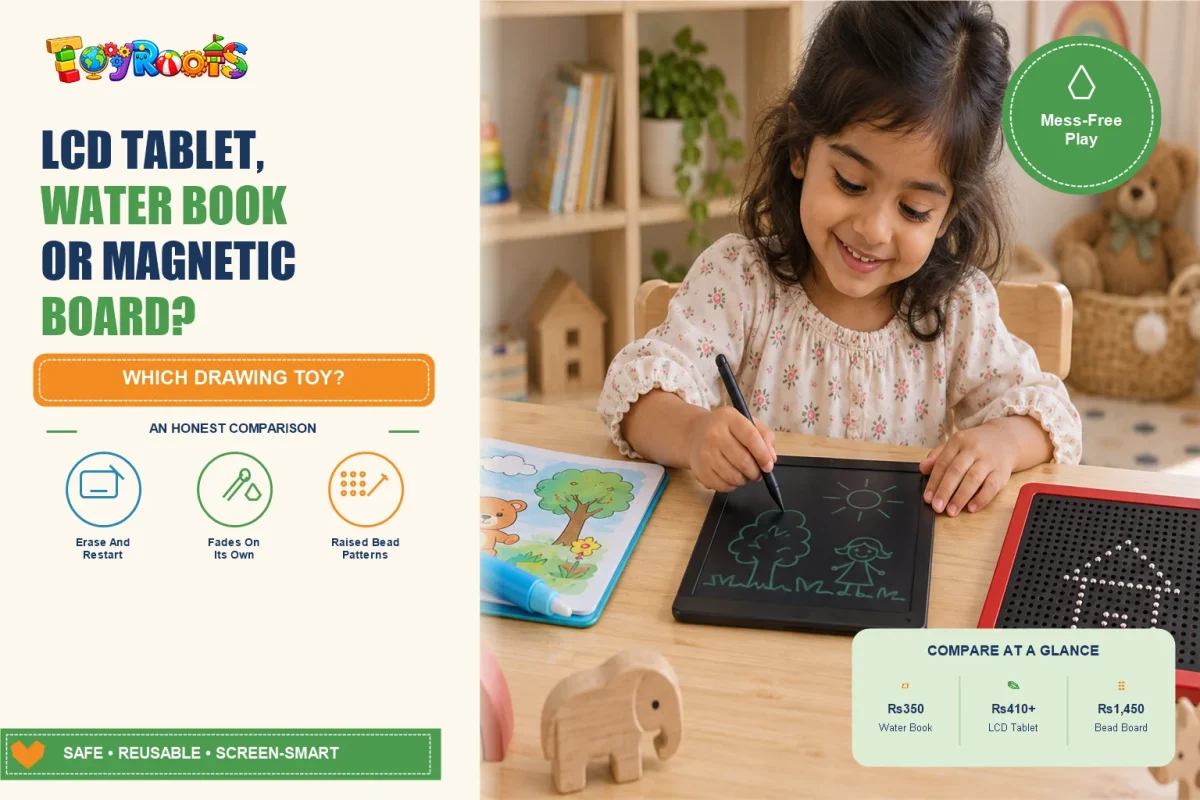
Three of the toys we sell all promise the same thing — a child can draw without paint on the walls — and they work in completely different ways. Parents ask us which to pick often enough that it is worth setting them side by side honestly, including where each one is the wrong choice.
The short version
Magic Water Book
LCD Tablet
Magnetic Bead Board
Price
₨350
₨410 – ₨1,350
₨1,450 – ₨1,600
Age
3+
3+
3+
Drawing lasts
5–10 minutes, then fades
Until you press erase
Until you slide it clear
Needs
Tap water
A watch battery
Nothing
Free drawing?
Painting inside printed scenes
Yes, any line
Dots on a fixed grid
Travel
Excellent — it is a book
Good at 6.5″, bulky at 16″
Fine, but heavier
Magic Water Book — ₨350
A board book with printed scenes and a chunky pen you fill with tap water. Painting over a page brings the colours up; as the water dries the page goes white again and is ready to reuse. Five designs — dinosaurs, safari animals, ocean, space and forest.
Best for the youngest hand in the house and for journeys. There is genuinely nothing to spill, no ink and no chemicals, and a page resets itself without an adult doing anything.
Not for a child who wants to keep what they made, or one who wants to draw their own thing — you are colouring inside a printed scene, not starting from blank paper. Expect the pen to need refilling several times in a long session.
A pressure-sensitive screen that draws a line where the stylus presses, and clears completely at the press of a button. Five sizes, from a 6.5-inch that fits in a bag to a 16-inch that sits on a table. It is our most-reviewed drawing toy — 12 reviews at 4.42 out of 5.
Best for repetition. A child practising letters, spellings or sums gets a blank surface again instantly, hundreds of times, without a sheet of paper going in the bin. Line thickness changes with pressure, so it behaves more like a pencil than the other two.
Not for keeping work — one button and the page is gone, which upsets some children more than others. Size matters more than the price gap suggests: the 6.5-inch is a travel toy, and a child drawing at a table will outgrow it quickly.
A sealed board holding 380 small steel beads under the surface. A magnetic stylus pulls them up to make a raised dot, and a slider pushes them all back down. The Pro edition adds pattern challenge cards to copy.
Best for a child who likes the feel of a thing as much as the picture — the beads click up under the pen and the finished pattern is raised, not printed. It also holds a design indefinitely, which the other two do not.
Not for free drawing. The beads sit on a fixed grid, so you make dot patterns rather than smooth curves, and letters come out blocky. It is also three to four times the price of the water book, and the beads are sealed in — nothing to lose, but nothing to replace either if the board cracks.
Worth answering plainly, because we sell mostly screen-free toys and this one has a screen.
It is a screen, but it is not connected to anything. It shows only what the child draws on it — no apps, no video, no notifications, nothing arriving from outside. The concern behind most screen-time advice is passive watching and content designed to hold attention; a surface that does nothing until a child moves a stylus across it is a different thing.
That said, if your household rule is simply “no screens”, the water book does the same job for ₨350 and settles the question.
So which one?
Buy the water book if the child is at the younger end of 3+, if it is mainly for car journeys and waiting rooms, or if you want the cheapest way to find out whether they enjoy this kind of play at all.
Buy the LCD tablet if they are practising writing or numbers, or if they draw constantly and you are getting through paper. Pick the size for where it will actually be used rather than the largest you can afford.
Buy the magnetic bead board if the child already likes fiddly, tactile things, or if you want something that keeps a finished design rather than clearing it.
All three are in stock and delivered anywhere in Pakistan for ₨200, free on orders over ₨3,000.
If you have a 3- to 5-year-old, you may hear these sentences many times throughout the day.
You love spending time with your child, but there are moments when you need to cook, work, clean, answer a phone call, or simply have a few quiet minutes. Yet as soon as you step away, your child may lose interest in their toys and immediately ask you to come back.
So how can you teach a preschooler to play independently?
The good news is that independent play is a skill children develop gradually. You don’t need to force your child to play alone, and you don’t need a room full of expensive toys.
With the right environment, realistic expectations, and age-appropriate activities, you can gradually help your child become more comfortable starting and continuing play without constant adult involvement.
Important: Independent play does not mean unsupervised play.
The goal is to help your child become confident enough to explore, create, and solve small problems while you remain aware of what they are doing and provide a safe environment.
What Is Independent Play?
Independent play is when a child chooses an activity, begins playing, makes decisions, explores possibilities, and continues for a period of time without an adult directing every step.
It does not necessarily mean that the parent is in another room.
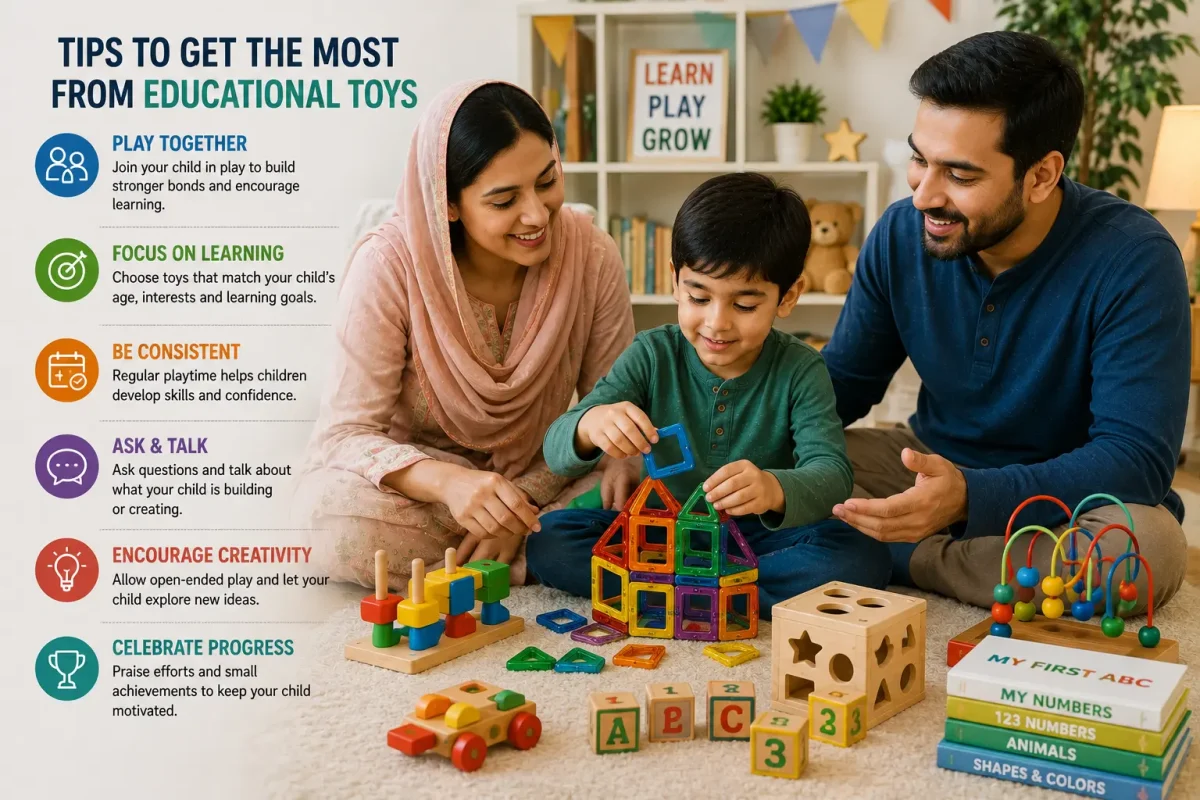
You might be sitting nearby while your child builds something. You might be working at the same table. You may occasionally answer a question or look at what they have created.
The important difference is that the child is leading the play.
For example, there is a difference between:
“Let’s build a house. Put this piece here.”
and:
“Here’s your building set. What would you like to make?”
In the first situation, the adult is directing the activity.
In the second, the child has to decide what to do.
That decision-making is an important part of developing independent play.
Is Independent Play Safe for 3- to 5-Year-Olds?
Yes, age-appropriate independent play can be a healthy part of a preschooler’s routine, but independent play should not be confused with leaving a young child completely unsupervised.
For preschoolers, parents should create a safe play environment and remain aware of what their child is doing.
Think about it this way: You don’t have to play with your child, but you should know what your child is playing with.
Before starting independent play, consider:
Is the toy appropriate for your child’s age and abilities?
Are there small pieces or other potential hazards?
Is the play area free from unsafe objects?
Does the activity require closer supervision?
Have you checked the manufacturer’s recommended age and safety instructions?
Does your child know how to use the toy safely?
For younger 3-year-olds especially, parents may want to remain closer and gradually give their child more space as they demonstrate that they can safely handle an activity.
The child can make a house, tower, bridge, animal, road, spaceship, or something that exists entirely in their imagination.
The second type of activity gives the child something extremely valuable:
possibilities.
Open-ended toys can be particularly useful for independent play because the child—not the toy or the parent—decides what happens next.
Parents looking for more hands-on learning options can also explore ToyRoots’ Montessori toys, which include self-directed, hands-on activities designed for toddlers and preschoolers.
Don’t Expect 30 Minutes of Independent Play Immediately
One of the biggest mistakes parents make is setting the goal too high.
If your child currently wants you involved every few minutes, don’t suddenly expect them to play independently for half an hour.
Start small.
Try 5–10 minutes of independent play while you remain nearby.
Once your child becomes comfortable with that amount of time, gradually increase it.
The objective isn’t to test how long your child can stay away from you.
It is to build confidence through repeated successful experiences.
Think of independent play like learning any other skill.
A child doesn’t learn it perfectly on the first attempt.
They practice.
They get bored.
They ask for help.
They try again.
And gradually, they become more capable.
1. Create a Simple “Yes, You Can Play” Area
If every toy in the house is packed into one giant box, your child may actually find it harder to choose something.
Instead, create a small play area with a limited number of activities.
For parents specifically looking for hands-on number activities, ToyRoots also has a dedicated Counting & Number Learning Toys collection.
The objective isn’t to turn every quiet moment into a lesson.
Sometimes your child should simply be allowed to explore.
9. What If My Child Keeps Calling Me?
They probably will.
Especially in the beginning.
Instead of getting frustrated, create a predictable response.
You can use a simple rule:
“Try it yourself first, then ask me.”
If your child asks:
“Can you build this?”
Try:
“Have a try first. I’ll look when you’re done.”
If they genuinely cannot solve something, help—but avoid doing the entire task for them.
The goal isn’t to refuse your child.
The goal is to slowly change your role from playmate to supporter.
Independent Play Doesn’t Mean Less Connection
This is important.
Some parents worry that encouraging independent play means spending less time with their children.
It doesn’t.
Your child still needs affection, conversation, shared activities, reading, outdoor play, and family time.
Independent play simply gives your child another experience:
“I can enjoy myself even when Mum or Dad isn’t directing everything.”
It can help children practice confidence, persistence, creativity, decision-making, and problem-solving.
And it gives parents something valuable too:
a little breathing room.
What Should a Parent Do During Independent Play?
You don’t need to constantly watch your child.
But you also don’t need to completely disappear.
A useful approach is awareness without constant intervention.
You can:
Stay within reasonable reach when appropriate.
Know which activity your child is using.
Check in occasionally.
Let your child attempt small challenges independently.
Step in when something becomes unsafe.
Offer help when your child genuinely needs it.
Avoid directing every step.
The more capable your child becomes, the more freedom you can gradually give them.
Independent play should grow alongside your child’s confidence and ability.
A Simple Independent-Play Routine for Preschoolers
You don’t need a complicated schedule.
Try something like this:
5 minutes: Play together and introduce the activity.
10 minutes: Let your child continue independently while you remain nearby.
5 minutes: Check in and talk about what they created.
Then repeat the process when appropriate.
As your child becomes more comfortable, gradually increase the independent portion.
Some days will work better than others.
That’s completely normal.
A tired, hungry, overstimulated, or upset child may need more connection than usual.
Independent play isn’t a performance that your child has to succeed at every day.
What If My 3-Year-Old, 4-Year-Old, or 5-Year-Old Plays Differently?
Every child develops at a different pace.
A 3-year-old may need more frequent reassurance and shorter periods of independent play.
A 4-year-old may be ready to spend longer periods exploring a familiar activity.
A 5-year-old may be able to create more complicated games, constructions, or imaginative scenarios independently.
These are general patterns, not strict rules.
Instead of asking:
“How long should a preschooler play independently?”
ask:
“Is my child becoming more comfortable starting and continuing play without constant direction?”
Progress matters more than a specific number of minutes.
The Goal Isn’t to Keep Your Child Busy
This is the biggest idea to take away.
Independent play isn’t about finding the magical toy that keeps your child occupied for an hour.
It is about helping children develop the ability to start, explore, make decisions, solve small problems, and continue without constant adult direction.
The best toys can support this process, but your approach matters just as much.
Give your child fewer instructions.
Give them more opportunities.
Let them work through small, age-appropriate challenges.
Allow them to make something “wrong.”
Allow them to become bored.
And give them enough time to discover:
“I can figure something out myself.”
That confidence is far more valuable than simply keeping a child busy.
Frequently Asked Questions About Independent Play
Is independent play good for preschoolers?
Yes. Age-appropriate independent play gives preschoolers opportunities to make choices, explore, create, solve small problems, and practice continuing an activity without constant adult direction.
Should a 3-year-old play independently?
A 3-year-old can practice independent play for short periods, particularly with familiar, age-appropriate activities in a safe environment. Younger preschoolers may need more frequent check-ins and closer parental awareness.
Does independent play mean leaving my child alone?
No. Independent play means the child leads the activity rather than an adult directing every step. Parents should still provide a safe environment and remain appropriately aware of what the child is doing.
How long should a preschooler play independently?
There is no single correct amount of time. Start with short periods, such as 5–10 minutes, and gradually increase them as your child becomes comfortable. Some children will naturally manage longer periods than others.
Don’t feel that you have to immediately solve the problem. Give your child a small selection of activities and some time to decide what to do. Boredom can sometimes be the starting point for creativity and self-directed play.
Should parents play with their children at all?
Absolutely. Independent play should complement—not replace—shared play and meaningful interaction with parents. Children benefit from both experiences: playing with others and learning to explore independently.
Final Thoughts
Helping a preschooler develop independent play isn’t about getting your child to need you less.
It’s about helping your child become more confident in what they can do for themselves.
Start small.
Create a safe and simple play environment. Choose activities that your child can lead. Start an activity together and gradually step back. Resist the temptation to solve every little problem. Let your child experience small amounts of boredom and frustration while remaining available when they genuinely need help.
Remember:
Independent play is not unsupervised play.
For children aged 3–5, independence should grow gradually alongside their abilities, while parents continue to provide a safe environment and appropriate awareness.
You don’t need a room full of expensive toys.
A few purposeful, age-appropriate activities can be enough.
At ToyRoots, we believe in learning through play—giving children opportunities to build, explore, think, create, and solve problems rather than simply keeping them entertained.
Because the ultimate goal isn’t simply to keep your child busy.
It’s to help them discover what they can do on their own.
It\’s 4 PM. Homework is done. Your child is quiet — too quiet. You check the room and there they are, hunched over a phone or tablet, lost in YouTube or a mobile game. You tell them to stop. There\’s a tantrum. You give in for \”just 10 more minutes.\” An hour passes. It is not a story of one day, it continues!
If this sounds familiar, you are not alone.
Pakistani child experts confirm what parents across Lahore, Karachi, and Islamabad already feel: children under 5 gain nothing from screen time — they need books, toys, and real interaction. And psychologists warn that excessive screen use is making children more isolated and emotionally detached.
But here\’s what nobody tells you: the real problem isn\’t the screen. It\’s the absence of something better.
When children are bored, screens win by default. The solution is not stricter rules — it\’s giving your child something genuinely engaging to do instead. This guide will show you exactly how.
Why Pakistani Parents Are More Worried Than Ever
Screen addiction in Pakistani children has reached a point where even child psychologists are raising alarms. Leading Pakistani child health experts point out that while older children may learn some things from screens, children aged 3–4 years gain nothing developmental from screen time. \”They need other things — books, toys, and real interaction,\” say experts.
Meanwhile, reports from cities like Multan describe mothers who remember their daughters playing with dolls, arranging imaginative games, and developing social skills through play — all now replaced by the blue glow of mobile screens.
The good news? Play-based learning works — and it works fast. When children have access to genuinely engaging toys, they naturally choose play over screens.
1. Replace \”Screen Boredom\” With Open-Ended Play
The biggest reason children reach for phones is that screens require zero effort to start. A good toy, by contrast, needs a child to engage their imagination.
What works: Open-ended toys that have no single \”right\” answer — building blocks, magnetic construction sets, puzzles, and sorting games. These toys grow with your child\’s imagination, meaning a single toy can entertain for months, not minutes.
ToyRoots recommendation: Our Magnetic Construction Building Blocks Set is one of the most popular choices for Pakistani parents wanting to replace screen time. Children aged 3 and above can build anything — towers, bridges, animals, vehicles — and no two sessions look the same.
The key insight: Screens are passive. Good toys are active. When your child\’s brain is actively working, they won\’t even think about the phone.
2. Make \”Thinking Games\” a Daily Habit
One of the most effective screen time replacements for children aged 4 and above is logic and problem-solving play. When children are challenged to figure something out, they experience a sense of reward that is more satisfying — and longer-lasting — than watching a video.
Pakistani parents who have introduced puzzle and logic toys consistently report that their children become so absorbed they forget to ask for the phone.
What works: Tangram puzzles, shape-sorting games, traffic logic games, and number-matching activities. Start with something slightly challenging — not too easy that it\’s boring, not so hard it causes frustration.
ToyRoots recommendation: Our Traffic Jam Rescue Logic Game is a bestseller for exactly this reason. Children aged 4+ are given a puzzle board with cars and must figure out how to free the stuck vehicle. There\’s no screen, no battery, and no adult needed — children solve it independently and feel genuinely accomplished.
The key insight: Screen games give instant gratification with no real effort. Logic toys teach children that thinking leads to reward — a lesson that benefits them in school and beyond.
3. Bring Back Family Game Night
In Pakistani culture, family togetherness is deeply valued. Yet screen time has quietly replaced shared family play — with each family member on their own device.
What works: Board games and card games that the whole family can play together. These create the social interaction that screens can never replicate. Children develop patience, turn-taking, fair play, and the ability to handle both winning and losing — all critical life skills.
ToyRoots recommendation: Our Magnetic Ludo Board Game — portable and foldable — is perfect for Pakistani families. Ludo is already part of our culture. This magnetic version keeps pieces from sliding on car rides, at picnics, or during power cuts. It works everywhere, needs no electricity, and brings the whole family together.
The key insight: Children don\’t just want entertainment — they want attention. Family games give them both, and they\’ll choose this over a screen every time.
4. Start Early — The 0–2 Year Window Is Critical
This is the advice most Pakistani parents receive too late. Child development experts consistently emphasize that the first two years of life are when the brain develops fastest — and screen time during this period does the most damage.
For babies and toddlers, the brain develops through physical touch, sensory exploration, and real-world interaction — none of which a screen can provide.
What works: Sensory toys, soft stacking cups, shape sorters, texture balls, and activity mats. These build the neural pathways that screens simply cannot.
ToyRoots recommendation: Our ranges for Ages Under 1 Year and Ages 1+ Year are specifically curated for early development. Every toy in this range is selected to stimulate the senses and build motor skills during the critical first years.
The key insight: The earlier you establish toy-based play habits, the easier it is to maintain them as your child grows. Parents who start screen-free play early report far fewer screen addiction struggles later.
5. Use \”Swap, Don\’t Ban\” As Your Strategy
The biggest mistake Pakistani parents make when trying to reduce screen time is going cold turkey. Banning screens outright causes tantrums, resentment, and the moment you relax the rule — an immediate return to excessive use.
A far more effective strategy is the swap: every time your child reaches for a screen, offer something engaging as an immediate alternative. Over time, children build new habits and naturally reach for the toy first.
How to do it:
Keep a basket of 3–4 engaging toys accessible and visible at all times
When screen time ends, immediately offer a toy rather than walking away
Celebrate when your child chooses the toy independently
The key insight: You cannot win by removing something. You win by replacing it with something better. Screens are powerful because they\’re always there and always easy. Make your toys just as accessible.
6. Use Screen-Free Toy Time as a Sleep Routine
Pakistani parents consistently report that children\’s worst screen habits develop in the hours before bed. Children use phones in bed, which disrupts sleep, which makes them tired and irritable the next day — creating a cycle that is hard to break.
What works: Quiet, calming toys that signal \”wind-down time.\” Wooden puzzles, drawing sets, play dough, and simple stacking games are all excellent pre-sleep activities that tire the brain gently without the stimulation of a screen.
ToyRoots recommendation: Browse our Puzzles Collection for calm, focused toys that are perfect for the hour before bedtime.
The key insight: Blue light from screens disrupts sleep and makes it harder for children to fall asleep. Replacing the last 30–60 minutes before bed with quiet toy play dramatically improves sleep quality — and most Pakistani parents notice the difference within a week.
7. Invest in Quality, Not Quantity
One of the most common mistakes is buying many cheap toys that break quickly and lose appeal within days. When toys break or become boring fast, children default back to screens — because screens never break and never run out of content.
What works: Fewer, higher-quality toys that are durable, open-ended, and genuinely engaging. A well-chosen educational toy will hold a child\’s attention for months — and the investment in your child\’s development is far greater than the price difference.
ToyRoots approach: Every toy we stock is selected for durability, child safety (non-toxic materials), and genuine educational value. We focus on Montessori and STEM principles — meaning our toys grow with your child\’s development rather than becoming quickly redundant.
The key insight: One Rs 2,500 toy that lasts a year and develops real skills is a better investment than five Rs 500 toys that break in a month and teach nothing.
The Bottom Line for Pakistani Parents
Screen addiction in children is real, it\’s growing, and it\’s a genuine concern for child development experts across Pakistan. But the solution isn\’t stricter rules or more arguments — it\’s smarter play.
Give your child something better to do, and they will do it.
The research is clear: children who have access to engaging, age-appropriate toys spend less time on screens, develop stronger cognitive and social skills, perform better in school, and are happier overall.
At ToyRoots, everything we stock is chosen with exactly this in mind — Montessori and STEM toys that are genuinely engaging, safe, locally available with Cash on Delivery, and built to last.
Choosing the right toy for your child is about much more than keeping them busy. The right educational toy can encourage curiosity, creativity, problem-solving, coordination, concentration, and independent play.
But with so many toys available, parents often ask:
Which educational toys are actually suitable for my child’s age?
A toy that is perfect for a 1-year-old may be too simple for a 6-year-old. Similarly, a toy designed for older children may be frustrating or unsafe for a toddler.
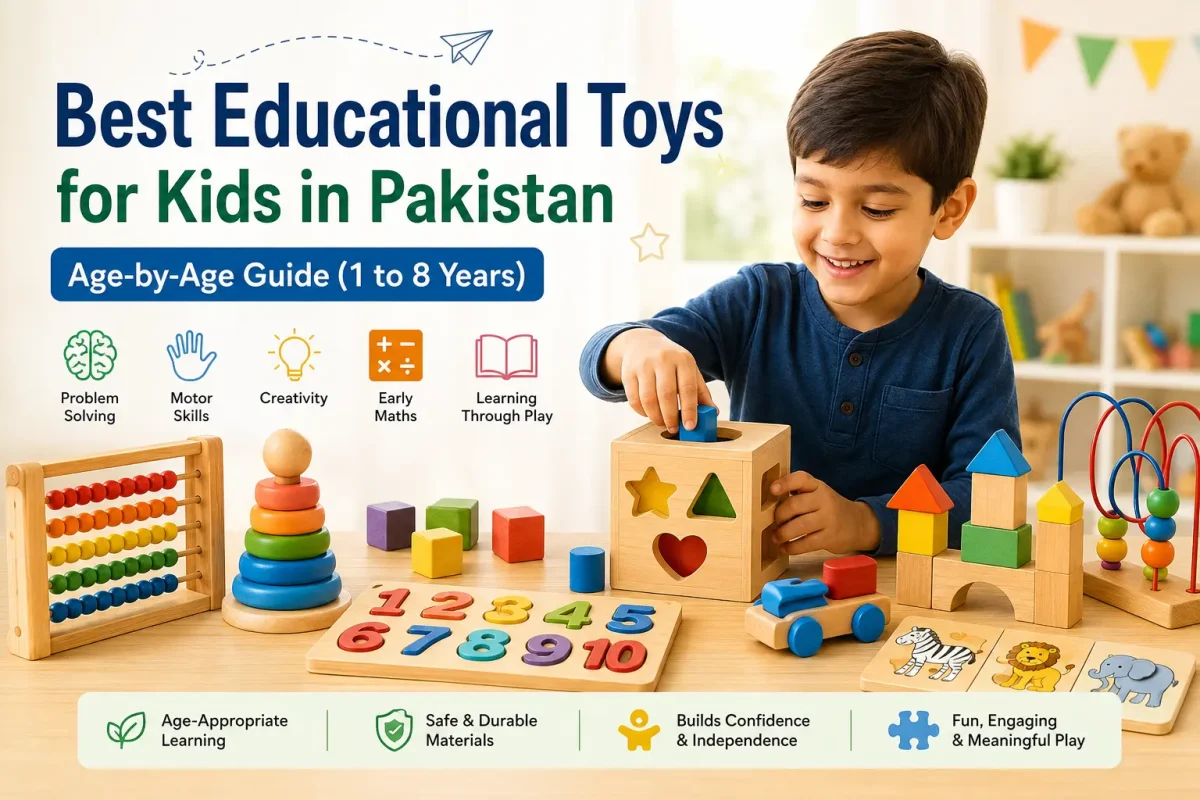
In this guide, we’ll explore the best educational toys for kids in Pakistan from 1 to 8 years old, what skills different toys can encourage, and how parents can choose the right toy based on age, interests, learning needs, safety, and budget.
The goal isn’t to find the most expensive toy. It’s to find a toy that gives your child a reason to explore, think, build, create, solve, and play.
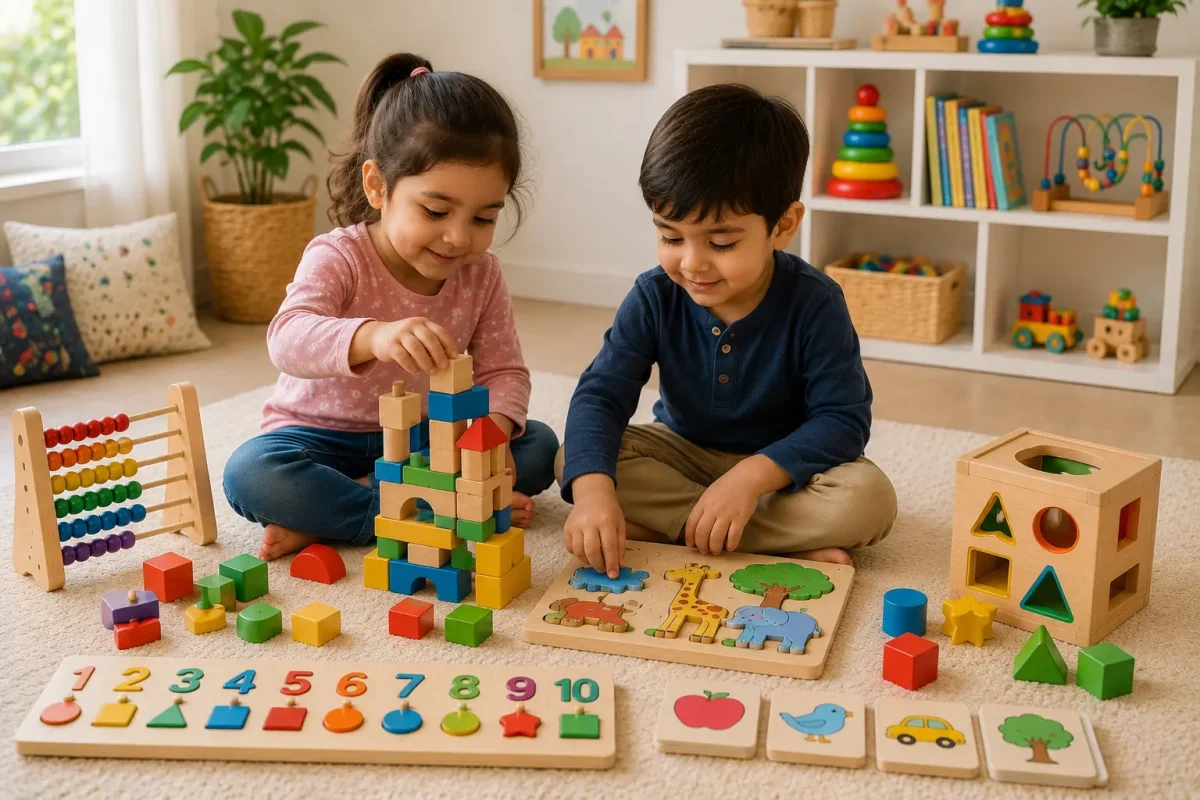
Educational toys can make learning through play fun and engaging for young children.
Why Are Educational Toys Important?
Educational toys turn everyday play into an opportunity for learning.
Unlike toys that provide entertainment without much participation, good educational toys encourage children to actively interact with objects, make decisions, experiment, and try again when something doesn’t work.
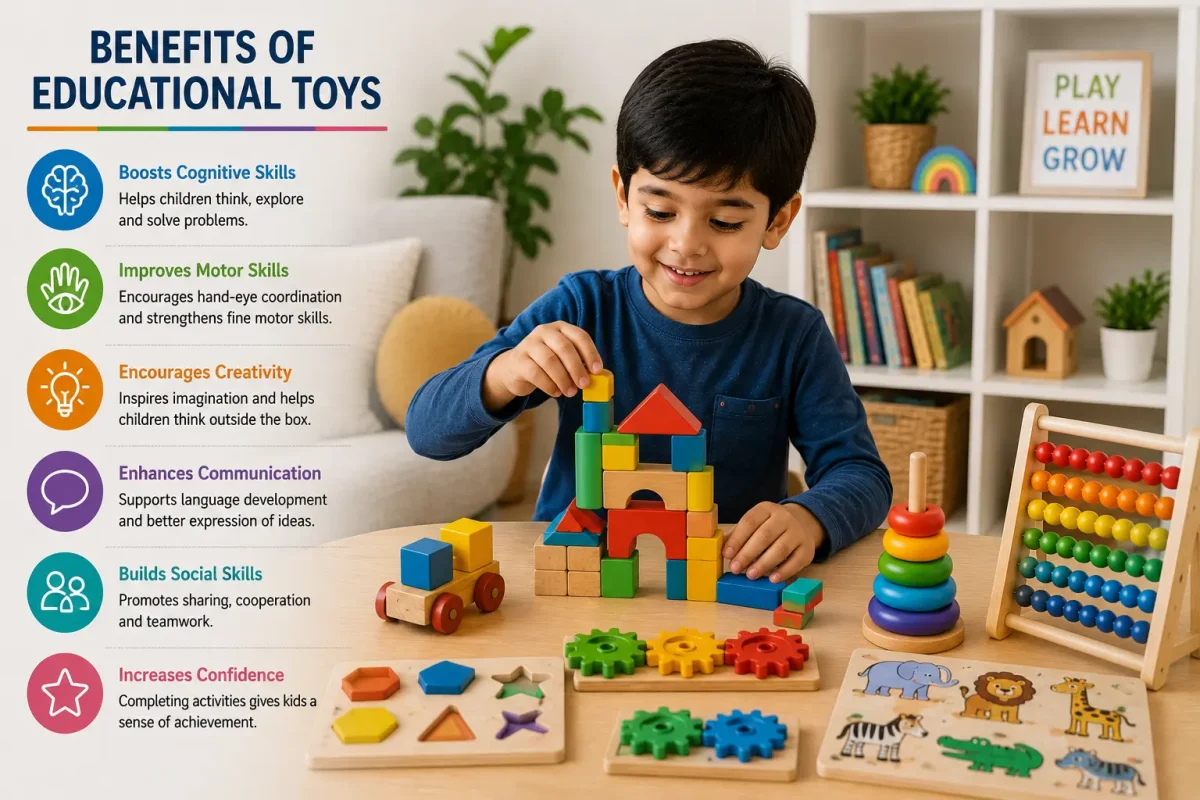
Depending on the toy, educational play can help children develop:
Fine motor skills
Hand-eye coordination
Problem-solving skills
Early maths skills
Language and vocabulary
Concentration
Creativity and imagination
Spatial awareness
Logical thinking
Independent learning
Confidence
However, an educational toy does not need to look like a classroom activity.
A simple wooden puzzle can teach problem-solving. Building blocks can introduce concepts of balance and structure. A counting toy can make early maths more hands-on.
Educational toys can make learning through play fun and engaging for young children.
The best learning often happens when children don’t feel like they are being taught.
Parents looking for a broader selection can also explore ToyRoots educational toys, including Montessori-inspired puzzles, building toys, counting activities and STEM learning options.
Best Educational Toys for 1-Year-Olds
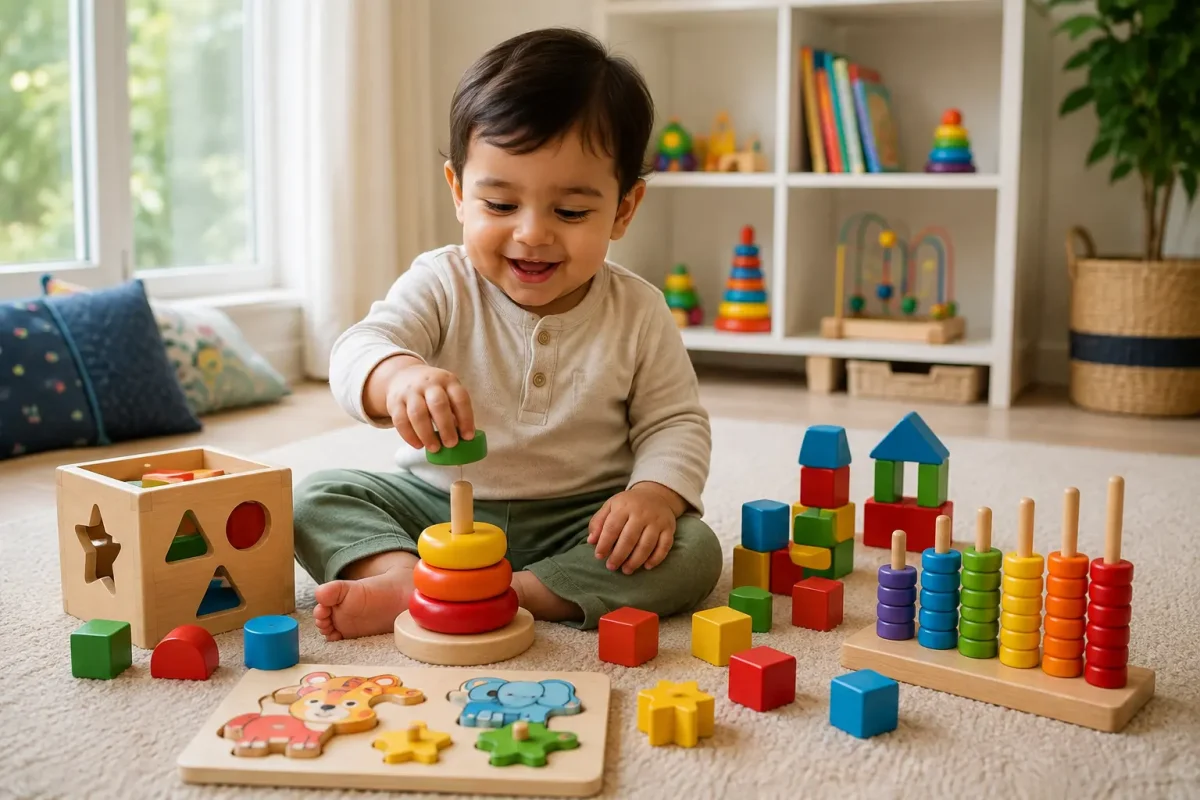
At around one year old, children are becoming increasingly curious about their surroundings. They are learning through touching, moving, grabbing, stacking, dropping, and exploring.
At this stage, simple toys are often better than complicated ones.
Skills to Encourage
Hand-eye coordination
Fine motor skills
Object recognition
Cause and effect
Balance and movement
Early problem-solving
Sensory exploration
Recommended Educational Toys for 1-Year-Olds
1. Shape Sorters
Shape sorters encourage children to recognise basic shapes and work out where each piece belongs.
2. Stacking Toys
Stacking rings, cups, or blocks can help children understand size, order, balance, and coordination.
3. Simple Wooden Puzzles
Choose puzzles with large, easy-to-hold pieces. Animal, fruit, vehicle, and everyday-object puzzles can introduce recognition while developing hand control.
4. Colour and Matching Toys
Simple matching activities can introduce colours and visual differences without making learning complicated.
5. Push and Pull Toys
For children who are becoming more mobile, suitable push-and-pull toys can encourage movement and coordination.
Age-appropriate educational toys help toddlers explore shapes, colours, coordination and early problem-solving through play.
Parent Tip
At this age, don’t worry about whether your child completes an activity correctly. Let them explore the toy in their own way while an adult stays nearby when supervision is needed.
Best Educational Toys for 2-Year-Olds
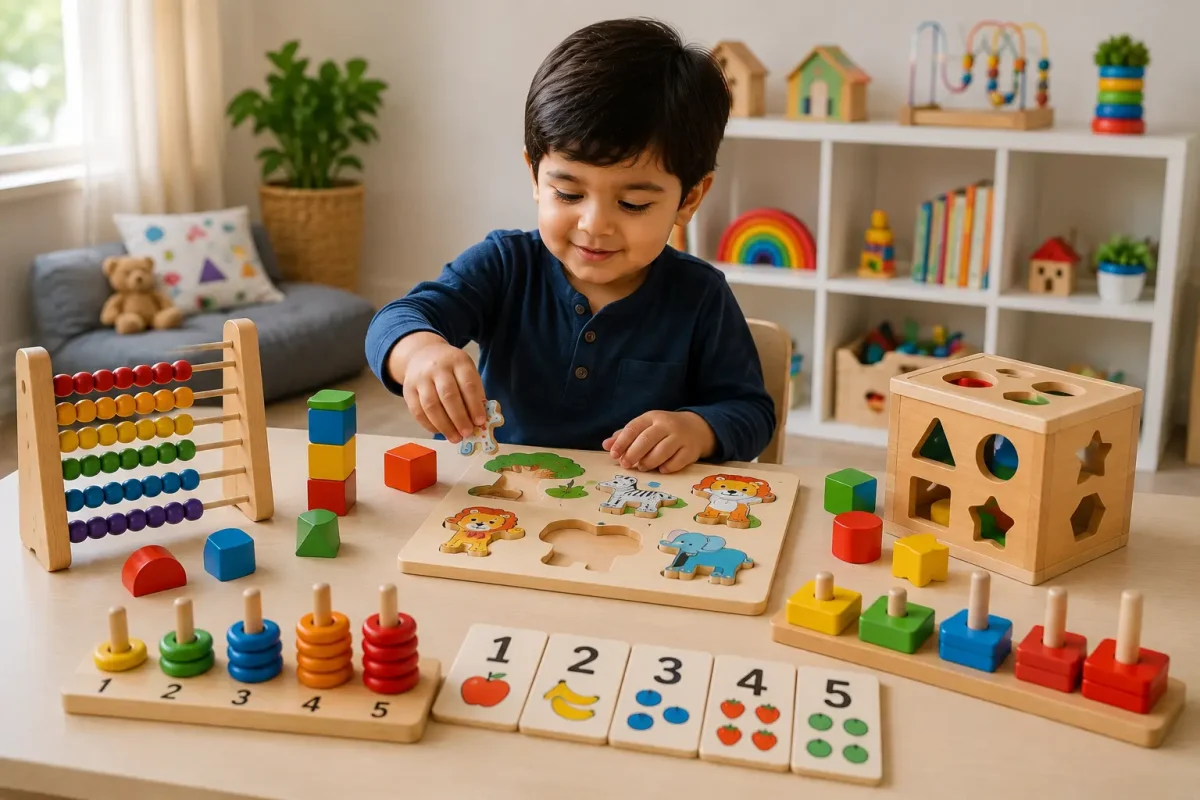
Two-year-olds are beginning to understand simple instructions and relationships between objects. They are also developing vocabulary and becoming more interested in sorting, matching, counting, and identifying things.
Skills to Encourage
Matching
Colour recognition
Shape recognition
Early counting
Fine motor control
Vocabulary
Memory
Simple problem-solving
Recommended Educational Toys for 2-Year-Olds
1. Wooden Matching Toys
Matching colours, pictures, shapes, or objects can help children notice similarities and differences.
2. Number and Counting Toys
Simple counting activities introduce numbers through hands-on play. Parents can explore ToyRoots counting and number learning toys for age-appropriate counting and early maths activities.
3. Wooden Puzzles
Large-piece puzzles can encourage concentration and problem-solving. You can also browse the ToyRoots educational puzzles collection for different puzzle styles and difficulty levels.
4. Alphabet Puzzles
Simple alphabet puzzles can introduce letters and improve recognition.
5. Sorting Toys
Educational toys help 2-year-olds develop matching, counting, sorting, coordination and early problem-solving skills.
Colour and shape sorting activities help children classify objects and develop early logical thinking.
For more age-specific ideas, parents can explore educational toys for 2-year-olds at ToyRoots, including puzzles, counting toys, sorting activities and other hands-on learning toys.
Best Educational Toys for 3-Year-Olds
At three years old, children are usually ready for more challenging activities. They can begin solving simple puzzles, recognising more letters and numbers, and using toys for imaginative play.
Skills to Encourage
Problem-solving
Early maths
Language development
Creativity
Memory
Concentration
Fine motor skills
Imaginative play
Recommended Educational Toys for 3-Year-Olds
1. Alphabet and Number Puzzles
These combine hands-on play with early literacy and numeracy.
2. Building Blocks
Blocks allow children to build towers, houses, vehicles, and imaginary structures while learning about shapes, balance, and space.
3. Logic Games
Simple logic activities can introduce children to patterns, matching, sequencing, and problem-solving.
4. Magnetic Building Toys
Age-appropriate magnetic construction toys can encourage creativity and spatial thinking. The ToyRoots Magnetic Building Blocks are one option for hands-on construction and 3D building.
5. Pretend-Play Toys
Pretend play gives children opportunities to develop language, imagination, and social skills.
Preschool children develop creativity, problem-solving and coordination through puzzles, building and hands-on educational play.
Parent Tip
Ask open-ended questions such as:
“What are you building?”
or
“What do you think will happen if you put this piece here?”
Instead of giving the answer immediately, give your child time to think.
Best Educational Toys for 4-Year-Olds
Four-year-olds can often handle activities that require several steps. They may also start showing stronger preferences for puzzles, building, drawing, numbers, stories, or pretend play.
This is a good time to gradually increase the level of challenge.
Skills to Encourage
Logical thinking
Early mathematics
Pattern recognition
Concentration
Creativity
Spatial awareness
Problem-solving
Communication
Recommended Educational Toys for 4-Year-Olds
1. Advanced Wooden Puzzles
Choose puzzles with more pieces or slightly more complex designs than toddler puzzles.
2. Pattern and Sorting Games
These can help children recognise sequences and relationships.
3. Building Sets
Construction toys allow children to plan and create their own designs.
4. Early Maths Toys
Counting games, number boards, and simple mathematical activities can make numbers more interactive. The ToyRoots counting and number toys collection includes hands-on options for early numeracy.
5. Creative Learning Toys
Drawing, craft, modelling, and construction activities give children opportunities to create something themselves.
At this age, the best toys are often those that have more than one possible way to play.
Best Educational Toys for 5-Year-Olds
Five-year-olds are becoming more capable of following instructions, solving multi-step problems, and staying focused on activities for longer periods.
This is also a good stage to introduce more structured STEM and logic activities.
Skills to Encourage
Problem-solving
Logical thinking
Early STEM skills
Mathematics
Creativity
Concentration
Planning
Independent play
Recommended Educational Toys for 5-Year-Olds
1. Logic Puzzles
Puzzles and brain games can encourage children to think carefully and try different solutions. The ToyRoots educational puzzles collection includes logic, number, geometric and other problem-solving activities.
2. Construction Toys
Building activities introduce planning, structure, balance, and spatial reasoning.
3. STEM-Inspired Toys
Age-appropriate STEM toys can introduce children to basic concepts through hands-on activities. Parents can explore the ToyRoots STEM toys collection for different types of building, logic, maths and science-inspired toys.
4. Number and Maths Games
Games involving counting, matching, patterns, and simple calculations can make early maths enjoyable.
5. DIY and Creative Kits
Building or creating something from separate pieces encourages planning and persistence.
The important thing is to choose a challenge that is difficult enough to be interesting but not so difficult that the child gives up.
Best Educational Toys for 6-Year-Olds
At six, children are entering an important stage where they can increasingly follow rules, understand more complex instructions, and solve problems independently.
Educational toys can now become more challenging.
Skills to Encourage
Critical thinking
Problem-solving
STEM concepts
Strategy
Mathematics
Creativity
Reading and language
Independent learning
Recommended Educational Toys for 6-Year-Olds
1. Building and Construction Sets
Children can follow instructions or create their own structures.
2. Logic Puzzles
More challenging puzzles can encourage concentration and reasoning.
3. STEM Activities
Science and engineering activities can introduce concepts through experimentation and hands-on learning. Explore STEM toys at ToyRoots for age-appropriate options.
4. Strategy Games
Age-appropriate strategy games can teach planning, patience, rules, and decision-making.
5. Creative Projects
Hands-on educational toys help 5–6-year-olds develop problem-solving, maths, creativity and construction skills.
Art, construction, modelling, and DIY activities encourage children to turn ideas into something physical.
Best Educational Toys for 7-Year-Olds
Seven-year-olds can often enjoy toys that require planning, experimentation, and multiple steps.
Instead of simply asking whether a toy is “educational”, ask:
What will my child actually do with it?
A good toy should give the child an opportunity to make decisions and solve problems.
Recommended Educational Toys for 7-Year-Olds
Advanced puzzles
Construction sets
STEM activities
Science experiment kits
Logic games
Number and maths games
Strategy games
Creative building activities
Why Open-Ended Toys Are Valuable
A toy with one fixed activity may become boring quickly.
An open-ended building set, puzzle collection, or creative kit can be used repeatedly in different ways.
That gives children more opportunities to experiment and develop their own ideas.
Best Educational Toys for 8-Year-Olds
By eight, many children are ready for more challenging activities that involve strategy, science, engineering, logic, and creativity.
At this age, parents should consider both age and individual ability.
A seven- or eight-year-old who loves science may enjoy a STEM kit, while another child may get much more value from a strategy game, construction set, puzzle, or creative activity.
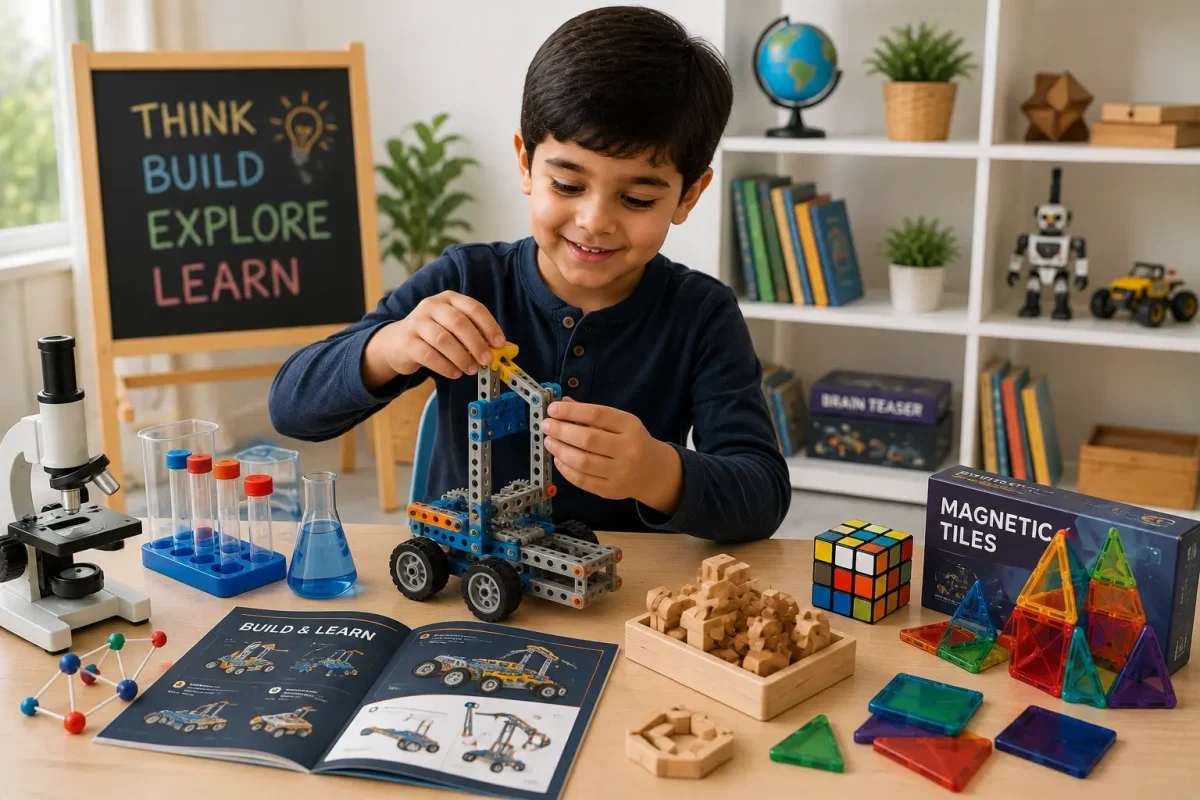
Hands-on STEM and construction activities encourage problem-solving, creativity and logical thinking in 7–8-year-olds.
Recommended Educational Toys for 8-Year-Olds
Advanced STEM kits
Science experiment kits
Engineering and construction sets
Challenging logic puzzles
Strategy games
Advanced building toys
Creative DIY projects
Maths and problem-solving games
For children who are ready for more advanced hands-on learning, parents can explore the ToyRoots STEM collection. Always check the individual product’s recommended age before ordering.
Educational Toys by Skill: What Should Your Child Learn?
A well-designed toy can support several skills at the same time.
Montessori vs STEM Toys: Which Is Better?
Parents often ask whether they should choose Montessori toys or STEM toys.
The answer is: neither is automatically better.
They support different types of learning.
Montessori-Inspired Toys
Montessori-inspired toys often focus on:
Hands-on exploration
Independence
Concentration
Practical skills
Simple, purposeful activities
Wooden puzzles, sorting toys, stacking activities, and practical-life activities can fit well into this approach. Parents can browse ToyRoots Montessori toys for hands-on learning options.
STEM Toys
STEM stands for:
Science, Technology, Engineering, and Mathematics.
STEM toys often focus more on:
Problem-solving
Building
Experimentation
Logical thinking
Engineering concepts
Scientific exploration
For younger children, simple construction and sorting activities can introduce the foundations of STEM. Older children may be ready for more structured science, engineering, and building activities.
Montessori-inspired hands-on play and STEM activities can both encourage curiosity, problem-solving and independent learning.
So instead of asking “Montessori or STEM?”, ask:
“What kind of learning does my child enjoy right now?”
Wooden Toys vs Electronic Toys
Electronic toys can be entertaining, but children don’t necessarily need lights, sounds, screens, or batteries to learn.
Wooden and hands-on toys can encourage children to actively participate in play.
For example, a wooden puzzle requires the child to:
Look at the pieces.
Compare shapes.
Try different positions.
Make a decision.
Correct mistakes.
Complete the puzzle.
This type of active play can be particularly valuable for young children.
The material itself, however, doesn’t automatically make a toy educational.
A good wooden toy is useful because of the activity it encourages—not simply because it is made from wood.
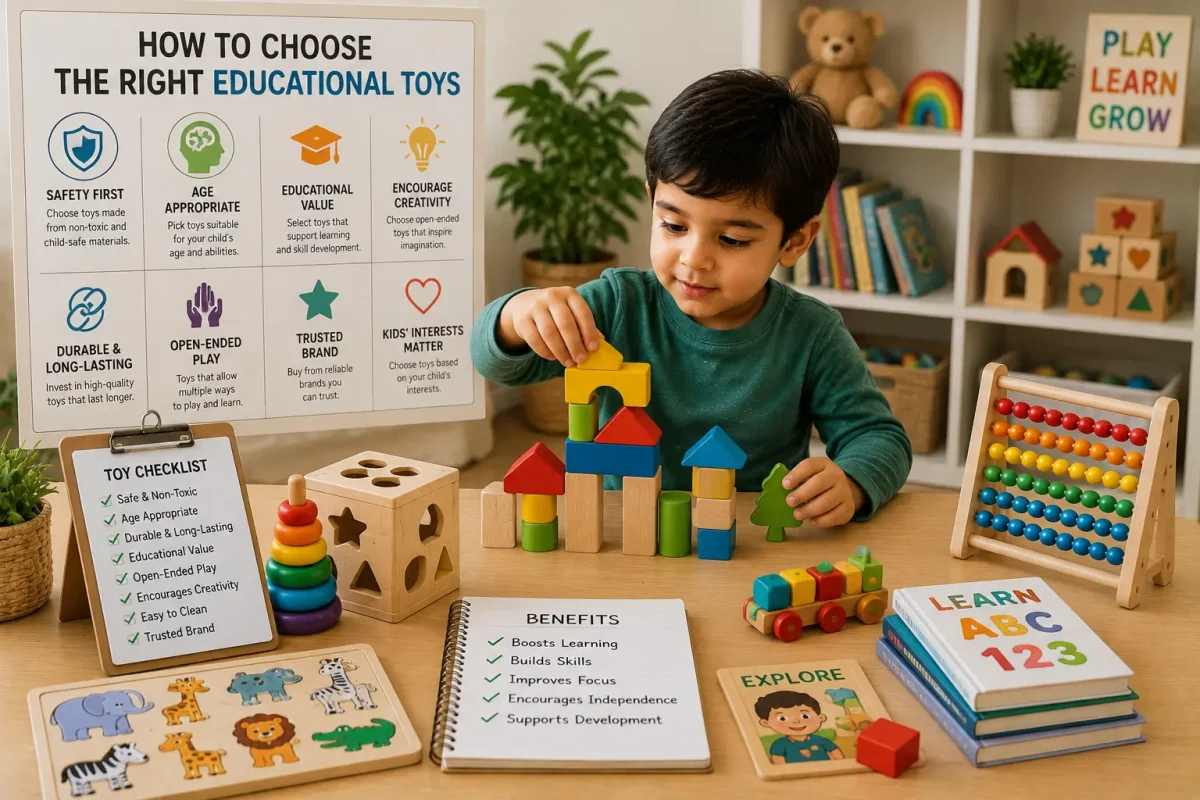
How to Choose the Right Educational Toy for Your Child
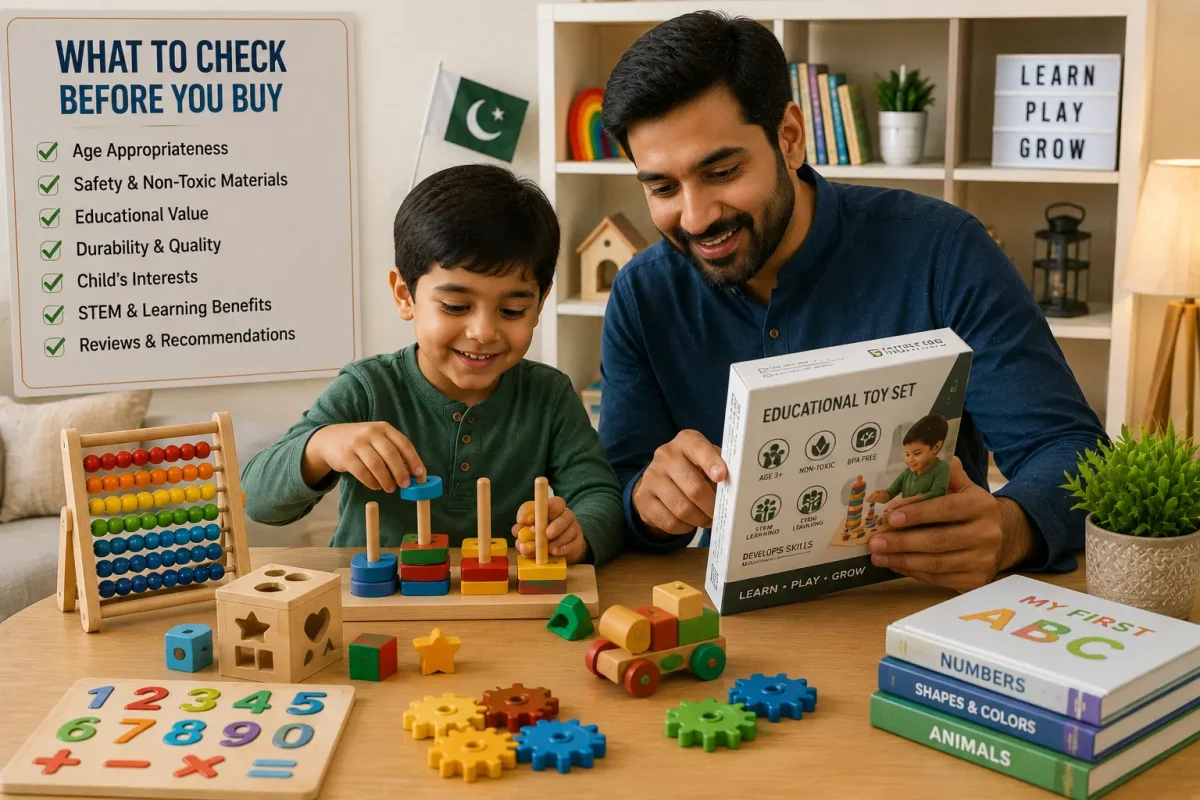
Choose educational toys based on age, safety, interests, learning value, and the right level of challenge.
Before buying a toy, use this simple formula:
Age + Interest + Skill + Challenge + Budget
1. Age
Always check the manufacturer’s recommended age.
2. Interest
Think about what your child naturally enjoys.
Do they like:
Building?
Puzzles?
Numbers?
Drawing?
Science?
Pretend play?
Physical activities?
3. Skill
Choose a toy that supports a skill your child is developing.
4. Challenge
The toy should be challenging enough to keep the child interested without becoming unnecessarily frustrating.
5. Budget
A higher price doesn’t automatically mean better learning.
A simple puzzle that a child uses repeatedly can be more valuable than an expensive toy that is forgotten after a few days.
What Should Pakistani Parents Check Before Buying Educational Toys?
When buying toys online in Pakistan, parents should consider more than appearance.
Check the Age Recommendation
Make sure the toy is appropriate for the child’s age.
Check for Small Parts
Younger children may require toys with larger pieces and closer adult supervision.
Think About Storage
Large construction sets and multi-piece toys need space.
Consider Durability
A toy that can be used repeatedly can offer better long-term value.
Think About Screen-Free Play
Hands-on toys can provide an alternative to passive screen entertainment.
Check the Product Details
Before ordering, read the individual product page for age guidance, materials, dimensions, included pieces, and any supervision requirements.
Parents can check age guidance, safety, materials and educational value before buying toys for their children.
How Much Should You Spend on Educational Toys in Pakistan?
You don’t have to spend thousands of rupees to provide meaningful educational play.
Under Rs. 1,000
Look for:
Simple wooden puzzles
Matching activities
Counting activities
Small logic games
Basic creative activities
Rs. 1,000–2,500
You may find:
More detailed puzzles
Building toys
Educational games
Larger activity sets
Some STEM-inspired toys
Rs. 2,500+
This budget can open up options such as:
Larger construction sets
Advanced STEM kits
Multi-activity learning kits
Detailed model-building toys
More challenging educational games
Parents can choose educational toys based on their budget while prioritising age suitability, safety, quality and learning value.
However, price should not be your main selection criterion.
Ask instead:
Will my child actually play with this repeatedly?
Common Mistakes Parents Make When Buying Educational Toys
Buying a Toy That Is Too Advanced
A toy that is far beyond the child’s current ability can become frustrating rather than educational.
Choosing a Toy Only Because It Says “Educational”
The word “educational” on packaging doesn’t automatically make a toy useful.
Look at the actual activity.
Buying Too Many Toys
Children don’t necessarily need a huge number of toys.
A smaller selection of varied, reusable activities can sometimes provide better play.
Ignoring the Child’s Interests
A toy may be excellent in theory but still sit untouched if it doesn’t match the child’s interests.
Choosing Toys Only for Entertainment
Lights and sounds may attract attention, but active participation is often more valuable for learning.
Forgetting Safety
Always consider age recommendations, small parts, magnets, materials, and supervision requirements.
Frequently Asked Questions
What are the best educational toys for kids in Pakistan?
The best educational toy depends on the child’s age, interests, developmental stage, and the skill you want to encourage. Popular options include wooden puzzles, shape sorters, counting toys, building blocks, logic games, Montessori-inspired toys, and age-appropriate STEM activities.
Which educational toys are best for a 1-year-old?
Simple shape sorters, stacking toys, large-piece wooden puzzles, colour-matching activities, and suitable push-and-pull toys can encourage early coordination, recognition, and exploration.
What are good educational toys for a 2-year-old?
Matching games, sorting toys, simple counting activities, wooden puzzles, alphabet puzzles, and stacking toys are useful options for many two-year-olds.
What should I buy for a 3-year-old?
Consider puzzles, building blocks, alphabet and number activities, logic games, magnetic construction toys, and imaginative-play activities.
What are the best educational toys for 4- and 5-year-olds?
Children at this age can often enjoy more challenging puzzles, building sets, pattern games, early maths activities, creative kits, and age-appropriate STEM toys.
Are STEM toys suitable for young children?
Yes, but the type of STEM activity should match the child’s age. For younger children, simple building, sorting, counting, and cause-and-effect activities can introduce STEM concepts. Older children can move toward science experiments, engineering activities, construction sets, and more structured STEM kits.
Not necessarily. Montessori-inspired toys can encourage hands-on exploration and independence, while other educational toys may focus on STEM, creativity, language, maths, or problem-solving. The best choice depends on the child and the type of play you want to encourage.
Wooden toys can be durable and encourage hands-on, screen-free play, but the material alone doesn’t determine whether a toy is educational. What matters most is the activity the toy encourages.
How do I choose an educational toy for my child?
Start with five things:
Age → Interest → Skill → Challenge → Budget
This simple approach can help you choose a toy that your child is more likely to enjoy and use repeatedly.
Final Thoughts
The best educational toys for kids in Pakistan aren’t necessarily the most expensive, biggest, or most technologically advanced.
The right toy is one that gives a child a reason to think, explore, create, solve problems, experiment, and try again.
For a 1-year-old, that might be a simple shape sorter or stacking toy.
For a 3-year-old, it could be a puzzle or building set.
For a 5-year-old, it might be a logic game or STEM activity.
For a 7- or 8-year-old, it could be a science kit, construction set, strategy game, or challenging puzzle.
Most importantly, choose the toy around your child, not just the age printed on the box.
Consider what they enjoy, what skills they are developing, how much challenge they can handle, and whether the toy will continue to be useful after the first few days.
At ToyRoots, the goal is simple: make learning through play enjoyable, meaningful, and accessible for children in Pakistan.
Explore ToyRoots’ educational toys, including Montessori, wooden, puzzle, counting, building, and STEM learning options, to find age-appropriate choices for your child’s next learning adventure.
Educational toys can make learning through play enjoyable and meaningful for children at different ages.
ToyRoots was proud to participate in The Grand Fiesta at DHA Lahore, a vibrant community event organized by Ms. Shanzay Irfan that brought together families, educators, and young learners for a day of learning, discovery, and fun. On Monday, February 2nd, we had the privilege of exhibiting our carefully selected range of educational toys at the DHA Event Halls, where visitors explored hands-on learning experiences and discovered how play can support children\’s growth and development. From inspiring conversations with parents to joyful moments shared with children, the event was a truly memorable celebration of creativity, curiosity, and lifelong learning.
Event Overview
📍 Venue: DHA Event Halls, Lahore
🕒 Time: 12:00 PM – 10:00 PM
👨👩👧 Families, educators, and young learners joined us for a day filled with learning and fun.
A Day Full of Learning & Fun
Throughout the day, families, educators, and young learners explored our carefully selected collection of educational toys designed to inspire creativity, curiosity, and lifelong learning.
Every interaction at our booth reflected the joy of learning through play, making the event a memorable experience for both children and parents.
Helping Parents Choose the Right Toys
Represented by Asad Abdullah and
Muhammad Shafiq, the ToyRoots team guided parents in selecting educational toys that matched their children\’s developmental milestones and learning needs.
Some of the most popular categories included:
Montessori Toys – Encouraging independent and hands-on learning.
STEM Toys– Making science, technology, engineering, and mathematics engaging.
Science Kits – Inspiring curiosity through exciting experiments.
Age-Appropriate Learning Toys – Carefully selected for every stage of child development.
One of the highlights of the day
Watching children actively engage with educational toys while parents discovered meaningful learning resources reminded us why educational play is so important.
A Community of Curious Learners
Children especially enjoyed exploring our LCD Writing Tablets, tactile puzzles, and educational games. These activities encouraged creativity, reduced screen time, and strengthened problem-solving and critical thinking skills.
We extend our heartfelt appreciation to
Ms. Shanzay Irfan and
Amna\’s Group for organizing such a memorable event and creating a wonderful platform for families and local businesses to connect.
We are equally grateful to every family who visited our booth. Your encouragement and enthusiasm inspire us to continue making learning meaningful through educational play.
Thank you for being part of our journey.
We look forward to meeting you again at future ToyRoots events and continuing to inspire children through the power of play.