
No products in the cart.
Parenting Tips, ToyRoots Life
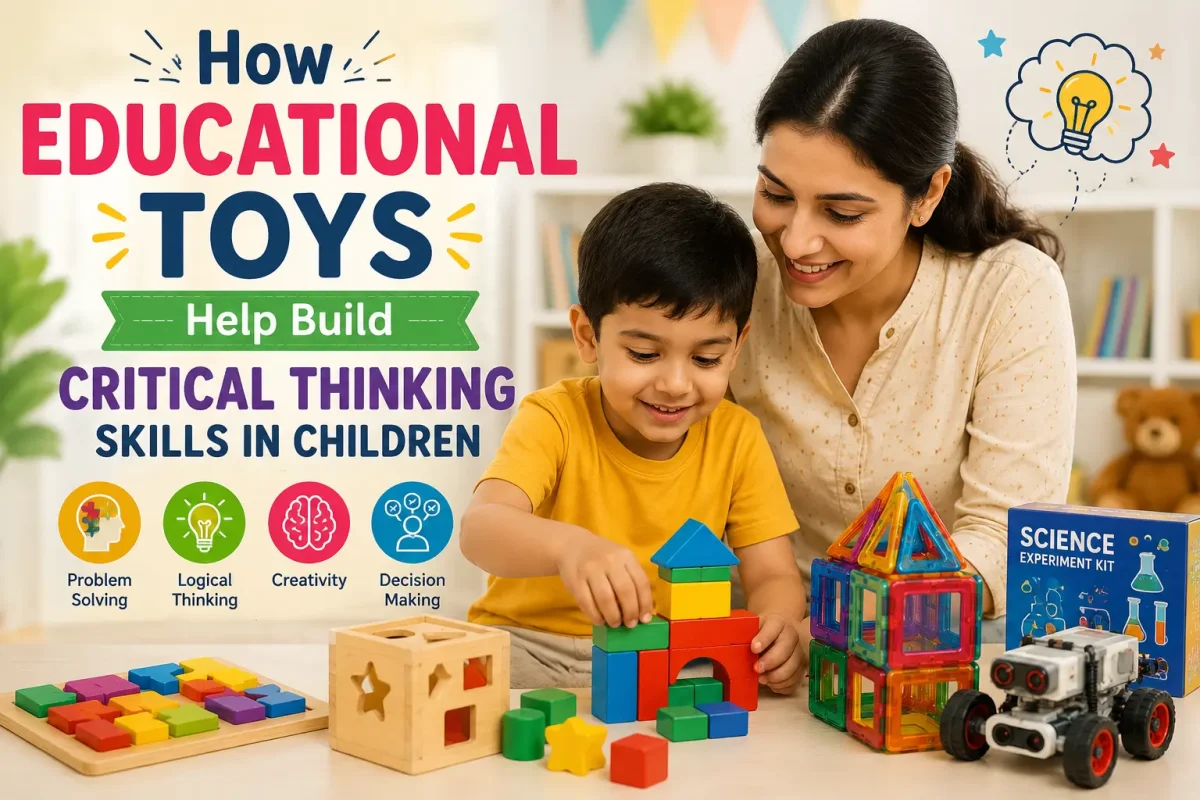
How Educational Toys Help Build Critical Thinking Skills in Children
Children are naturally curious. From stacking blocks to asking endless “why” questions, every interaction is an opportunity to learn. While all play has value, educational toys are specifically designed to nurture important developmental skills, including one of the most essential life skills: critical thinking.
Critical thinking helps children analyze information, solve problems, make thoughtful decisions, and approach challenges with confidence. In today’s fast-changing world, these abilities are just as important as learning to read or write. The good news is that developing critical thinking doesn’t have to feel like schoolwork. Through engaging, hands-on play, educational toys make learning fun while helping children build skills they’ll use for a lifetime.
In this article, we’ll explore what critical thinking is, why it matters, and how the right educational toys can help children become creative, confident, and independent thinkers.
What Is Critical Thinking?

Critical thinking is the ability to think carefully, evaluate information, and make logical decisions instead of acting on impulse. For children, it means learning how to:
- Solve problems independently
- Recognize patterns and relationships
- Compare different ideas
- Ask meaningful questions
- Make informed decisions
- Learn from mistakes
- Think creatively when facing new challenges
These skills develop gradually through everyday experiences, especially during play. Every time a child builds a tower, solves a puzzle, or experiments with different ways to complete a task, they are strengthening their critical thinking abilities.
Why Is Critical Thinking Important for Children?

Critical thinking extends far beyond the classroom. It helps children succeed academically, socially, and emotionally.
Improves Problem-Solving Skills
Children encounter new challenges every day. Whether they’re figuring out how to complete a puzzle or deciding how to share toys with friends, critical thinking enables them to explore solutions instead of becoming frustrated.
Encourages Independent Learning
Children who develop strong thinking skills become more confident in exploring new ideas and finding answers on their own. This independence builds resilience and a love for learning.
Builds Confidence
Successfully solving challenges gives children confidence in their abilities. Each small achievement encourages them to take on bigger challenges with enthusiasm.
Enhances Creativity
Critical thinking and creativity work together. When children experiment with different approaches, they learn there isn’t always just one correct answer.
Prepares Children for the Future
The ability to think critically is valuable in every stage of life. As technology and workplaces continue to evolve, problem-solving, adaptability, and innovation remain among the most important skills for future success.
How Educational Toys Encourage Critical Thinking
Educational toys create opportunities for children to think, experiment, and learn through active play rather than passive entertainment.
They Encourage Problem-Solving
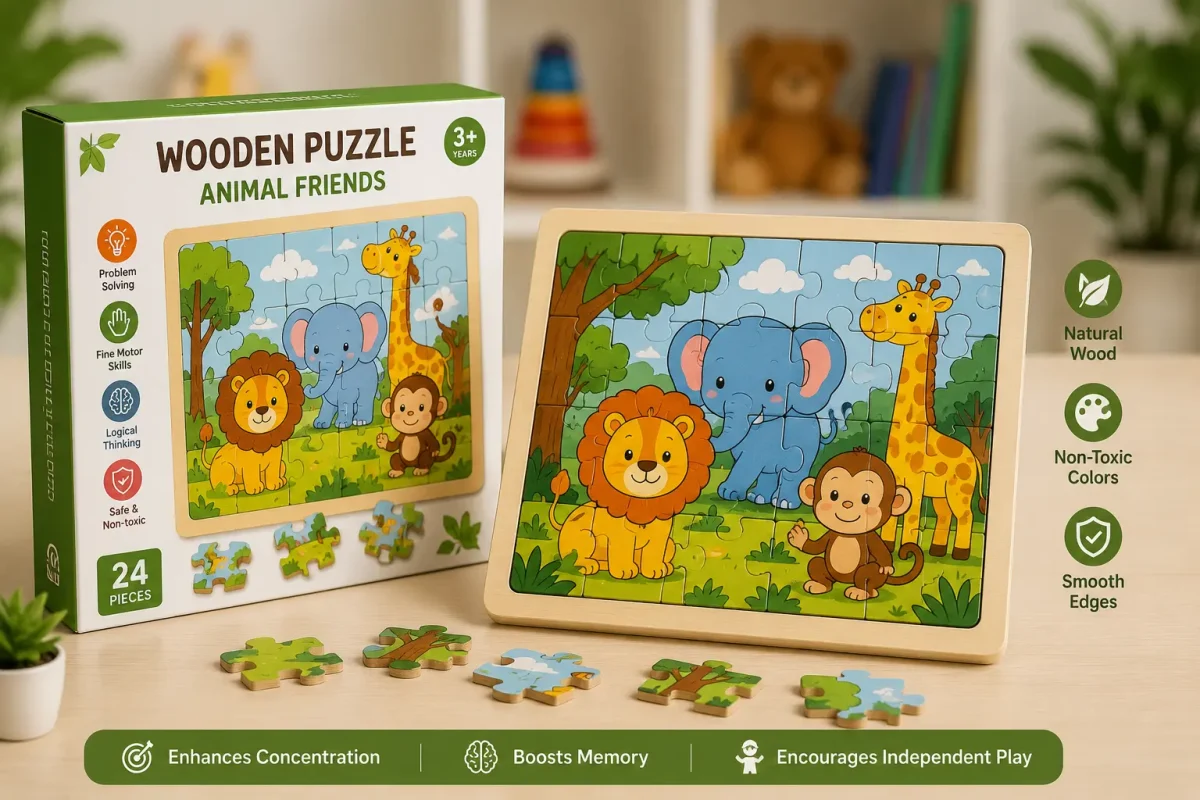
Many educational toys present children with challenges that require careful thinking before reaching a solution.
Examples include:
- Jigsaw puzzles
- Shape sorters
- Building blocks
- Logic games
As children try different approaches, they learn persistence, patience, and flexible thinking. They begin to understand that making mistakes is a natural part of learning.
They Improve Logical Reasoning
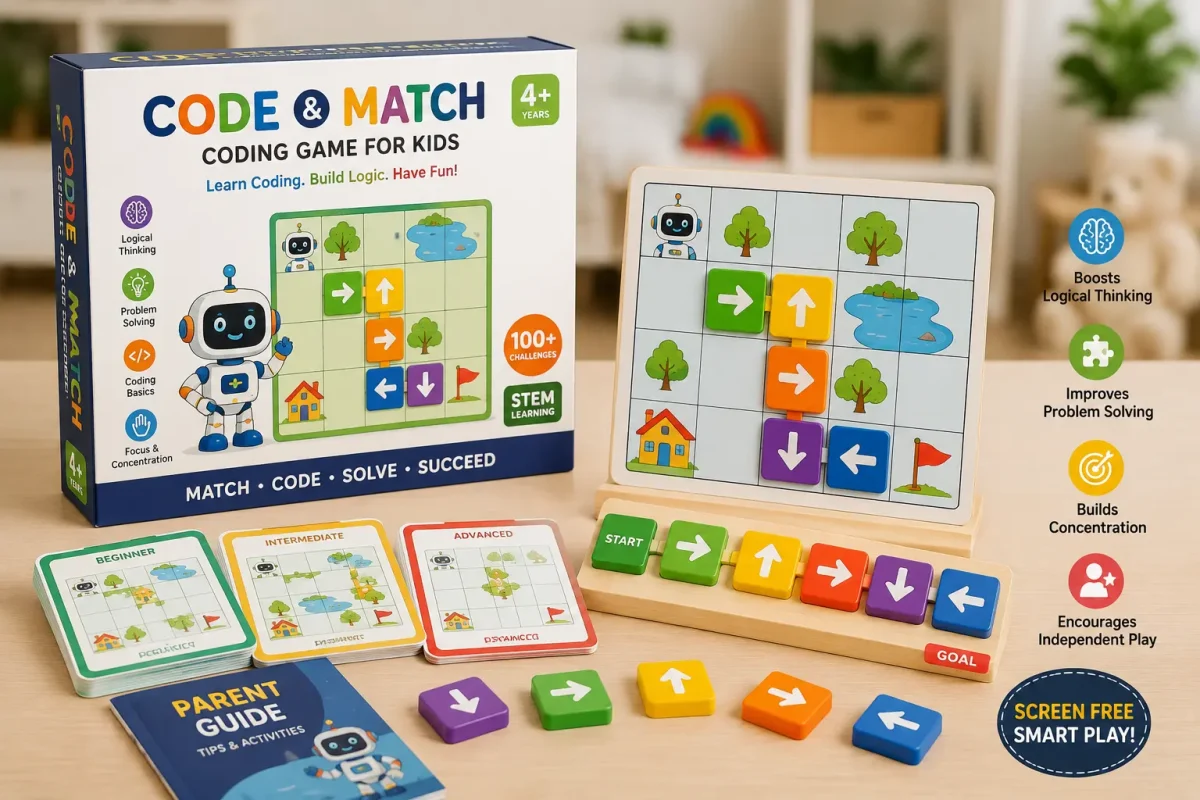
Logical reasoning involves recognizing patterns, sequencing information, and understanding how different pieces fit together.
Educational toys such as:
- Pattern blocks
- Matching games
- Coding games
- Number puzzles
help children develop structured thinking while introducing mathematical and analytical concepts in an enjoyable way.
They Inspire Creativity

Some of the best educational toys have no single “correct” outcome.
Open-ended toys like:
- Wooden building blocks
- Magnetic tiles
- Construction sets
- Art and craft kits
allow children to imagine, design, build, and redesign repeatedly. This freedom encourages innovation while strengthening planning and decision-making skills.
They Teach Cause and Effect
Understanding cause and effect is one of the foundations of critical thinking.
Children learn this naturally when using toys such as:
- Marble runs
- Domino sets
- STEM experiment kits
- Mechanical construction toys
As they observe what happens after changing one variable, they begin forming logical connections and making predictions.
They Develop Decision-Making Skills
Many educational games require children to think ahead before taking action.
Board games, strategy games, and memory games encourage children to:
- Consider different options
- Predict outcomes
- Evaluate risks
- Learn from previous choices
These experiences help children become more thoughtful decision-makers in everyday life.
The Best Types of Educational Toys for Critical Thinking

Different toys develop different aspects of thinking. Offering a variety of educational toys gives children opportunities to strengthen multiple cognitive skills.
STEM Toys

STEM (Science, Technology, Engineering, and Mathematics) toys introduce children to real-world concepts through exploration.
Examples include:
- Science experiment kits
- Robotics kits
- Engineering sets
- Coding games
These toys encourage experimentation, observation, and analytical thinking.
Building and Construction Toys

Construction toys help children visualize structures while improving spatial awareness and planning.
Popular options include:
- Wooden blocks
- Interlocking bricks
- Magnetic construction tiles
- Engineering building kits
Children learn balance, symmetry, and structural thinking while creating their own designs.
Logic Puzzles

Puzzles remain one of the most effective tools for developing critical thinking.
They help children improve:
- Concentration
- Memory
- Pattern recognition
- Visual reasoning
- Problem-solving
Puzzle difficulty can gradually increase as children grow.
Board Games

Educational board games combine fun with valuable life skills.
Children practice:
- Strategic thinking
- Planning ahead
- Taking turns
- Following rules
- Making decisions under changing conditions
Family game nights also encourage communication and teamwork.
Montessori-Inspired Toys

Montessori toys are designed to encourage independent learning through hands-on exploration.
Examples include:
- Sorting trays
- Counting materials
- Sensory toys
- Practical life activities
- Shape puzzles
These toys help children explore concepts at their own pace while developing concentration and confidence.
How to Choose the Right Educational Toy

Not every educational toy is suitable for every child. Choosing toys based on age, interests, and developmental stage ensures the best learning experience.
Consider the following factors:
Age Appropriateness
Select toys designed for your child’s age to provide the right level of challenge without causing frustration.
Child’s Interests
Children are more engaged when toys match their natural curiosity. A child interested in animals may enjoy science kits, while another who loves building may prefer construction toys.
Open-Ended Play
Choose toys that allow multiple ways to play rather than limiting children to a single activity. Open-ended toys encourage creativity and long-term engagement.
Safety
Always select toys made from durable, child-safe, and non-toxic materials. Check age recommendations and safety certifications before purchasing.
Learning Value
The best educational toys combine fun with meaningful learning experiences. If children enjoy using the toy repeatedly, it is likely providing lasting developmental benefits.
Tips for Parents to Encourage Critical Thinking Through Play
Educational toys become even more effective when parents actively participate in the learning process.
Here are a few simple strategies:
- Ask open-ended questions such as “What do you think will happen next?”
- Encourage children to explain their thinking.
- Allow children to solve problems independently before offering help.
- Celebrate effort instead of only successful outcomes.
- Rotate toys regularly to maintain curiosity.
- Balance structured educational activities with free play.
The goal is not to provide all the answers but to encourage children to discover them independently.
Common Mistakes to Avoid
Parents sometimes unintentionally reduce learning opportunities during play.
Avoid these common mistakes:
Solving Every Problem
Give children time to think through challenges before stepping in.
Choosing Toys That Are Too Difficult
Overly complicated toys may discourage learning rather than support it.
Buying Too Many Toys
A smaller collection of high-quality educational toys often provides more meaningful learning than an overwhelming number of options.
Focusing Only on Academic Skills
Creativity, communication, imagination, and emotional development are equally important components of critical thinking.
Frequently Asked Questions
At what age should children start using educational toys?
Educational toys can benefit children from infancy. Sensory toys, stacking rings, and shape sorters are excellent choices for babies and toddlers, while older children can enjoy puzzles, STEM kits, and strategy games.
Are educational toys better than regular toys?
Educational toys are designed with learning goals in mind, but traditional toys also support healthy development. The best play environment includes a balance of both, encouraging imagination, creativity, physical activity, and skill development.
How much time should children spend playing with educational toys?
Quality matters more than quantity. Even 30 to 60 minutes of focused, engaging play each day can contribute significantly to cognitive development, especially when balanced with outdoor play, reading, and social interaction.
Do educational toys improve school performance?
Educational toys help build foundational skills such as concentration, logical reasoning, memory, and problem-solving. These abilities support classroom learning and can contribute to academic success over time.

Final Thoughts
Critical thinking is one of the greatest gifts we can give children. It helps them become curious learners, confident problem-solvers, and creative thinkers who are prepared for the challenges of tomorrow.
Educational toys make this journey enjoyable by transforming everyday play into meaningful learning experiences. Whether it’s building a tower, solving a puzzle, experimenting with a science kit, or creating something entirely new, each activity strengthens the skills children need to thrive.
By choosing thoughtful, age-appropriate educational toys and encouraging hands-on exploration, parents can nurture a lifelong love of learning while helping children build confidence, resilience, and independence.
Explore Educational Toys at ToyRoots
At ToyRoots, we believe that every play session is an opportunity to learn. Our carefully selected collection of educational toys is designed to inspire curiosity, creativity, and critical thinking in children of all ages.
Whether you’re searching for STEM kits, building sets, puzzles, Montessori-inspired toys, or engaging learning games, you’ll find options that support your child’s development while making playtime exciting and meaningful.
Explore our collection today and help your child discover the joy of learning through play—because every great thinker starts with curiosity.
Related reading
All in Parenting Tips →
Best Fine Motor Skills Toys for Kids in Pakistan: An Age-by-Age Guide
Short answer Match the toy to what your child’s hands can already do. At 1, that means large-piece puzzles, stacking toys and…
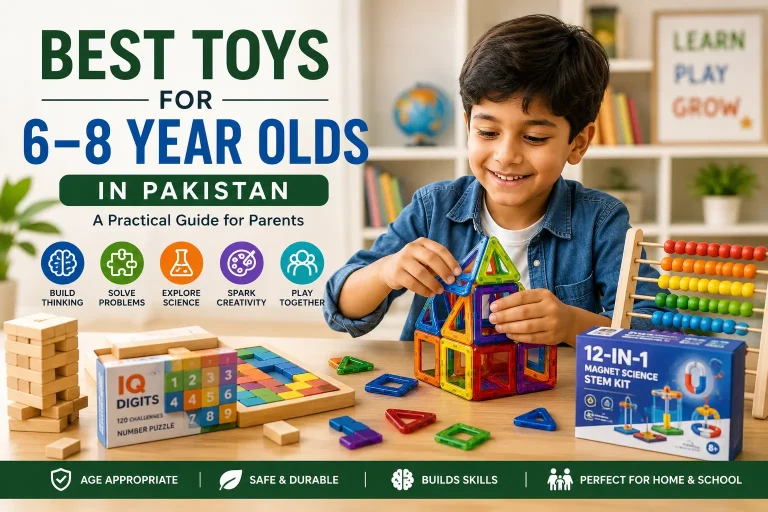
Best Toys for 6–8 Year Olds in Pakistan: A Practical Guide for Parents
Short answer By 6–8 children can follow rules and multi-step instructions, so the strongest choices are construction sets, logic puzzles, STEM kits,…
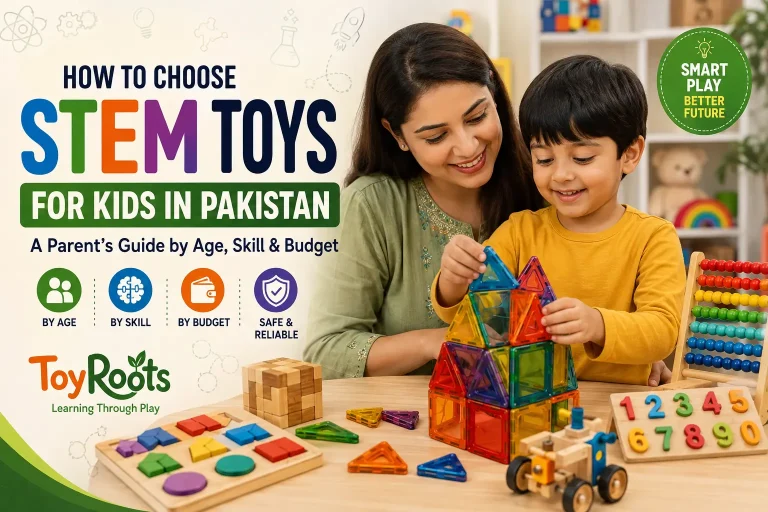
How to Choose STEM Toys for Kids in Pakistan: A Parent’s Guide by Age, Skill & Budget
Short answer Start with what your child is already drawn to — building, puzzles, or taking things apart — then match the…
