
No products in the cart.
Parenting Tips, ToyRoots Life
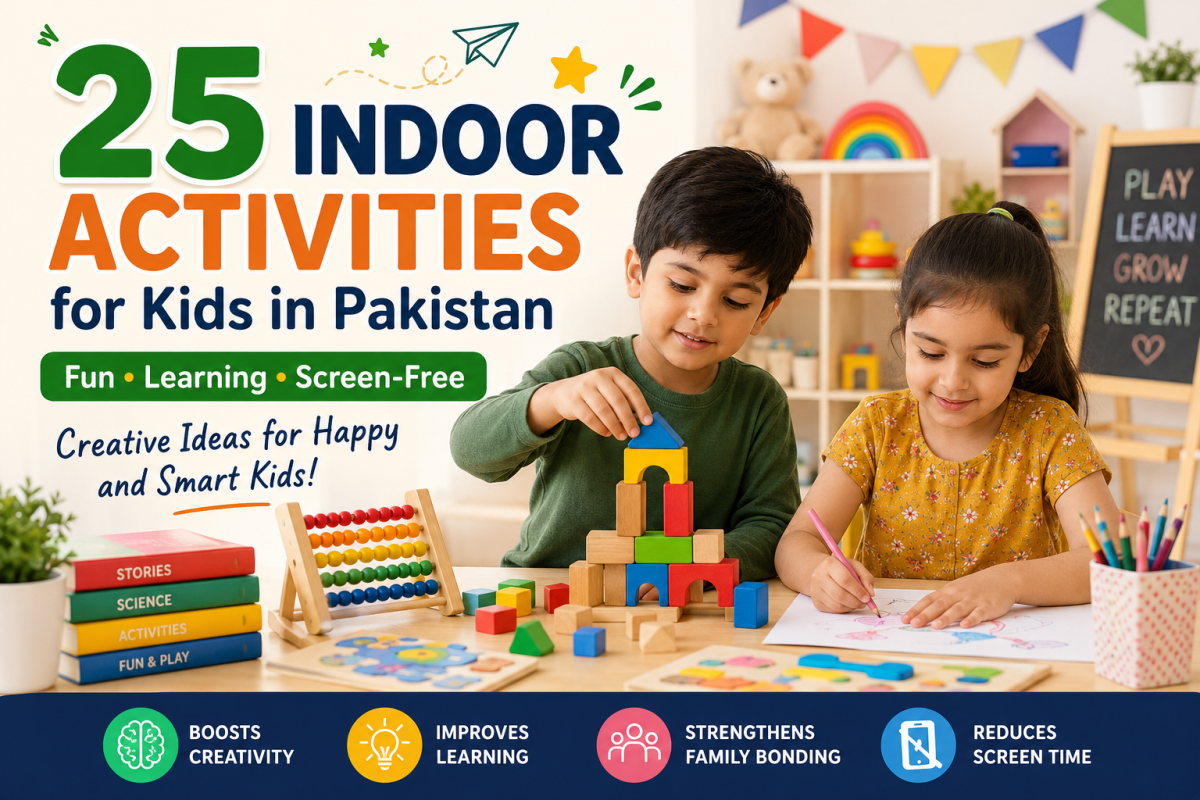
Indoor Activities for Kids in Pakistan: 25 Fun Learning Ideas at Home
Keeping children entertained indoors can sometimes feel like a challenge, especially during hot summer days, rainy weather, school holidays, or weekends at home. While many children naturally turn to televisions, tablets, or mobile phones, too much screen time can reduce opportunities for hands-on learning and creative exploration.Fortunately, indoor play can be just as exciting as outdoor adventures. With a little creativity and the right activities, children can develop important life skills while having fun. From building creativity and improving fine motor skills to encouraging imagination and problem-solving, indoor activities help children grow in every area of development.Whether you have a curious toddler, an energetic preschooler, or a young school-age child, these 25 fun indoor activities will help transform ordinary days into exciting learning experiences.
Why Indoor Activities Matter
Indoor activities are much more than a way to keep children busy. They encourage creativity, improve concentration, strengthen communication skills, and provide opportunities for children to explore new ideas through play. Every activity gives children a chance to build confidence while learning naturally in a safe and comfortable environment.
1. Building Block Challenge
Encourage your child to build towers, bridges, castles, or entire cities using building blocks or magnetic tiles. This activity develops creativity, spatial awareness, logical thinking, and problem-solving skills while keeping children engaged for long periods.
2. Indoor Treasure Hunt
Hide toys or small objects around the house and give your child simple clues to find them. This exciting game improves observation skills, memory, and critical thinking while making indoor play feel like an adventure.
3. Drawing and Coloring Time
Give children paper, crayons, or colored pencils and allow them to express their imagination through art. Drawing encourages creativity, strengthens hand muscles, and helps children communicate their ideas visually.
4. Pretend Grocery Store
Turn part of your home into a mini supermarket using household items. Children can pretend to shop, count money, and organize products while developing communication, math, and social skills.
5. Puzzle Solving
Age-appropriate puzzles challenge children to think carefully, recognize patterns, and remain patient while completing each picture. Puzzle activities strengthen concentration and memory.
6. Storytelling Together
Begin a story with one sentence and encourage your child to continue it. Storytelling develops vocabulary, imagination, listening skills, and confidence while creating enjoyable family moments.
7. Indoor Obstacle Course
Arrange cushions, chairs, blankets, and safe household items to create a simple obstacle course. Children can crawl, jump, balance, and move through different challenges while improving coordination and physical fitness.
8. Color Sorting Activity
Ask younger children to sort toys or objects according to their colors. This simple learning activity improves visual recognition, attention, and early cognitive development.
9. Dance Party
Play cheerful music and let children dance freely around the room. Dancing improves coordination, balance, confidence, and physical health while creating a joyful atmosphere.
10. Simple Science Experiments
Easy science activities such as baking soda volcanoes or floating and sinking experiments introduce children to scientific thinking through fun, hands-on experiences.
11. Reading Corner
Create a comfortable reading space where children can explore storybooks with parents or independently. Reading improves language development, imagination, and comprehension skills.
12. Play Dough Fun
Children can use play dough to create animals, shapes, letters, and imaginative objects. This activity strengthens fine motor skills while encouraging creativity.
13. Indoor Bowling
Use empty bottles as bowling pins and a soft ball to create an exciting bowling game that improves coordination and movement skills.
14. Puppet Show
Create simple puppets using socks or paper bags and encourage children to perform stories. Puppet play builds communication skills and imaginative thinking.
15. Memory Matching Game
Matching picture cards challenges children to remember locations while strengthening concentration, observation, and memory skills.
16. Alphabet Hunt
Invite children to find objects around the house that begin with different letters. This playful activity makes learning the alphabet exciting and interactive.
17. Counting Challenge
Count toys, books, blocks, or household objects together. Everyday counting activities help children understand numbers in practical situations.
18. Cardboard Box Creations
Large cardboard boxes can become houses, castles, rockets, or racing cars through imaginative play. Children love transforming ordinary objects into exciting adventures.
19. Shadow Play
Use a flashlight to create shadows on the wall and encourage children to make animals or characters using their hands. This activity stimulates creativity and storytelling.
20. Indoor Camping
Build a blanket fort using chairs and blankets, then enjoy pretend camping with storybooks, snacks, and imaginative adventures.
21. Nature Crafts
Collect leaves, flowers, or twigs during a previous outdoor visit and use them to create beautiful artwork. Nature crafts combine creativity with environmental awareness.
22. Shape Discovery
Encourage children to identify circles, squares, triangles, and rectangles around the home. This simple activity strengthens observation and early math skills.
23. Homemade Music Band
Use containers, spoons, bottles, and boxes to create musical instruments. Children enjoy experimenting with rhythm while developing listening and coordination skills.
24. Pretend Different Professions
Role-playing as doctors, teachers, firefighters, or chefs encourages children to explore different careers while improving confidence and communication.
25. Educational Toy Playtime
Educational toys provide endless opportunities for children to build creativity, logical thinking, problem-solving abilities, and independent learning through meaningful play.
How Educational Toys Make Indoor Play Even Better
Educational toys inspire children to explore, experiment, and discover new ideas every day. Unlike passive entertainment, they actively support brain development, creativity, communication, and independent thinking while making learning enjoyable and engaging.
Final Thoughts
Indoor activities are a wonderful way to keep children happy, active, and learning throughout the year. By combining imaginative games, creative projects, physical movement, and educational toys, parents can create meaningful experiences that support every stage of their child\’s development. Every moment of play is an opportunity to build confidence, curiosity, and a lifelong love of learning.
Related reading
All in Parenting Tips →
Eidi Gift Ideas for Kids in Pakistan: Thoughtful Gifts Beyond Cash
Eid is a time for family gatherings, delicious food, new clothes, and the excitement of receiving Eidi. For children, opening an envelope…
How to Clean and Maintain Kids’ Toys: A Parent’s Guide for Pakistan
Children touch their toys throughout the day. They carry them around the house, play with them on the floor, take them outside,…
How to Choose Wooden Toys for Kids in Pakistan: A Parent’s Guide
Choosing a toy for your child is about more than finding something colourful or entertaining. You want something they will enjoy, use…
